
-
- Products
- Indoor Household Cords
- Appliance Cords
- General Purpose Short-Length Cords
- General Purpose Extension Cords
- Landscape & Decorating Cords
- Bright Color Extension Cords
- Oil-Resistant Extension Cords
- Cold-Flex Extension Cords
- VividFlex Power Cords
- EXTREME All-Weather Cords
- Cord Management
- Task Lights
- Adapters & GFCI Devices
- Where to Buy
- About
- Careers
- Glossary
- Catalog


Top 10 Extension Cables: Your Ultimate Guide to Choosing the Best
In today's technology-driven world, the need for reliable power sources is more critical than ever. Extension cables, essential tools in both residential and commercial settings, facilitate the distribution of electricity over greater distances. According to a recent report by the National Electrical Manufacturers Association (NEMA), the market for electrical accessories, including extension cables, is projected to grow significantly, driven by an increasing demand for convenient power solutions. The versatility of extension cables has made them indispensable for various applications, from powering home appliances to supporting sophisticated industrial equipment.
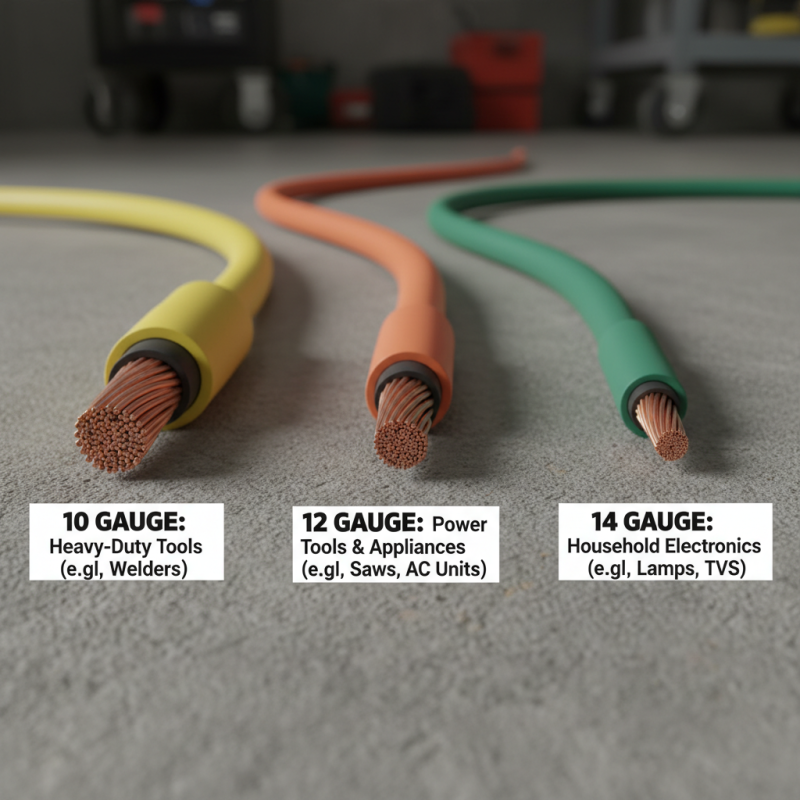
As consumers and businesses strive for optimal efficiency, the importance of selecting the right extension cable cannot be overstated. Factors such as length, gauge, and safety ratings play a vital role in ensuring not only the functionality of the cable but also the safety of the environment in which it is used. The Electrical Safety Foundation International (ESFI) highlights that improper use of extension cords is a leading cause of electrical fires, underscoring the need for informed decisions when it comes to their selection. This guide will navigate through the top 10 extension cables on the market, equipping readers with the necessary knowledge to make informed choices that align with their specific requirements and safety standards.

Table of Contents
[Hide]
Understanding Extension Cables: Types and Uses
Extension cables are versatile tools that facilitate the connection of electrical devices to power sources. They come in various types, each designed to serve specific functions and adapt to different environments. The most common types of extension cables include indoor and outdoor versions, with outdoor cables being built to withstand harsher conditions, such as moisture and temperature fluctuations. Additionally, there are heavy-duty extension cables which can handle higher wattage for power tools and equipment, making them ideal for construction sites or workshops.
Beyond their basic function of extending reach, extension cables can help in organizing spaces effectively. For instance, in home or office setups, using a power strip extension can minimize cable clutter while providing additional outlets for multiple devices. Some cables may also incorporate surge protection to prevent damage from voltage spikes. It's essential to choose the right type based on your needs, considering factors like length, load capacity, and durability. Understanding these characteristics can assist users in selecting the best extension cable for their specific situations, ensuring both safety and convenience.
Top 10 Extension Cables: Your Ultimate Guide to Choosing the Best
| Extension Cable Type | Length (feet) | Max Load (Watts) | Number of Outlets | Cable Rating | Key Features |
|---|---|---|---|---|---|
| Standard Extension Cord | 25 | 1800 | 3 | 16 AWG | Lightweight, weather-resistant |
| Heavy-Duty Extension Cord | 50 | 3600 | 6 | 12 AWG | Thick insulation, heavy traffic use |
| Outdoor Extension Cord | 100 | 2400 | 3 | 14 AWG | Weatherproof, UV resistant |
| Power Strip with USB | 12 | 2500 | 4 | 16 AWG | USB ports, surge protection |
| Multipurpose Extension Cord | 15 | 1500 | 6 | 18 AWG | Ideal for indoor use, lightweight |
| Flat Extension Cord | 9 | 1200 | 3 | 16 AWG | Space-saving design, versatile |
| Reel Extension Cord | 50 | 1650 | 4 | 14 AWG | Easy storage, tangle-free |
| Smart Extension Cord | 10 | 2400 | 3 | 16 AWG | Wi-Fi compatible, voice control |
| Extension Cord with Timer | 25 | 1875 | 2 | 16 AWG | Programmable timing, energy saving |
Related Posts
-
10 Essential Tips for Choosing the Right Power Cord Extension Cable for Your Needs
-

10 Essential Tips for Choosing the Right Cord Cable for Your Devices
-

How to Choose the Right Power Cord Cable for Your Electronics with Expert Tips
-

How to Organize and Manage Electronic Cords for a Clutter Free Space
-
Transform Your Space: 7 Stylish and Functional Cool Extension Cords You Didn’t Know You Needed
-
2025 Top Short Power Cord Innovations for Efficient Home and Office Use