
-
- Products
- Indoor Household Cords
- Appliance Cords
- General Purpose Short-Length Cords
- General Purpose Extension Cords
- Landscape & Decorating Cords
- Bright Color Extension Cords
- Oil-Resistant Extension Cords
- Cold-Flex Extension Cords
- VividFlex Power Cords
- EXTREME All-Weather Cords
- Cord Management
- Task Lights
- Adapters & GFCI Devices
- Where to Buy
- About
- Careers
- Glossary
- Catalog


Top 10 Types of Partition Glass for Offices
A well-chosen Partition Glass system can bring daylight deeper into an office while defining meeting rooms, quiet zones, and shared work areas. The right option depends on how each space is used, not just how it looks. A clear, floor-to-ceiling wall may make a compact office feel larger, but it can also reveal screens, paperwork, and people in sensitive conversations. Privacy matters.
This guide explores ten types of office partition glass, from frameless panels to frosted, tinted, and switchable options. Each offers a different balance of visibility, sound control, appearance, and upkeep. For example, a busy meeting room may need better acoustic performance than a casual collaboration area. Metal framing, door hardware, glass thickness, and installation quality can also affect daily comfort. Details count.
There is no universal best choice. The decision should reflect the floor plan, lighting, cleaning routine, and privacy needs. Product specifications are useful, but real performance depends on the complete system and careful installation. Confirm relevant safety and building requirements with qualified local professionals. That step is easy to overlook. The comparisons below are a practical starting point, not a substitute for assessing the actual space. A glass wall can make an office feel calm and open; sometimes it simply makes every conversation more visible.
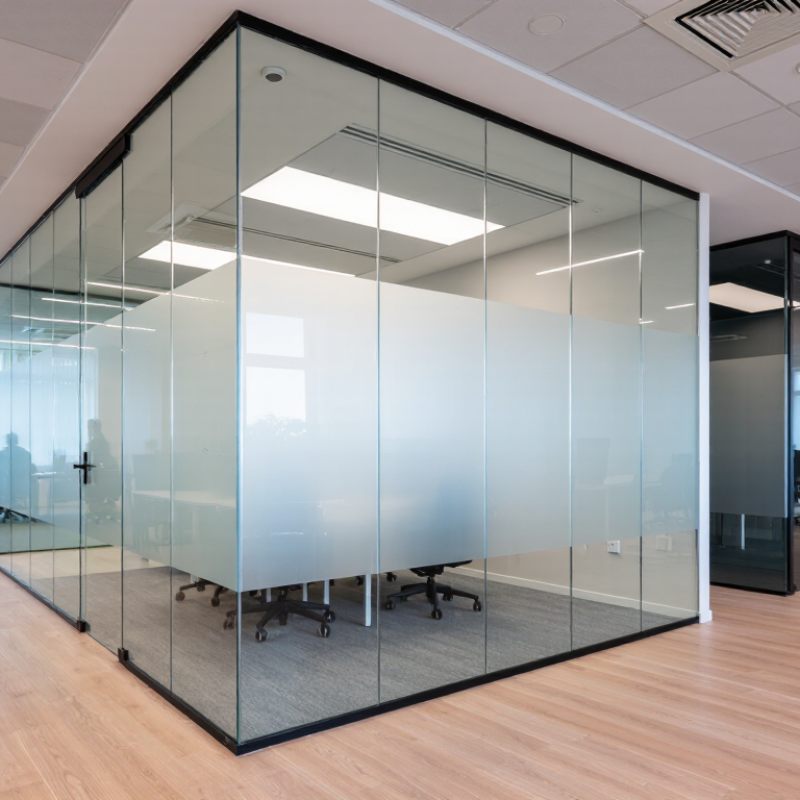
Table of Contents [Hide]
Understanding Glass Partitions and Their Role in Offices
Glass Partitions divide an office without making it feel closed. Clear panels carry daylight from perimeter windows into interior work areas. Frosted bands or patterned films soften views where people need privacy. Framed, frameless, sliding, and acoustic-rated systems each serve different layouts. The right choice depends on how teams work, not just how a floor plan looks.
Glass is not a cure for every noise problem. Standard panels may reduce direct sound, but gaps around doors can still let conversations travel. Acoustic performance depends on the full assembly, including seals, frames, and ceiling connections. In practice, teams sometimes expect a glass meeting room to feel fully private, then discover voices remain audible. That mismatch is worth discussing before installation. Consider glare, cleaning access, door swings, and future layout changes, too. Small details matter.
Tips: Match the glass to the task. Use clear panels near shared areas, and consider translucent sections beside focus rooms. Ask for tested acoustic data when sound control matters. Check sample panels in the actual office lighting; a finish that looks subtle in a showroom may feel much darker onsite. Some compromises are unavoidable.