
-
- Products
- Indoor Household Cords
- Appliance Cords
- General Purpose Short-Length Cords
- General Purpose Extension Cords
- Landscape & Decorating Cords
- Bright Color Extension Cords
- Oil-Resistant Extension Cords
- Cold-Flex Extension Cords
- VividFlex Power Cords
- EXTREME All-Weather Cords
- Cord Management
- Task Lights
- Adapters & GFCI Devices
- Where to Buy
- About
- Careers
- Glossary
- Catalog


Top 10 Wedge Anchors for Concrete Applications?
Choosing the right Wedge Anchors for concrete is not a simple shopping exercise. The strongest-looking product can still fail when the concrete is cracked, weak, or poorly prepared. This guide examines ten practical options for construction, maintenance, equipment mounting, and structural support.
Dr. Ronald A. Cook, a respected structural engineering researcher known for concrete anchorage studies, states, “The performance of an anchor is inseparable from the concrete in which it is installed.” That principle guides this comparison. Each anchor deserves attention beyond diameter and price. We consider load capacity, embedment depth, corrosion resistance, washer design, installation tools, and published testing. We also examine suitability for cracked and uncracked concrete.
Small details matter. A dusty hole can reduce holding strength. An under-tightened nut can create movement. A damaged thread can complicate inspection. These problems appear ordinary, yet they can undermine a carefully designed connection.
The list is not absolute. Site conditions vary widely. A product that performs well in dense indoor concrete may disappoint outdoors or near slab edges. That limitation deserves honesty. Manufacturer data and project-specific engineering should guide final selection, especially for safety-critical work. Some ratings also depend on exact installation procedures, not casual field judgment.
Expect clear comparisons, practical observations, and a few uncomfortable questions. Are premium Wedge Anchors always better? Is stainless steel necessary? Can a low-cost anchor satisfy demanding loads? The answers depend on concrete strength, exposure, spacing, and installer discipline. Good anchoring begins with evidence, not assumptions.
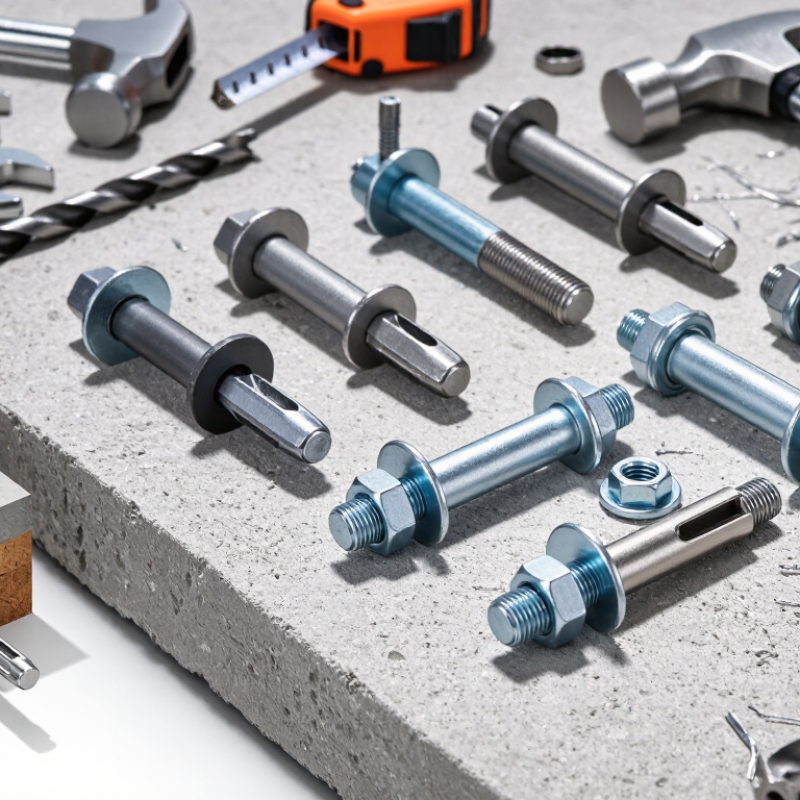
Table of Contents [Hide]
What Are Wedge Anchors and How Do They Work in Concrete?
Wedge anchors are mechanical fasteners designed to secure equipment, plates, rails, and structural supports to concrete. They use a threaded steel stud, nut, washer, and expansion clip. During installation, the clip sits near the embedded end of the stud. Tightening the nut pulls the stud upward, forcing the clip against the drilled hole. Friction and mechanical expansion then hold the anchor firmly in place.
A reliable installation begins with the correct hole diameter and depth. The installer drills into sound concrete, removes dust, and checks the required embedment. A dusty hole can reduce holding strength. Small details matter. The anchor should remain clear of edges, joints, and nearby anchors, according to tested spacing requirements. Tightening also matters. Too little torque may leave the clip under-expanded. Excessive torque can damage the concrete or threads. A calibrated torque wrench is safer than guesswork.
I have seen anchors fail because the hole looked clean but contained hidden powder. That assumption is easy to make. Concrete strength, cracking, load direction, moisture, and corrosion exposure all affect performance. Choose an anchor evaluated for the actual concrete condition, especially when tension or vibration is involved. Installation records should include hole depth, anchor size, torque, and inspection results. Wedge anchors are not automatically suitable for every application. Their performance depends on the concrete, the design, and the installer’s discipline.