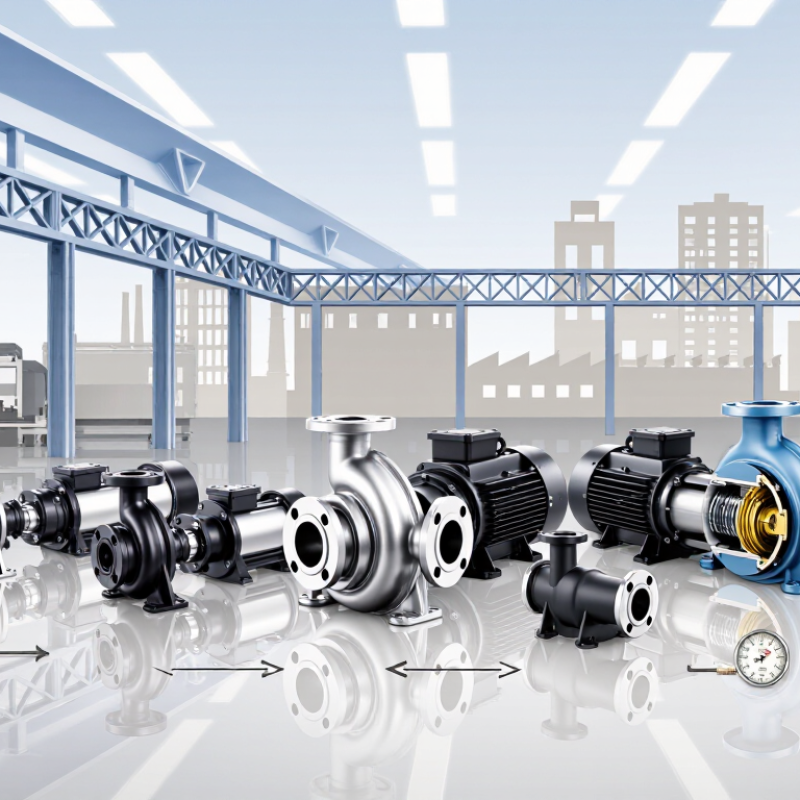
| Product Application | Designed for hot-water circulation in domestic hot-water systems, hydronic heating loops, solar-heating circuits, and light commercial installations. | The pump should be matched to the fluid temperature, pressure, flow rate, and system materials. | The destination country's installation rules may distinguish potable-water circulation from closed-loop heating service. | Request the intended application, approved fluid type, maximum temperature, and operating limitations in writing. |
| Pump Construction | Common configurations include wet-rotor circulators, dry-rotor centrifugal pumps, stainless-steel or coated cast-iron housings, and threaded or flanged connections. | Material selection should address corrosion, scaling, temperature, and compatibility with treated or potable water. | Connection standards and dimensions differ by market; BSP, NPT, and flange requirements must be confirmed before ordering. | Check material certificates, connection drawings, sealing materials, and dimensional tolerances. |
| Performance Range | Small domestic circulators commonly operate in the low-flow range, while larger heating pumps are selected using system curves and required head. | A valid performance curve should show flow, head, efficiency, power input, and operating limits. | Do not compare pumps only by motor wattage; duty-point performance is more important for system compatibility. | Obtain a certified test curve and confirm the required duty point, shut-off head, minimum flow, and maximum flow. |
| Motor and Speed Control | Available designs may use fixed-speed induction motors, multi-speed motors, or electronically commutated motors with variable-speed control. | Variable-speed control can reduce energy consumption when the system load changes, but the control method must suit the installation. | Confirm compatibility with local power supplies, external controls, frequency converters, and communication interfaces. | Review motor type, rated input, standby consumption, speed-control range, and control-signal specifications. |
| Electrical Compatibility | Supply configurations may include 220–240 V at 50 Hz or 110–120 V at 60 Hz, depending on the target market and product design. | Rated voltage, frequency, phase, starting current, insulation system, and motor protection must be clearly stated on the nameplate and datasheet. | A pump intended for one voltage or frequency must not be assumed suitable for another without manufacturer confirmation. | Verify nameplate data, wiring diagrams, plug or terminal requirements, and protection against dry running or overheating. |
| Temperature Capability | Temperature limits vary by model, seal arrangement, bearing design, electronics, and application; domestic hot-water and heating systems may have different requirements. | The maximum continuous and short-term fluid temperatures should be separately identified. | Temperature ratings may affect packaging, storage, installation instructions, and local plumbing approvals. | Request test conditions, maximum ambient temperature, maximum fluid temperature, and allowable pressure at temperature. |
| Ingress Protection | Many circulation-pump designs use an IP protection rating for the motor or electrical enclosure; the rating is model-specific. | IP ratings are defined under IEC 60529 and indicate protection against solids and water under specified test conditions. | The selected IP level should match the installation environment, including condensation, splashing, and outdoor exposure. | Check the exact IP marking on the product, test report, installation orientation, and cable-entry arrangement. |
| Safety Standards | Electrical circulation pumps may be evaluated against IEC 60335-1 and the applicable particular requirements, including IEC 60335-2-51 for stationary circulation pumps. | The applicable standard depends on product construction, application, voltage, and target market. | A general declaration or laboratory report does not automatically prove compliance with every destination-market requirement. | Request the applicable standard list, test reports, risk assessment, and current declaration of conformity. |
| CE and EU Market Access | Depending on the design, EU-market pumps may involve requirements related to electrical safety, electromagnetic compatibility, restriction of hazardous substances, and energy-related products. | CE marking is supported by technical documentation and a valid EU Declaration of Conformity; it is not a standalone quality grade. | The importer or responsible economic operator must maintain relevant compliance documentation for the EU market. | Confirm the exact directives, harmonized standards, product model, and declaration date shown in the compliance file. |
| Quality Management | Manufacturers may operate quality systems based on ISO 9001 principles, but certification status and scope must be verified independently. | A valid certificate should identify the legal entity, manufacturing scope, certification body, issue date, and expiry date. | The certified scope should cover pump design, assembly, testing, or the actual supplied activity rather than an unrelated business process. | Verify the certificate number and status with the issuing certification body where possible. |
| Factory Testing | Relevant checks can include insulation resistance, dielectric strength, leakage current, rotor operation, noise, vibration, leakage, and hydraulic performance. | A documented inspection plan with acceptance limits provides stronger evidence than a generic quality statement. | Pre-shipment inspection can reduce risks involving incorrect voltage, wrong connections, damaged seals, or missing accessories. | Request sample inspection records, calibration certificates, batch traceability, and a mutually agreed inspection standard. |
| Potable-Water Suitability | Components used in potable-water circulation may require specific material and hygienic approvals in the destination market. | General electrical certification does not automatically establish drinking-water contact compliance. | Approval schemes differ by country and may cover elastomers, coatings, metals, plastics, and migration limits. | Obtain water-contact declarations and destination-specific approvals before marketing the pump for potable water. |
| Documentation Package | A professional export package normally includes datasheets, performance curves, manuals, wiring diagrams, packing lists, invoices, and compliance documents. | Documents should consistently show the same model number, rated data, manufacturer information, and revision status. | English manuals and destination-market labeling can simplify customs clearance, installation, and after-sales support. | Check whether manuals include installation, priming, rotation, maintenance, disposal, and safety instructions. |
| Packaging and Shipping | Export packaging should protect the motor, shaft, electrical enclosure, threaded connections, and accessories from impact and moisture. | Carton markings should identify model, quantity, gross weight, net weight, country of origin, and handling information where required. | Incoterms, palletization, container loading, insurance, and moisture protection should be agreed before production. | Confirm drop protection, corrosion protection, carton dimensions, stacking limits, and shipping inspection procedures. |
| Customs Classification | Heat recirculation pumps are generally classified within HS Chapter 84, but the precise tariff code depends on pump type, construction, and national customs interpretation. | The commercial invoice should accurately describe the product, operating principle, materials, voltage, and intended use. | Import duty, VAT, energy labeling, and product registration requirements vary by destination country. | Confirm the final HS classification and tariff treatment with the importer or a qualified customs broker. |
| Warranty and Service | Warranty terms commonly depend on installation conditions, correct sizing, water quality, maintenance, and evidence of manufacturing defects. | Clear warranty exclusions and a serial-number or batch-traceability system support efficient claims handling. | Long-distance export buyers should plan spare parts, replacement seals, technical support, and return procedures. | Review warranty duration, response time, spare-parts availability, technical contacts, and claim documentation requirements. |