
-
- Products
- Indoor Household Cords
- Appliance Cords
- General Purpose Short-Length Cords
- General Purpose Extension Cords
- Landscape & Decorating Cords
- Bright Color Extension Cords
- Oil-Resistant Extension Cords
- Cold-Flex Extension Cords
- VividFlex Power Cords
- EXTREME All-Weather Cords
- Cord Management
- Task Lights
- Adapters & GFCI Devices
- Where to Buy
- About
- Careers
- Glossary
- Catalog


Top Flexible Packaging Slitting Blades Suppliers Worldwide
Choosing reliable flexible packaging slitting blades suppliers requires more than comparing catalog prices. Converters depend on clean cuts, stable production, and predictable blade life. A small edge defect can create film dust, uneven rolls, or costly machine stoppages. This guide introduces leading suppliers worldwide and examines the qualities that matter in daily converting operations.
The evaluation considers blade materials, carbide grades, coatings, edge geometry, and manufacturing tolerances. Supplier experience also matters, especially when blades must match films, laminates, foils, or adhesive structures. Strong manufacturers should provide technical data, application guidance, inspection records, and consistent replacement support. Traceability is valuable. So is practical testing.
A polished website is not enough. Real confidence comes from documented quality systems, responsive engineers, and feedback from converters using similar equipment. Delivery capability, packaging protection, and regional service can influence the final result. Some suppliers may excel in precision while offering fewer customization options. Others may provide broad support but require longer lead times. No single company fits every production line.
This overview aims to compare suppliers fairly, using evidence rather than promotional language. Information can change, and supplier performance may vary by factory or market. That limitation deserves attention. Buyers should verify specifications, test samples, and confirm compatibility before placing large orders. The best choice is not always the cheapest. It is the supplier that consistently supports safe, efficient, and measurable slitting performance.
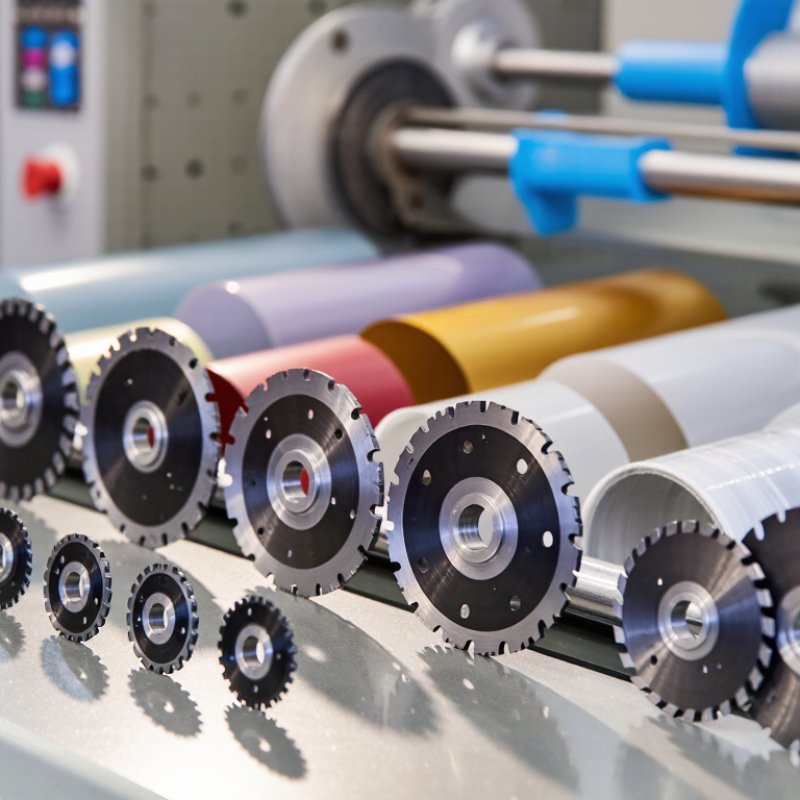
Table of Contents [Hide]
What Are Flexible Packaging Slitting Blades?
Flexible packaging slitting blades are precision tools used to divide wide rolls into narrower webs. They cut films, laminates, paper, and thin foil during converting. Common designs include razor blades, shear knives, and scoring blades. Each design creates a different cutting action. Razor blades slice with a sharp edge, while shear knives cut between overlapping circular blades. Scoring blades press through material against a grooved surface. The right choice depends on thickness, layer structure, line speed, and winding requirements.
In practical production, blade geometry matters as much as hardness. A polished edge can reduce drag and limit adhesive buildup. A suitable rake angle may produce cleaner cuts with less dust. Carbide and hardened tool steel offer useful wear resistance, but neither material suits every package structure. Operators should check edge chipping, web tension, and blade alignment during setup. Small alignment errors can create wandering cuts, edge fraying, or uneven roll faces. These details are easy to overlook.
Clean cuts matter.
Reliable suppliers should provide consistent dimensions, traceable material information, and clear sharpening or replacement guidance. Sample trials are more dependable than catalogue claims, especially when a package combines film with foil or paper. I have found that longer blade life is not always better; a worn edge may damage the web before it appears visibly dull. This is one area where assumptions deserve review. Regular inspection, careful storage, and measured cutting tests support stable performance across different converting lines.