
-
- Products
- Indoor Household Cords
- Appliance Cords
- General Purpose Short-Length Cords
- General Purpose Extension Cords
- Landscape & Decorating Cords
- Bright Color Extension Cords
- Oil-Resistant Extension Cords
- Cold-Flex Extension Cords
- VividFlex Power Cords
- EXTREME All-Weather Cords
- Cord Management
- Task Lights
- Adapters & GFCI Devices
- Where to Buy
- About
- Careers
- Glossary
- Catalog


2026 Top Jump Box Types for Global Buyers
Global buyers entering the 2026 Jump Box market face more choices than simple peak-amp claims suggest. Portable lithium-ion models suit passenger cars, motorcycles, and roadside service kits. Heavy-duty lead-acid units still support trucks, fleets, and workshops requiring repeated starts.
Supercapacitor Jump Box designs deserve attention. They can recharge from a weak battery, but performance depends on battery condition and operating temperature. Lithium models are lighter. They also need careful protection against overheating, overcharging, and reverse polarity.
Safety comes first.
Automotive electrical trainer Craig Van Batenburg has stated, “A jump starter is a backup, not a substitute for diagnosis.” This practical view should guide product selection. A jump box can start an engine, but it cannot repair a damaged alternator or unsafe wiring.
Reliable buyers should compare starting current, voltage compatibility, cable thickness, clamp quality, recharge time, and cold-weather performance. They should also examine transport requirements, regional certifications, warranty coverage, and replacement-battery access. These details often matter more than a large number printed on the package.
The strongest 2026 choices may include compact lithium units, professional lead-acid systems, supercapacitor models, and multifunction emergency devices. However, one category will not fit every market. A tropical delivery fleet may need different protection from a northern roadside operator.
Specifications can mislead.
Real testing remains essential. Suppliers should request independent test records, sample units, and clear technical manuals before placing large orders. Even experienced buyers can overlook standby drain or weak clamps. That mistake can become expensive across borders.
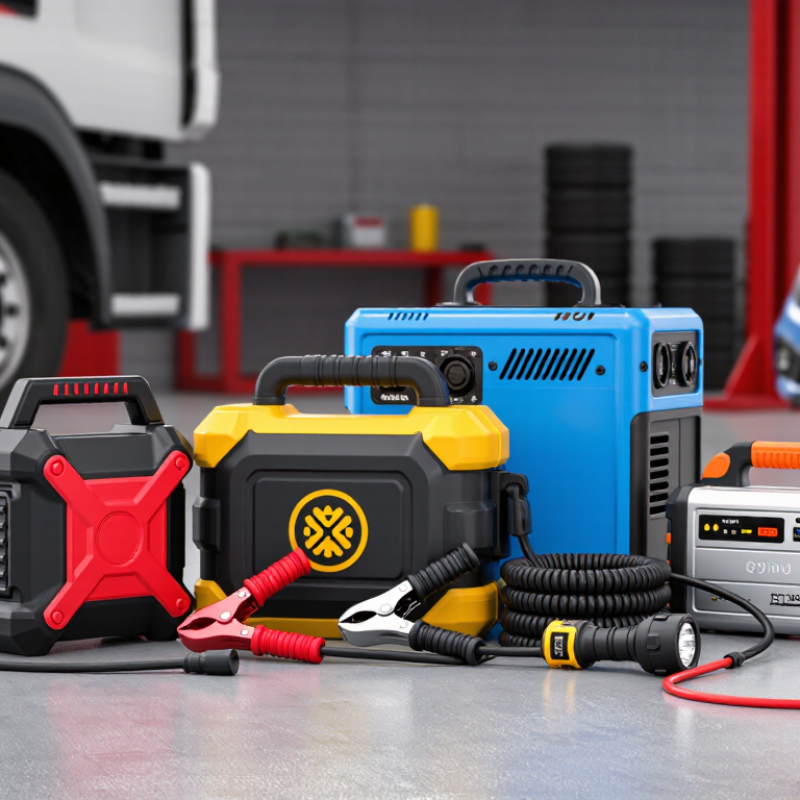
Table of Contents [Hide]
What a Jump Box Is and How It Provides Emergency Starting Power
A jump box is a portable battery pack that supplies temporary starting power to a vehicle’s weak or discharged battery. It connects through heavy-duty clamps, usually red to positive and black to negative or ground. The pack supports the starter motor for several seconds. It does not recharge a damaged battery.
The need is substantial. ADAC’s 2024 breakdown report found starter batteries caused 44.1% of roadside failures in Germany during 2023. This figure shows why emergency starting equipment matters for global drivers. A jump box may use lithium-ion or lithium iron phosphate cells. Lithium models are compact, while larger lead-acid units often provide stronger reserve capacity. Check cranking-current ratings carefully. Peak current can look impressive, but starting performance depends on temperature, cable quality, battery condition, and engine size.
In practice, keep the clamps clean and fully attached. Never trust a loose connection. Reverse-polarity protection improves safety, but users still need to read the instructions. UL 2743 covers safety requirements for portable power packs, offering a useful reference for buyers comparing products. Some manufacturers publish optimistic figures. That is worth questioning. A pack rated for one large engine may struggle after repeated starts in freezing weather. Storage temperature, recharge intervals, warranty terms, and verified testing deserve equal attention. The most useful jump box is not always the smallest one. Reliability matters more than impressive packaging.