
-
- Products
- Indoor Household Cords
- Appliance Cords
- General Purpose Short-Length Cords
- General Purpose Extension Cords
- Landscape & Decorating Cords
- Bright Color Extension Cords
- Oil-Resistant Extension Cords
- Cold-Flex Extension Cords
- VividFlex Power Cords
- EXTREME All-Weather Cords
- Cord Management
- Task Lights
- Adapters & GFCI Devices
- Where to Buy
- About
- Careers
- Glossary
- Catalog


Top 10 Laser Cleaning Equipment Manufacturers Worldwide
Laser Cleaning Equipment is moving from a specialist process into mainstream industrial maintenance. Grand View Research reports that the global laser cleaning market reached approximately USD 0.7 billion in 2023. Its forecast also indicates continued growth through 2030, supported by automotive, aerospace, electronics, and heritage conservation applications. MarketsandMarkets presents a different estimate and expects strong expansion toward the end of this decade. The gap matters. Research firms use different product definitions, regional coverage, and revenue models.
Cleaner surfaces. Lower chemical use.
Reinhart Poprawe, former director of Fraunhofer ILT, described laser manufacturing as “a key technology for sustainable production.” That principle explains the growing interest in Laser Cleaning Equipment. A focused beam can remove rust from a steel flange, paint from an aircraft component, or oil residue from a production mold. Operators can adjust pulse duration, scanning speed, and power without touching the substrate. However, results depend heavily on material reflectivity, contamination thickness, extraction systems, and operator training.
This Top 10 Laser Cleaning Equipment Manufacturers Worldwide overview therefore looks beyond advertising claims. It considers cleaning performance, pulse stability, automation options, safety design, service coverage, and documented industrial experience. Fiber laser sources may suit large metal parts, while compact pulsed systems can protect delicate surfaces. No ranking is perfect. A manufacturer strong in shipyards may not lead in electronics. Buyers should verify test data, warranty terms, compliance documentation, and local technical support before purchasing. The numbers suggest momentum, but practical trials reveal the truth.
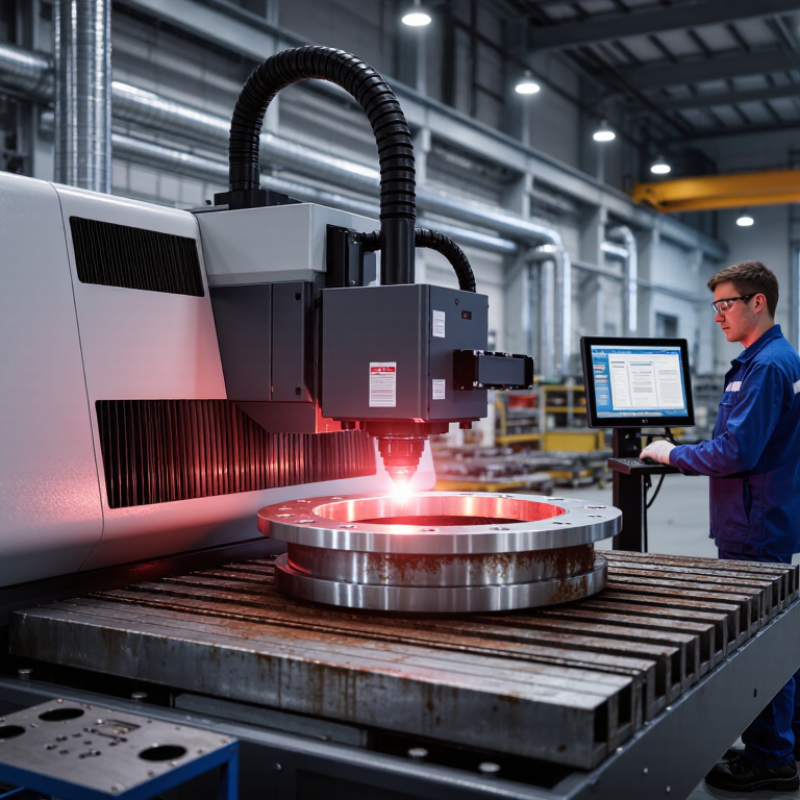
Table of Contents [Hide]
Laser Cleaning Equipment: Definition, Applications, and Core Technologies
Laser Cleaning Equipment: Definition, Applications, and Core Technologies
Laser cleaning equipment removes rust, paint, oil, oxides, and residues through controlled laser energy. The beam heats contaminants beyond their ablation threshold. The underlying material should remain largely unaffected when parameters are correctly selected. This process is usually dry, chemical-free, and produces limited secondary waste.
According to Allied Market Research, the global laser cleaning market was valued at approximately $587.5 million in 2021. The report projected about $1.13 billion by 2031, reflecting growing industrial adoption.
The equipment serves mold maintenance, automotive restoration, aerospace production, shipbuilding, and precision manufacturing. Pulsed lasers suit delicate surfaces because they deliver energy in short bursts. Continuous-wave systems can remove thicker coatings faster, but they require stronger thermal control.
Core components include the laser source, scanning head, focusing optics, control software, extraction unit, and protective enclosure. Wavelength selection matters. So does pulse duration.
Small details often decide the result. A technician may adjust scanning speed after observing a faint color change on steel. That judgment still needs documented testing.
According to MarketsandMarkets, the laser cleaning market was expected to reach roughly $1.1 billion by 2028, supported by automation and environmental requirements. Yet market forecasts differ. They should not replace surface trials, safety assessments, or operator training.
Excessive fluence can scar coatings, pit metal, or create unwanted fumes. Effective systems therefore combine process monitoring, suitable ventilation, and controls aligned with applicable laser-safety standards.