
-
- Products
- Indoor Household Cords
- Appliance Cords
- General Purpose Short-Length Cords
- General Purpose Extension Cords
- Landscape & Decorating Cords
- Bright Color Extension Cords
- Oil-Resistant Extension Cords
- Cold-Flex Extension Cords
- VividFlex Power Cords
- EXTREME All-Weather Cords
- Cord Management
- Task Lights
- Adapters & GFCI Devices
- Where to Buy
- About
- Careers
- Glossary
- Catalog


What Are the Top Mine Exhaust Fans?
Selecting the right Mine Exhaust Fans is a safety decision, not merely an equipment purchase. Underground workings depend on reliable airflow to dilute methane, diesel particulate matter, heat, and blasting fumes. A fan may look powerful on a specification sheet. Its real value appears underground, beside long duct runs, bends, dust, and changing resistance.
The International Energy Agency’s Global Critical Minerals Outlook 2024 highlights expanding mineral demand and deeper, more energy-intensive operations. That trend increases pressure on mine ventilation systems. The World Bank’s Minerals for Climate Action report projects mineral production could rise by nearly 500% by 2050. More production will require stronger airflow planning, efficient motors, and dependable controls. These reports do not rank fan brands. They show why selection standards must be rigorous.
NIOSH guidance consistently emphasizes airflow measurement, contaminant control, system redundancy, and worker exposure protection. The Global Mining Guidelines Group also recommends evaluating ventilation through the complete network, rather than judging one fan alone. That approach matters. An efficient impeller cannot compensate for leaking stoppings or undersized ducting. Top Mine Exhaust Fans should therefore be compared through airflow volume, static pressure, efficiency, noise, vibration, monitoring options, and maintenance access. Field experience adds another lesson: corrosion and dust often reduce performance sooner than expected. Some published efficiency claims also assume clean, stable conditions. Real mines are rarely so cooperative. This article examines leading fan solutions through technical performance, operating reliability, lifecycle cost, and documented ventilation practice. The final choice should still follow a site-specific survey and qualified engineering review.
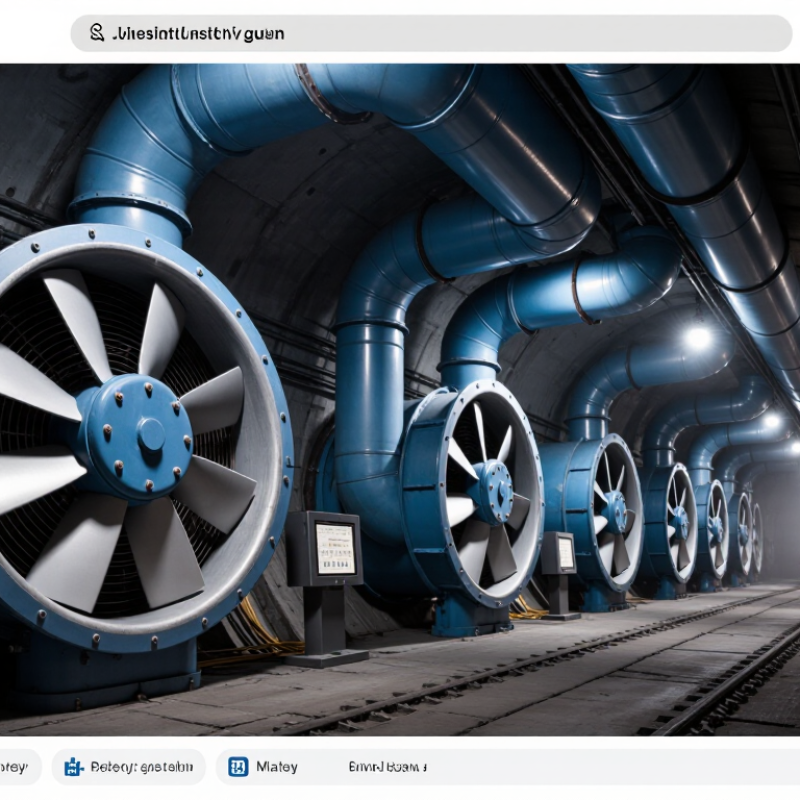
Table of Contents [Hide]
What Are Mine Exhaust Fans and Why Are They Important?
What Are Mine Exhaust Fans and Why Are They Important?
Mine exhaust fans are powerful ventilation machines that remove contaminated air from underground workings. They pull out dust, heat, fumes, and gases through shafts, raises, or ventilation ducts. Fresh air then replaces the extracted air. This continuous movement helps workers breathe more safely and keeps equipment operating in difficult conditions.
Top-performing mine exhaust fans are not judged by size alone. Their value depends on airflow, pressure, energy use, noise, durability, and control accuracy. A fan moving air through a long, narrow tunnel faces more resistance than one serving a wide chamber. Poorly sealed doors and damaged ducting can also reduce performance. In practice, technicians often check vibration, bearing temperature, airflow readings, and motor condition during inspections. Small warning signs matter. I have learned that a quiet fan is not always a healthy fan.
Tips: Match the fan to the ventilation network, not just the rated airflow. Inspect blades and guards regularly. Measure airflow at working areas, not only near the fan. Keep maintenance records with dates, readings, and unusual sounds. Variable-speed controls can reduce wasted power when demand changes. However, controls need qualified setup and regular testing. A rushed adjustment may create uneven ventilation. Airflow plans should be reviewed when mine layouts, production levels, or equipment change. Safety assumptions can become outdated faster than expected.