
-
- Products
- Indoor Household Cords
- Appliance Cords
- General Purpose Short-Length Cords
- General Purpose Extension Cords
- Landscape & Decorating Cords
- Bright Color Extension Cords
- Oil-Resistant Extension Cords
- Cold-Flex Extension Cords
- VividFlex Power Cords
- EXTREME All-Weather Cords
- Cord Management
- Task Lights
- Adapters & GFCI Devices
- Where to Buy
- About
- Careers
- Glossary
- Catalog


Top Wooden Window Frame Suppliers in China
Choosing a wooden window supplier is not only a price decision. Frame design, timber selection, moisture control, and finishing all affect how a window performs after installation. Wooden Window Frames can bring warmth and strong insulation potential, but performance depends on the complete window system—not appearance alone.
The International Energy Agency’s 2023 buildings-sector tracking report estimates that building operations account for about 30% of global final energy consumption and 26% of energy-related emissions. These figures do not measure window performance directly. They do, however, explain why buyers should examine verified thermal data rather than rely on broad efficiency claims. Ask suppliers for test reports, declared U-values, timber species, moisture specifications, and details about coatings and hardware. Small details matter.
China has a broad manufacturing base, yet supplier capabilities vary. A polished sample cannot show how consistently a factory controls moisture or finishes a large production run. This guide to Top Wooden Window Frame Suppliers in China focuses on product evidence, manufacturing experience, quality systems, customization, and communication. It also encourages buyers to check references and request current documentation before placing an order. No shortlist can replace due diligence. Even a well-presented supplier may not be the right fit for every climate, project, or installation method.
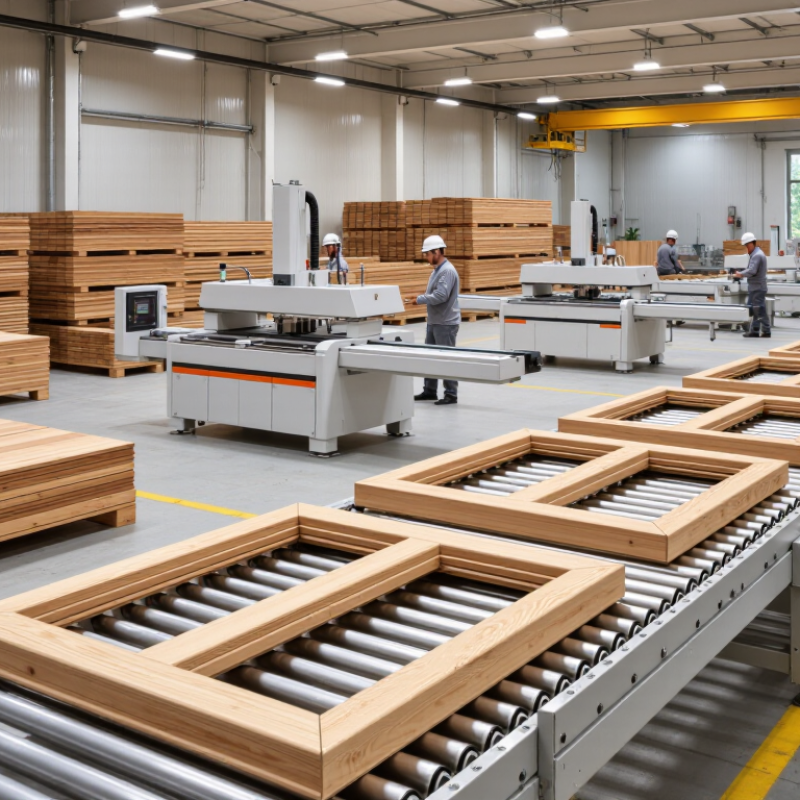
Table of Contents [Hide]
Wooden Window Frames in China: Timber Species, Components, and Manufacturing
Top Wooden Window Frame Suppliers in China
Wooden Window Frames in China: Timber Species, Components, and Manufacturing
In China, frames commonly use pine, fir, larch, and oak, selected for cost, grain, and exposure. Softwoods machine readily; denser hardwoods can hold crisp profiles but need careful drying. Species names alone tell little. Ask for the botanical name, source region, kiln-drying records, and shipment moisture readings. FAO’s Global Forest Resources Assessment 2020 estimates that forests cover 4.06 billion hectares worldwide, making documented timber sourcing an important part of supplier checks.
A sound frame is a system: stiles and rails, corner joints, glazing rebates, weather seals, drainage paths, and protective finishes. Finger-jointed or laminated stock can remove some defects, but adhesive control still matters. CNC machining improves repeatability; coating coverage and assembly tolerances still need inspection. The USDA Forest Products Laboratory’s Wood Handbook (FPL-GTR-282, 2021) places the fiber saturation point near 30% moisture content for many woods. Below that point, moisture changes can affect dimensions. Kiln schedules and acclimatization matter. One awkward truth: a perfect sample can hide uneven batch drying.
Tip: Request moisture readings from several frame sections. Check joint photos, coating records, and air- and water-resistance test reports for the same opening size.
| Category | Material or Component | Typical Details | Manufacturing or Sourcing Considerations |
|---|---|---|---|
| Timber species | Pine | Softwood commonly used for painted and stained window frames. Indicative density is approximately 450–550 kg/m³ at about 12% moisture content; values vary by species and grade. | Check the specified pine species, grading, knot limits, moisture content, and whether frame members are solid or laminated. |
| Timber species | Larch | Softwood with a comparatively dense structure; indicative density is approximately 550–650 kg/m³ at about 12% moisture content. Natural durability varies with species and heartwood content. | Confirm the timber grade and the intended exterior coating system; density and durability figures are indicative rather than guarantees of service life. |
| Timber species | Oak | Hardwood with a prominent grain; indicative density is approximately 600–750 kg/m³ at about 12% moisture content, depending on species and origin. | Check species identification, drying quality, movement allowances, and compatibility with the selected finish and hardware. |
| Timber species | Eucalyptus | Hardwood group with substantial variation between species; indicative density can be approximately 550–750 kg/m³ at about 12% moisture content. | Request the exact species and grade. Confirm drying, stability, and suitability for the specified frame section and exposure conditions. |
| Frame component | Stiles and rails | Vertical and horizontal members forming the main sash or frame structure. | Review section dimensions, corner-joint construction, timber continuity, and any laminated or finger-jointed construction shown in the specification. |
| Frame component | Mullions and transoms | Intermediate vertical and horizontal members that divide a frame or glazing area. | Confirm the layout, member sizes, and how the divisions affect glass sizes and the overall window configuration. |
| Frame component | Glazing beads and rebates | Beads retain glazing; rebates are the prepared sections that receive the glass or insulating glass unit. | Check that rebate dimensions suit the specified glazing build-up and that the glazing detail allows appropriate sealing and drainage. |
| Frame component | Sill and drip detail | The sill helps shed water away from the lower frame; a drip detail can reduce water tracking back underneath. | Review sill slope, end-grain protection, and connections to the surrounding wall and drainage details. |
| Sealing and hardware | Weather seals, gaskets, and hardware | Compression seals and gaskets help limit air and water passage; hinges, handles, and locking parts enable operation and closure. | Confirm compatibility among seals, sash design, hardware, and the specified opening type. Request test evidence when performance ratings are required. |
| Manufacturing | Timber drying and conditioning | Moisture content is controlled before machining and assembly. A range of about 8–12% is commonly specified for joinery, but the appropriate target depends on the service climate and project requirements. | Ask for the project moisture-content specification and documented checks; avoid treating one target range as suitable for every climate. |
| Manufacturing | Machining and corner joints | Profiles and joinery may be produced using CNC or conventional machining. Corner joints can include mortise-and-tenon or other engineered joints. | Check drawings, tolerances, joint fit, adhesive specification where applicable, and sample workmanship before production approval. |
| Manufacturing | Laminated or finger-jointed stock | Engineered timber sections are assembled from smaller pieces and may be used to form longer or more consistent frame members. | Request details of the timber grade, adhesive, joint locations, and suitability of the finished member for the intended exposure. |
| Finishing and quality control | Coating, sealing, and inspection | Exterior coatings protect exposed timber surfaces; end-grain sealing and careful coverage of joints are important parts of the finishing process. | Specify the coating system, colour, application process, and inspection criteria. Confirm that glass, seals, drainage paths, and hardware are checked before packing. |
| Note: Density figures are approximate reference ranges, not product guarantees. Timber properties vary by species, origin, grade, and moisture content. For supplier comparisons, request project-specific drawings, material specifications, samples, and relevant test documentation. | |||