
-
- Products
- Indoor Household Cords
- Appliance Cords
- General Purpose Short-Length Cords
- General Purpose Extension Cords
- Landscape & Decorating Cords
- Bright Color Extension Cords
- Oil-Resistant Extension Cords
- Cold-Flex Extension Cords
- VividFlex Power Cords
- EXTREME All-Weather Cords
- Cord Management
- Task Lights
- Adapters & GFCI Devices
- Where to Buy
- About
- Careers
- Glossary
- Catalog


What Is a Trailer Generator and How Does It Work?
What Is a Trailer Generator and How Does It Work? The answer begins with mobility. A Trailer Generator combines an engine, alternator, fuel system, control panel, and towable chassis. It can deliver electricity at construction sites, outdoor events, emergency work areas, and remote facilities.
Amy Davis, President of Cummins Power Systems, describes the central purpose clearly: “Power matters most when it is available where and when people need it.” This idea explains why trailer-mounted systems remain valuable. A diesel engine turns mechanical energy into rotation. The alternator converts that rotation into electrical power. The control panel regulates output, monitors temperature, and warns operators about overloads or low oil pressure.
Picture the equipment arriving behind a service truck. Steel supports carry the generator. A trailer axle absorbs road movement. Stabilizing jacks help keep the unit level. Thick cables then connect the generator to temporary distribution equipment or approved building connections.
The process sounds simple.
It is not always simple.
Choosing the wrong generator size can waste fuel or damage sensitive equipment. A unit rated for light tools may struggle with pumps, heaters, compressors, or medical systems. Noise, ventilation, grounding, weather protection, and towing limits also deserve careful attention. These details are sometimes treated as minor. They should not be.
A reliable explanation must admit one limitation: generator performance changes with altitude, temperature, maintenance, and electrical load. Therefore, understanding how a Trailer Generator works is only the beginning. Safe operation also requires accurate load calculations, proper inspection, and trained supervision. The machine creates portable power, but good planning makes that power dependable.
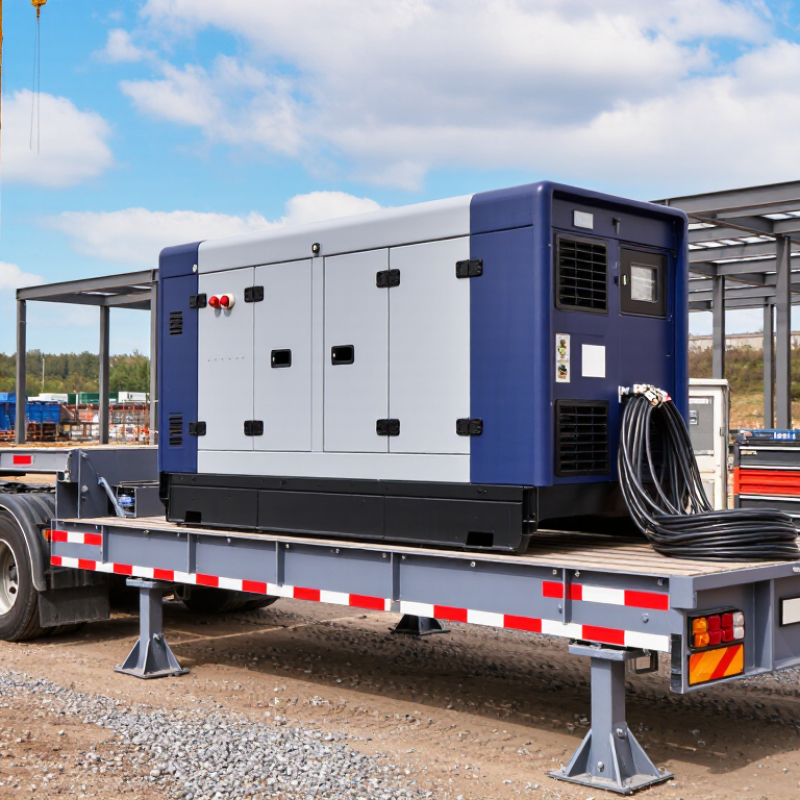
Table of Contents [Hide]
What Is a Trailer Generator?
A trailer generator is a mobile electrical generator built on a towable frame. It combines an engine, alternator, fuel system, control panel, and protective housing. A trailer hitch and axle let a suitable vehicle move it between work areas. These units support construction sites, outdoor events, emergency repairs, and temporary facilities.
The engine burns fuel and turns a shaft connected to the alternator. The alternator converts that mechanical motion into electrical energy. A voltage regulator helps maintain stable output for connected equipment. Operators usually connect cables through outlets or distribution panels. Grounding, ventilation, and correct cable sizing remain essential during setup. Never place the unit inside a closed building.
In practice, technicians inspect tires, hitch connections, oil levels, fuel lines, and warning lights before operation. They also compare the generator’s rated output with the equipment’s starting demand. Motors may need much more power during startup. That detail is easy to miss. A trailer generator is not simply a larger portable generator. Its weight, noise, exhaust, and towing requirements affect every placement decision. The term can also be confusing because some units power trailers, while others are generators mounted on trailers. Checking the specifications prevents expensive mistakes. Regular maintenance records improve reliability, although even a well-serviced unit can fail under extreme heat, dust, or overload.