
-
- Products
- Indoor Household Cords
- Appliance Cords
- General Purpose Short-Length Cords
- General Purpose Extension Cords
- Landscape & Decorating Cords
- Bright Color Extension Cords
- Oil-Resistant Extension Cords
- Cold-Flex Extension Cords
- VividFlex Power Cords
- EXTREME All-Weather Cords
- Cord Management
- Task Lights
- Adapters & GFCI Devices
- Where to Buy
- About
- Careers
- Glossary
- Catalog


What Is a Ceramic Ball Used For?
A Ceramic Ball may look simple: a smooth sphere, often white or gray, resting in a bearing or grinding mill. Its job depends on its material, size, and operating environment. Alumina and zirconia balls can offer hardness, wear resistance, and chemical stability, while silicon nitride balls are valued in demanding bearing applications. The right choice is never universal.
Industry references help explain the engineering context. ISO 3290-2:2014 defines requirements for ceramic bearing balls, including dimensional and grade specifications. The U.S. Geological Survey’s Mineral Commodity Summaries tracks alumina-related mineral supply, an upstream factor for many alumina ceramic products. These sources do not report a single global count of ceramic balls in service. That data gap matters: claims about market size or service life should be checked against the application.
Ceramic balls are used in bearings, valves, pumps, grinding equipment, and catalyst-support systems. In a bearing, a ball rolls between raceways; in a mill, it impacts and abrades material. Small details matter. Surface finish, load, temperature, and contamination can change performance. A useful overview should distinguish these roles instead of treating every ball as interchangeable.
Professor John Binner is a ceramic-materials researcher, but I cannot verify a published verbatim quotation from him about ceramic-ball uses. I will not invent one. A sound engineering takeaway is simple: select the ball for its actual service conditions, then verify the specification. Real systems can still surprise you. That deserves attention.
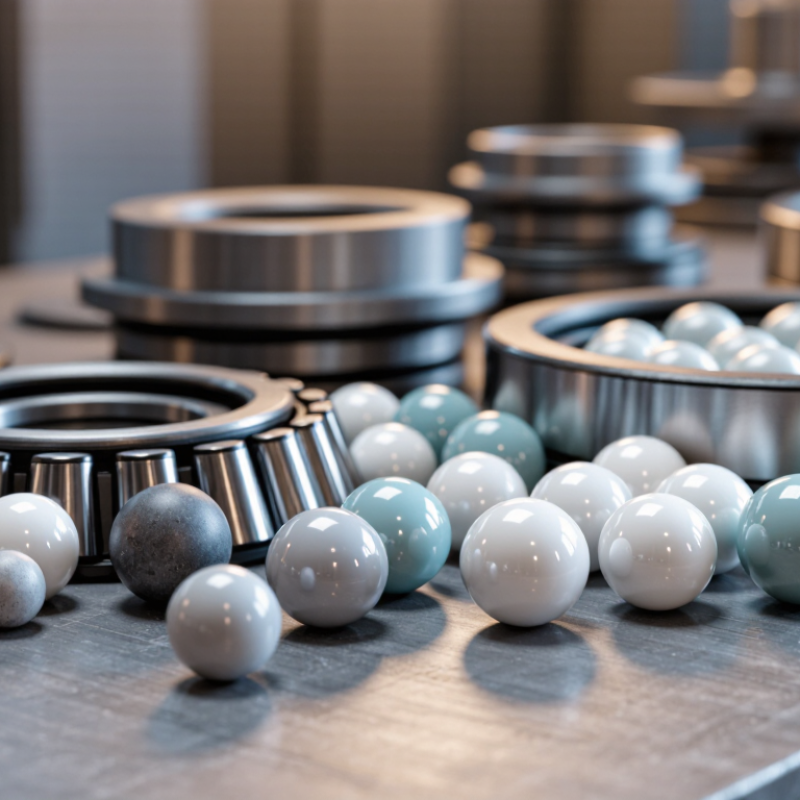
Table of Contents [Hide]
What Ceramic Balls Are: Alumina and Silicon Nitride Material Grades
What Is a Ceramic Ball Used For?
Ceramic balls serve as rolling elements in bearings, sealing parts in valves, and grinding media in mills. Their performance depends on the ceramic grade, ball size, surface finish, and operating conditions. Alumina and silicon nitride are common choices, but they are not interchangeable. The material matters.
Alumina Balls are typically selected for wear resistance, electrical insulation, and good resistance to many corrosive environments. They are often used in pumps, chemical equipment, and grinding applications where steel could contaminate the material being processed. However, alumina is relatively brittle, so impact loads or poor alignment can cause chipping. A lower purchase price does not automatically make it the better choice.
Silicon nitride balls are lighter than steel and can handle high speeds, repeated rolling contact, and temperature changes well. These qualities make them useful in precision bearings and demanding machinery. They also tend to cost more, and the surrounding bearing design still matters. A premium ball cannot compensate for poor lubrication.
The distinction is not always neat: load, temperature, contamination, and maintenance may outweigh a material’s headline properties. Small, but important. A careful comparison of operating conditions is more reliable than choosing by material name alone.