
-
- Products
- Indoor Household Cords
- Appliance Cords
- General Purpose Short-Length Cords
- General Purpose Extension Cords
- Landscape & Decorating Cords
- Bright Color Extension Cords
- Oil-Resistant Extension Cords
- Cold-Flex Extension Cords
- VividFlex Power Cords
- EXTREME All-Weather Cords
- Cord Management
- Task Lights
- Adapters & GFCI Devices
- Where to Buy
- About
- Careers
- Glossary
- Catalog


What Are Glasses With A Camera In Them?
Glasses With A Camera In Them are no longer a science-fiction curiosity. They are wearable computers with lenses, microphones, speakers, and a small imaging sensor. Some models capture photos, record short videos, answer questions, or provide hands-free navigation. Others mainly support calls and audio. The camera is only one part of the product.
Market data shows why this category deserves careful attention. Counterpoint Research reported strong year-on-year growth in global smart-glasses shipments during 2024, driven largely by camera-equipped products such as Ray-Ban Meta. Its analysis also suggests that everyday design matters more than futuristic appearance. People tend to use glasses that feel familiar, light, and socially acceptable. That finding matches practical experience: a device can perform well in testing but remain untouched if it feels awkward on the face.
IDC’s Worldwide Quarterly AR/VR Headset Tracker places smart glasses within a broader extended-reality market. However, conventional smart glasses and display-based AR glasses are not identical. This distinction is often overlooked. A camera model may show no digital images at all. It may simply record a first-person view or connect to a phone. Privacy remains a serious consideration. Visible recording indicators, clear user controls, and responsible data handling should guide product evaluation. Laws and workplace policies also differ by region, so users must check local requirements.
The category is still developing. Battery life, image quality, privacy signals, and repairability need improvement. This guide explains how these glasses work, what they can realistically do, and where marketing claims deserve skepticism. A camera does not automatically make glasses intelligent.
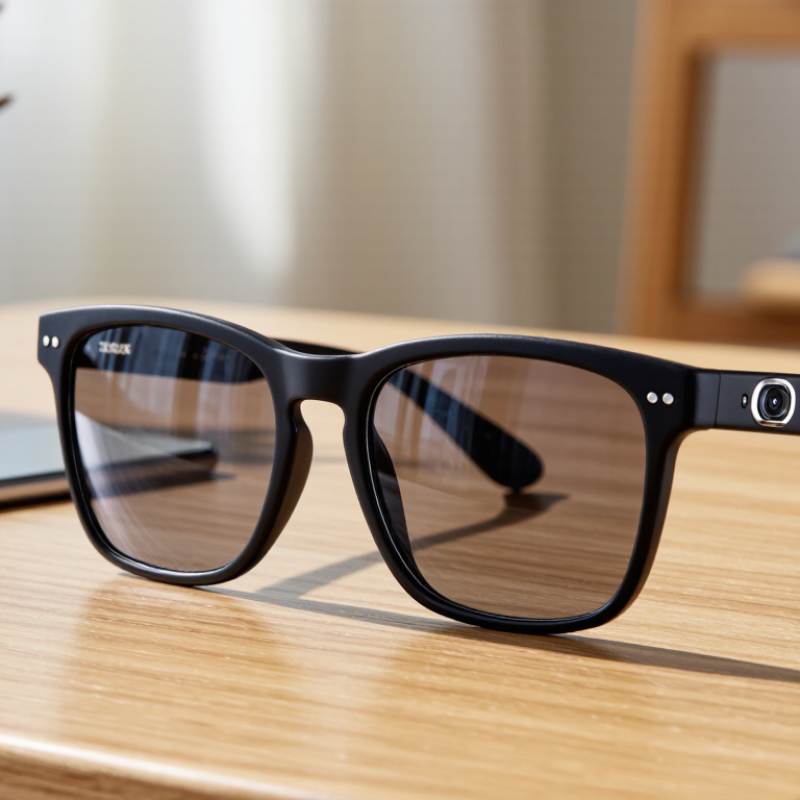
Table of Contents [Hide]
What Are Glasses With a Camera in Them?
What Are Glasses With a Camera in Them?
Glasses with a camera in them are wearable devices that combine vision correction or sun protection with a small imaging sensor. The camera usually sits near the frame hinge or bridge. It can capture photos, short videos, or hands-free audio notes. Some models use a phone connection for storage, processing, and sharing. A small indicator light may show when recording begins, but visibility can vary.
In practical use, these glasses can document a bike ride, a museum visit, or a repair task. They keep both hands available. I have found that camera position matters greatly. A slight head movement can change the framing. Bright outdoor scenes often look better than dim rooms. Battery life also depends on video quality, wireless activity, and weather.
They are not invisible recording tools. Responsible users should ask permission before filming people, especially in private spaces. Local privacy rules may differ, so checking them matters. Audio recording can create additional concerns. The glasses may feel natural after several hours, yet they can still look unusual to others. A camera cannot replace careful judgment. That part remains imperfect. Personally, I would treat them as a useful perspective-capture device, not a complete substitute for a phone or dedicated camera.