
-
- Products
- Indoor Household Cords
- Appliance Cords
- General Purpose Short-Length Cords
- General Purpose Extension Cords
- Landscape & Decorating Cords
- Bright Color Extension Cords
- Oil-Resistant Extension Cords
- Cold-Flex Extension Cords
- VividFlex Power Cords
- EXTREME All-Weather Cords
- Cord Management
- Task Lights
- Adapters & GFCI Devices
- Where to Buy
- About
- Careers
- Glossary
- Catalog


Why Are Portable Solar Panels For Camping So Popular?
Portable Solar Panels For Camping have become popular because they offer quiet, practical power away from electrical outlets. A folded panel beside a tent can recharge a phone, GPS device, camera, or small power station during daylight. Campers value this freedom, especially on multi-day trips, remote beaches, and crowded festivals. There is no fuel to carry. There is no engine noise.
Their appeal also comes from improving technology. Many current panels are lighter, more compact, and easier to connect than older models. A camper can place one on a picnic table, adjust its angle, and monitor charging through a power station display. However, performance depends on sunlight, shade, temperature, and panel orientation. A cloudy afternoon may produce much less energy than expected. Marketing numbers can also look better than real campsite results.
Practical experience suggests using a panel with a compatible battery and realistic energy demands. Check the voltage, wattage, connectors, and weather resistance before purchasing. Reliable manufacturers usually publish these specifications clearly. Independent reviews can reveal weaknesses, such as fragile stands or slow charging speeds. Even then, no system is perfect. Some campers may spend more money than they save, especially for short trips. Others may discover that their chosen panel cannot support a cooler or heated device. Portable solar power works best when treated as a helpful supplement, not an unlimited electricity source. That modest expectation makes camping safer, simpler, and more comfortable.
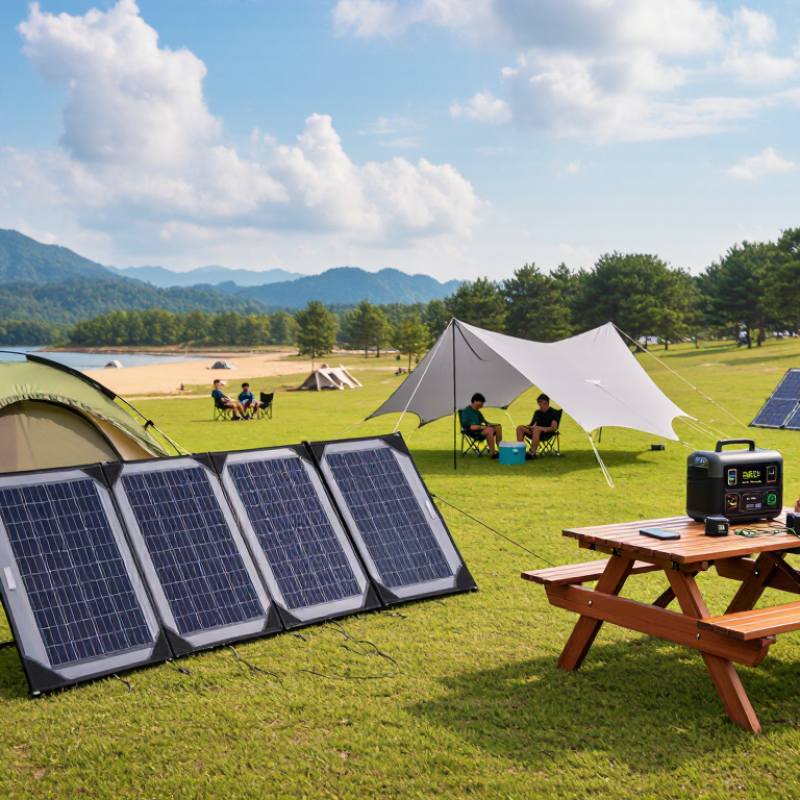
Table of Contents [Hide]
What Portable Solar Panels for Camping Are and How They Work
Portable solar panels for camping are foldable photovoltaic devices that turn sunlight into usable electricity.
They work through solar cells, which release electrical energy when light hits them. The panel produces direct-current power. A charge controller manages that power before it reaches a battery or device. It helps prevent overcharging and unstable voltage. The battery stores electricity for nighttime use. That matters after sunset.
A practical setup may include a panel, cables, a controller, a battery, and output ports. Place the panel in direct sunlight, facing the brightest part of the sky. Even a thin branch can reduce its output. Cloud cover, dust, and high temperatures can also lower performance.
The wattage printed on a panel describes laboratory conditions, not every campsite. Real results vary.
Campers commonly use stored power for lights, phones, cameras, and navigation equipment. Portable systems are quiet and avoid carrying fuel. However, portable does not mean effortless. A small panel may support basic charging but struggle with several devices. If energy use exceeds solar input, the battery will eventually empty. Testing the system at home can reveal weak cables or unsuitable connections. It is easy to overestimate performance. Careful planning makes the setup more dependable, though weather can still change the result.