
-
- Products
- Indoor Household Cords
- Appliance Cords
- General Purpose Short-Length Cords
- General Purpose Extension Cords
- Landscape & Decorating Cords
- Bright Color Extension Cords
- Oil-Resistant Extension Cords
- Cold-Flex Extension Cords
- VividFlex Power Cords
- EXTREME All-Weather Cords
- Cord Management
- Task Lights
- Adapters & GFCI Devices
- Where to Buy
- About
- Careers
- Glossary
- Catalog


Why Choose a Welded Ball Valve?
Choosing a Welded Ball Valve is often a decision about long-term system integrity, not appearance. In pipelines, terminals, and process plants, every connection can become a maintenance concern. A fully welded body removes many external bolted joints. It can also reduce potential leak paths around the valve shell. That matters where buried pipelines, vibration, and restricted access make repairs expensive.
Industry data supports careful valve selection. The International Energy Agency’s Global Methane Tracker 2024 reports that around 75% of methane emissions from fossil fuel operations could be reduced with existing measures. Reliable isolation valves form part of that wider emissions-control effort. API Specification 6D and ISO 15848 also emphasize pressure containment, functional testing, and fugitive-emission performance. These standards do not make every valve suitable. Design details still decide the result.
A Welded Ball Valve can offer a compact, robust solution for high-pressure transmission and distribution systems. Its continuous welded body may resist external corrosion better than a larger bolted assembly. Field experience also shows fewer exposed joints can simplify pipeline protection and inspection. However, welded construction is not automatically better. Poor welding, inadequate heat treatment, or weak quality control can create serious risks. The American Society of Mechanical Engineers’ B16.34 standard highlights the importance of pressure-temperature ratings, materials, and testing. Buyers should examine welding procedures, non-destructive examination records, coating systems, and actuator compatibility. Installation quality matters too. A strong valve can still fail in a poorly supported pipeline. That uncomfortable detail deserves attention. The right choice combines certified design, traceable manufacturing, practical maintenance planning, and service-specific engineering.
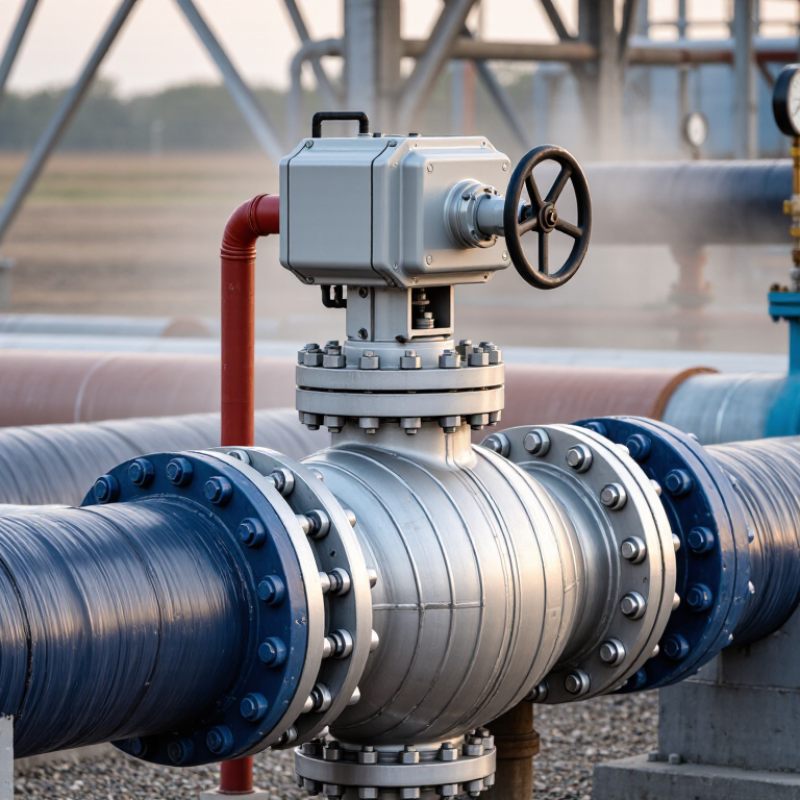
Table of Contents [Hide]
What Is a Welded Ball Valve?
A welded ball valve is a quarter-turn isolation valve with a spherical closure element. The sphere contains a drilled passage. When aligned, it allows fluid to flow with limited resistance. A 90-degree rotation blocks the passage. In pipeline applications, “welded” usually means the valve body or pipe ends are welded into the line. This differs from a flanged valve, which uses bolts and gaskets for connection.
The design creates a continuous pressure boundary with fewer external leak paths. API 6D and ISO 14313 provide widely used requirements for pipeline valve design, testing, and functional performance.
The IEA’s Global Methane Tracker 2024 estimates that fossil fuel operations released more than 120 million tonnes of methane in 2023.
Its findings underline why reliable sealing deserves careful attention. A welded connection can help reduce flange-related leakage, but it cannot prevent seat, stem, or weld defects. That distinction matters.
In field practice, technicians inspect welds using approved nondestructive testing methods. They also check alignment, coating integrity, cavity pressure, and seat compatibility. A buried valve needs special planning. Repairs may require isolation, excavation, and extended downtime.
Not maintenance-free. That assumption deserves review.
Selection should match pressure class, temperature, fluid properties, actuation needs, and future access requirements. A welded ball valve can offer durable service, but only when installation quality and inspection discipline support its design.