
-
- Products
- Indoor Household Cords
- Appliance Cords
- General Purpose Short-Length Cords
- General Purpose Extension Cords
- Landscape & Decorating Cords
- Bright Color Extension Cords
- Oil-Resistant Extension Cords
- Cold-Flex Extension Cords
- VividFlex Power Cords
- EXTREME All-Weather Cords
- Cord Management
- Task Lights
- Adapters & GFCI Devices
- Where to Buy
- About
- Careers
- Glossary
- Catalog


Why Choose an Electric Fireplace TV Console?
An Electric Fireplace Tv Console combines a media stand, an electric heater, and a flame-effect display in one piece of furniture. For households short on floor space, it can place a television, game console, and seasonal warmth in a single footprint. The appeal is practical: imagine settling in on a cold evening, with cables tucked behind the cabinet and a soft flame effect visible across the room. No wood, ash, or chimney is involved.
The U.S. Energy Information Administration’s 2020 Residential Energy Consumption Survey reports that space heating accounted for about 42% of household site energy use. That figure puts comfort choices in perspective, but it does not mean a fireplace console will reduce a home’s energy bill. Electric resistance heaters turn nearly all the electricity they consume into heat at the point of use, according to the U.S. Department of Energy’s Energy Saver guidance. Operating cost still depends on local electricity rates, heater wattage, room size, and how long the unit runs.
There are trade-offs. A console heater is generally best for supplemental warmth, not as a replacement for a home’s main heating system. Before buying, check the console’s dimensions, the television’s weight limits, the heater’s rated output, and the manufacturer’s clearance instructions. Look for recognized safety certification, too. A bright flame effect may look convincing in a showroom, yet finish quality and storage space vary widely. The right choice should fit the room—and your actual routine.
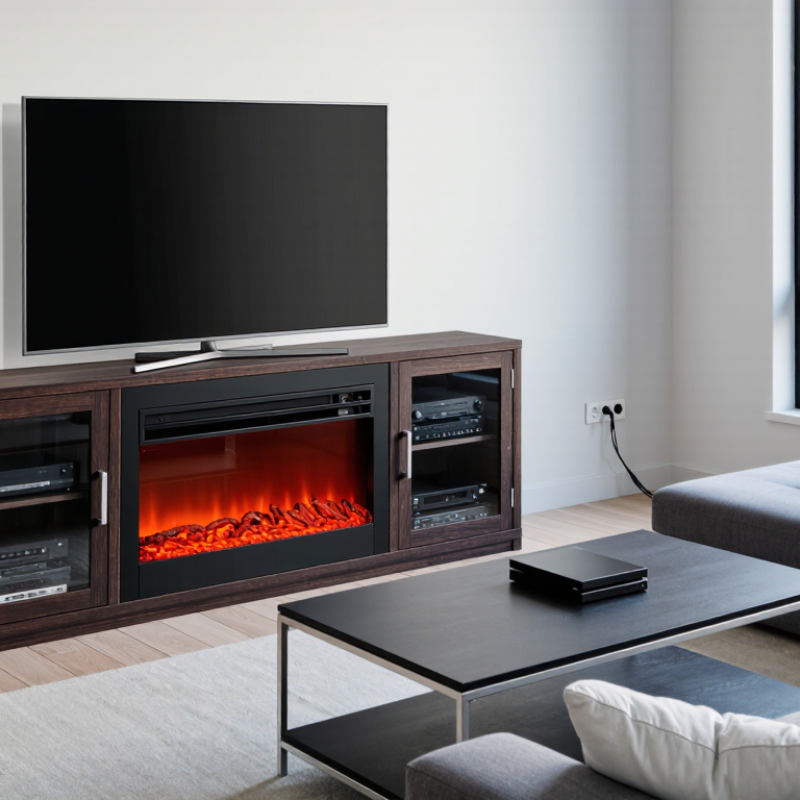
Table of Contents [Hide]
What an Electric Fireplace TV Console Is
An electric fireplace TV console is a piece of living-room furniture that combines a television stand with an electric fireplace insert. The console usually has a broad top for a TV, shelves or cabinets for media equipment, and a viewing window that displays simulated flames. Some models add heat; others provide the flame effect without warming the room. Check the product specifications, because features vary.
The insert creates its flame effect with lighting and other components, rather than a wood-burning fire. When a heater is included, it typically warms a nearby area, so it may supplement a room’s heating rather than replace it. Controls may be built into the unit or operated remotely. Keep ventilation openings clear, and follow the instructions for spacing around the console and television. Small details matter. A glossy screen can catch reflections from the flame display, and a console that looks spacious online may feel crowded once devices and cables are added. Measure your TV and available floor space before choosing; I would not assume every setup fits neatly. That extra check can save frustration.