
-
- Products
- Indoor Household Cords
- Appliance Cords
- General Purpose Short-Length Cords
- General Purpose Extension Cords
- Landscape & Decorating Cords
- Bright Color Extension Cords
- Oil-Resistant Extension Cords
- Cold-Flex Extension Cords
- VividFlex Power Cords
- EXTREME All-Weather Cords
- Cord Management
- Task Lights
- Adapters & GFCI Devices
- Where to Buy
- About
- Careers
- Glossary
- Catalog


Why Choose Carbon Steel Shafts for Global Sourcing?
Global sourcing demands more than a competitive quotation. It requires predictable performance, clear documentation, and dependable communication. A Carbon Steel Shaft can meet these needs when engineers select the grade and process carefully. Its strength, machinability, and broad industrial availability support many applications, including pumps, conveyors, agricultural equipment, and transmission assemblies. The steel also allows practical customization. Diameter, keyways, threads, shoulders, and surface finishes can match specific drawings.
Experienced buyers know that material choice alone does not guarantee quality. Suppliers should provide material certificates, dimensional inspection reports, and traceability records. Heat treatment must match the required hardness and loading conditions. For example, a shaft may need a hardened surface while retaining a tougher core. Sampling can reveal machining marks, runout, or unexpected distortion before full production begins. Small details matter.
Global projects also benefit from established production methods and accessible replacement material. Carbon steel is often easier to machine and repair than more specialized alloys. However, it is not automatically the best solution. Moisture, chemicals, and outdoor storage can cause corrosion. Protective coatings, proper packaging, and realistic service calculations remain essential. No material is perfect. That assumption deserves review. Buyers should compare total cost, not only the unit price. Freight, inspection, lead time, and failure risk can change the decision. With verified specifications and transparent supplier controls, Carbon Steel Shaft sourcing becomes a measurable engineering choice rather than a guess.
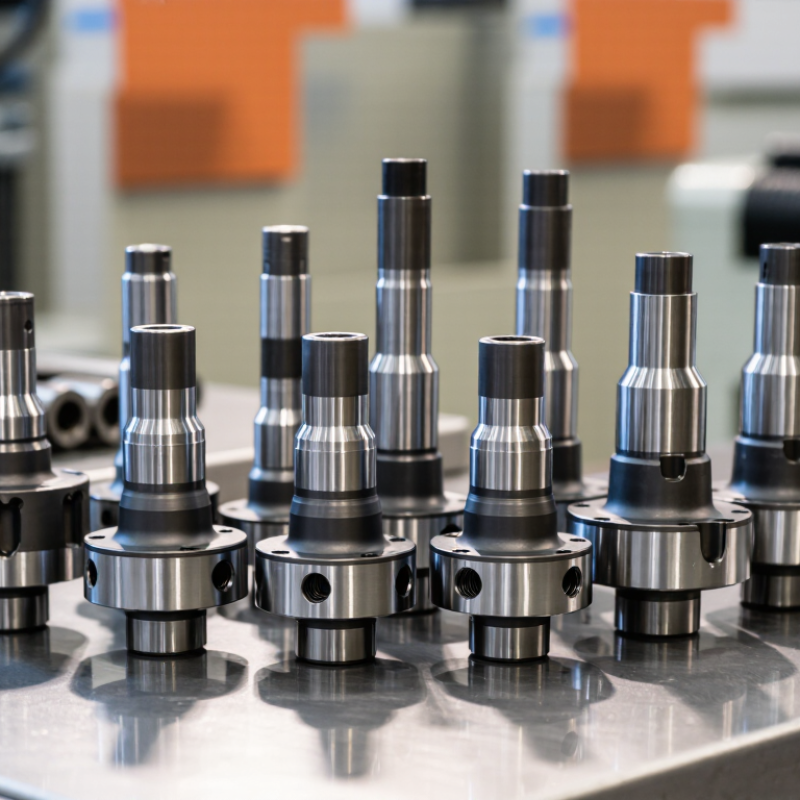
Table of Contents [Hide]
What Are Carbon Steel Shafts?
Carbon steel shafts are cylindrical machine components made mainly from iron and carbon. They transmit torque, support rotating loads, or guide moving parts. Carbon content commonly ranges from about 0.05% to 1.00%, depending on the grade and application. Manganese and small alloying additions can improve strength and machinability.
Common shaft grades include 1018 for easy machining and 1045 for higher strength. Heat treatment changes hardness, toughness, and wear resistance.
ASTM A108/A108M provides requirements for cold-finished carbon and alloy steel bars, often used as shaft stock. A shaft is not defined by appearance alone. Its diameter, straightness, keyway accuracy, surface finish, and runout require inspection.
Global sourcing benefits from broad steel availability. The World Steel Association reported approximately 1.89 billion tonnes of crude steel production in 2023. This supports diverse supply channels, but availability does not guarantee consistency. Suppliers should provide material test certificates, hardness results, dimensional records, and heat-treatment details. The U.S. Geological Survey also reported about 2.5 billion tonnes of global iron ore production in 2023, reflecting a substantial raw-material base.
There is a trade-off. The International Energy Agency identifies iron and steel as responsible for roughly 7% of global energy-related emissions. Recycled content and efficient processing can reduce impact, but documentation may be incomplete. A practical sourcing review should verify chemistry, mechanical properties, batch traceability, and packaging protection. One overlooked detail can damage a shaft before installation.