-
- Products
- Indoor Household Cords
- Appliance Cords
- General Purpose Short-Length Cords
- General Purpose Extension Cords
- Landscape & Decorating Cords
- Bright Color Extension Cords
- Oil-Resistant Extension Cords
- Cold-Flex Extension Cords
- VividFlex Power Cords
- EXTREME All-Weather Cords
- Cord Management
- Task Lights
- Adapters & GFCI Devices
- Where to Buy
- About
- Careers
- Glossary
- Catalog


Why Choose Mechanical Flanges for Global Industrial Projects?
Global industrial projects demand connections that remain dependable across changing climates, suppliers, and maintenance practices. A Mechanical Flange offers a practical solution when equipment must be assembled, inspected, and serviced repeatedly. Its bolted design supports controlled installation and easier replacement than many permanent joining methods. That matters.
Field experience shows that flange performance depends on more than material strength. Engineers must review pressure ratings, temperature ranges, corrosion exposure, bolt loads, gasket selection, and pipe alignment. A carbon steel flange may suit a protected plant area, while stainless steel or specialized alloys may perform better near seawater or aggressive chemicals. Details decide.
International projects also require careful coordination between drawings, procurement documents, and recognized standards such as ASME, EN, or ISO requirements. The selected Mechanical Flange should match the governing design code, connection dimensions, testing procedures, and local project specifications. Certificates, traceability records, and independent inspections can reduce uncertainty before shipment and installation.
Still, no flange choice is universally correct. A familiar product can fail when its rating, facing type, or gasket system is misunderstood. This is where qualified engineers, experienced fabricators, and reliable suppliers add measurable value. Their reviews can identify tolerance problems, coating limitations, and delivery risks before they affect construction. A small assumption can become an expensive lesson.
This article examines why Mechanical Flange systems remain valuable for global industrial projects. It considers technical reliability, lifecycle maintenance, supply-chain practicality, and responsible specification. The goal is not to promote one material or standard, but to support decisions based on verified project conditions and documented engineering judgment.
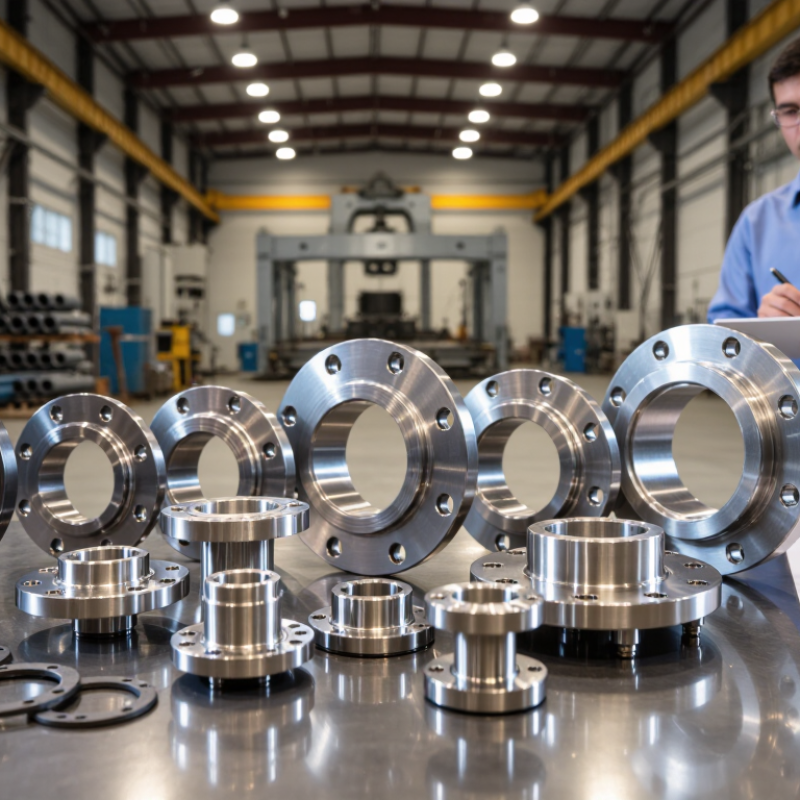
Table of Contents [Hide]
ASME B16.5 Classes 150–2500: Matching Flanges to Design Pressure
Why Choose Mechanical Flanges for Global Industrial Projects?
Mechanical flanges support global projects because they allow inspection, replacement, and controlled bolting. They also simplify maintenance around pumps, valves, and pressure vessels. ASME B16.5 covers nominal sizes and pressure classes from 150 to 2500. However, the class number is not a direct pressure value. Never choose by class alone.
Class 150 may suit moderate services, while Class 2500 supports demanding pressure systems. The actual rating depends on flange material, design temperature, corrosion allowance, and gasket selection. For example, carbon steel ratings can fall sharply at elevated temperatures. Engineers should compare process pressure with the pressure-temperature tables, then verify bolts and mating components.
The 2016 NACE IMPACT study estimated global corrosion costs at 2.5 trillion dollars annually, equal to 3.4% of global GDP. Poor flange selection can increase leakage risks and maintenance exposure.
Tips:
Record pressure, temperature, fluid chemistry, and flange material before selecting a class. Check the piping code and require certified material records. In field work, uneven bolt tightening remains a frequent weakness. A calibrated torque tool helps, but it does not replace alignment checks. One detail is often missed: thermal cycling can loosen an apparently correct joint. Recheck the design assumptions. Улар