-
- Products
- Indoor Household Cords
- Appliance Cords
- General Purpose Short-Length Cords
- General Purpose Extension Cords
- Landscape & Decorating Cords
- Bright Color Extension Cords
- Oil-Resistant Extension Cords
- Cold-Flex Extension Cords
- VividFlex Power Cords
- EXTREME All-Weather Cords
- Cord Management
- Task Lights
- Adapters & GFCI Devices
- Where to Buy
- About
- Careers
- Glossary
- Catalog


Why Choose Stainless Steel Welded Pipe?
Why Choose Stainless Steel Welded Pipe?
Stainless Steel Welded Pipe is widely used where durability, hygiene, and consistent performance matter. It is formed by rolling stainless steel strip and joining the seam with controlled welding. The result is a practical pipe for water systems, food processing, chemical equipment, and architectural projects.
Its smooth inner surface can reduce deposits and simplify cleaning. Many grades also resist rust, moisture, and temperature changes better than ordinary carbon steel. In a food facility, this may mean fewer rough areas around tanks, pumps, and transfer lines. In construction, the bright surface can provide a clean appearance without heavy coating maintenance.
The weld seam deserves attention. Modern production can produce accurate dimensions and reliable joints, but quality depends on material grade, welding control, heat treatment, and inspection. Buyers should review test reports, surface condition, wall thickness, and applicable standards before placing an order. A polished pipe is not automatically a safe pipe.
No material fits every project. Stainless steel can cost more at the beginning, and unsuitable grades may suffer in chloride-rich or highly acidic environments. It is easy to praise stainless steel too quickly. Engineers still need to examine fluid chemistry, pressure, temperature, installation methods, and maintenance plans. Small details matter.
With informed selection and qualified manufacturing, Stainless Steel Welded Pipe can offer long service life and stable operating value. The best choice is not always the cheapest option. It is the one supported by clear specifications, traceable quality records, and practical engineering judgment.
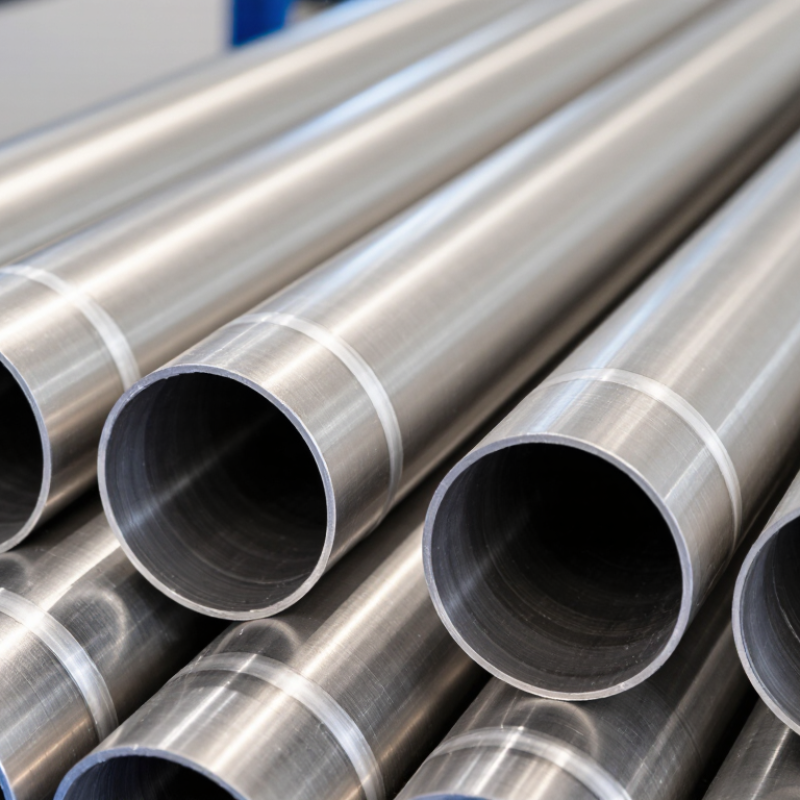
Table of Contents [Hide]
What Is Stainless Steel Welded Pipe?
Stainless steel welded pipe is made by forming a flat strip or sheet into a round shape, then joining its edges along a continuous seam. The seam is commonly created with an electric welding process. After welding, the pipe may be sized, straightened, and finished to meet specified dimensions. That is the basic idea. The details matter.
The finished pipe is not defined by its seam alone. Its stainless steel grade, wall thickness, surface condition, and production checks all affect where it can be used. For example, a pipe carrying water in a clean indoor system faces different conditions from one exposed to salt spray or cleaning chemicals. Corrosion resistance depends on both the alloy and the environment. A shiny surface is not proof of suitability.
Welded pipe often offers consistent dimensions and efficient production for many industrial and architectural applications. Its longitudinal seam should be evaluated against the service requirements, especially where pressure, temperature, or hygiene is important. Specifications may call for weld inspection, dimensional checks, or surface treatment. It is worth checking these details. The word “stainless” can sound reassuring, but it does not mean maintenance-free or immune to corrosion.