
-
- Products
- Indoor Household Cords
- Appliance Cords
- General Purpose Short-Length Cords
- General Purpose Extension Cords
- Landscape & Decorating Cords
- Bright Color Extension Cords
- Oil-Resistant Extension Cords
- Cold-Flex Extension Cords
- VividFlex Power Cords
- EXTREME All-Weather Cords
- Cord Management
- Task Lights
- Adapters & GFCI Devices
- Where to Buy
- About
- Careers
- Glossary
- Catalog


Why Are Drilling Chemicals Important for Oil and Gas?
A well does not drill through uniform rock. It crosses changing formations, pressure zones, and layers that can react with water. Drilling Chemicals help operators manage these conditions by shaping fluid density, controlling filtration, reducing friction, and supporting the borehole wall. Their effects show up in practical details: stable cuttings at the shale shaker, smoother circulation through the drill string, and fewer delays caused by unstable formations.
Dr. M. E. Chenevert’s published research on shale stability offers a useful technical lens. A careful paraphrase of its relevance—not a verbatim quotation—is: “The drilling fluid must be designed for the rock it meets, not just the hole it fills.” That distinction matters. A fluid that performs well in one formation may cause swelling, dispersion, or poor hole cleaning in another. No chemical is a magic fix.
The right formulation depends on well data, laboratory testing, field observations, and regular fluid monitoring. Engineers track measurements such as density, viscosity, and fluid loss, then adjust treatment as conditions change. Small changes can matter. An unexpected rise in viscosity, for example, may signal changing solids content or a need to review the fluid program. Chemical selection also involves trade-offs among performance, handling, environmental conditions, and cost. Results are not automatic; they depend on sound design and careful execution. Understanding these functions explains why Drilling Chemicals are central to safe, efficient, and reliable oil and gas drilling.
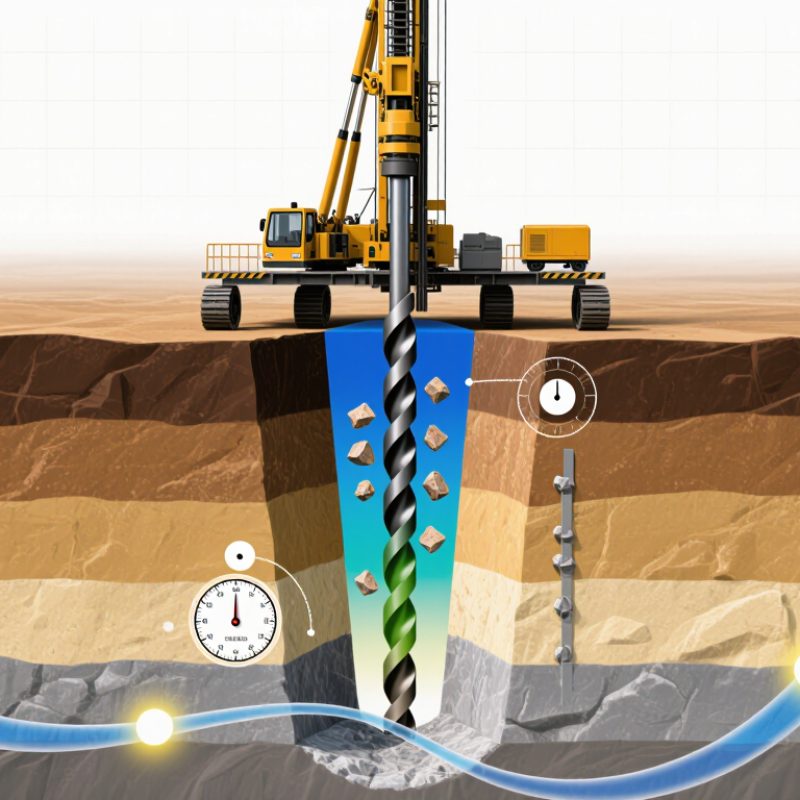
Table of Contents [Hide]
What Drilling Chemicals Are and How They Work
Drilling chemicals are ingredients in a circulating fluid, not a single product. Water, clay, polymers, salts, and weighting minerals are blended to match the rock and well conditions. The fluid carries cuttings up the annulus, cools the bit, and helps control pressure. Small doses matter. Viscosifiers help suspend cuttings when pumps stop; filtration-control additives form a thin cake on the borehole wall, limiting fluid loss. The API’s Recommended Practice 13B-1 sets field tests for properties such as density, rheology, and filtration, helping crews check whether the mud is behaving as intended.
The chemistry shifts as the well deepens. A heavier fluid may help balance formation pressure, while a thinner fluid can reduce pumping resistance. EPA’s 2016 assessment catalogued 1,606 chemicals reported in hydraulic-fracturing fluids from 2005 to 2013. That figure concerns fracturing fluids, not Drilling Muds, and should not be treated as a count of drilling additives. That distinction matters. In practice, drilled solids, temperature, and water chemistry can change fluid performance faster than a tidy formula suggests. Even routine measurements need interpretation: a reading may look acceptable while cuttings still settle in a quiet section of the hole.