
-
- Products
- Indoor Household Cords
- Appliance Cords
- General Purpose Short-Length Cords
- General Purpose Extension Cords
- Landscape & Decorating Cords
- Bright Color Extension Cords
- Oil-Resistant Extension Cords
- Cold-Flex Extension Cords
- VividFlex Power Cords
- EXTREME All-Weather Cords
- Cord Management
- Task Lights
- Adapters & GFCI Devices
- Where to Buy
- About
- Careers
- Glossary
- Catalog


Why Use an Air Humidity Sensor?
Why Use an Air Humidity Sensor?
Humidity is invisible, but its impact is everywhere. It affects breathing comfort, product quality, energy use, and equipment reliability. An Air Humidity Sensor converts that hidden condition into measurable data. This helps people respond before moisture causes damage.
Dr. Vilho Väisälä, the founder of Vaisala and a pioneer in atmospheric measurement, emphasized a practical principle: “Accurate measurement is the foundation of reliable decisions.” His work shaped modern humidity monitoring, especially in weather observation and industrial environments. Today, the same principle applies in homes, laboratories, warehouses, museums, and manufacturing plants.
Consider a storage room with cardboard boxes near a cold wall. Condensation may appear slowly, while paper softens and metal begins to corrode. A properly placed Air Humidity Sensor can reveal rising relative humidity early. Automated ventilation or dehumidification can then reduce the risk.
Small details matter.
Sensor placement, calibration, airflow, and temperature compensation all influence the reading. A cheap device may show a number, but not always a trustworthy one. That is an uncomfortable limitation worth admitting. Even advanced sensors require maintenance and periodic verification.
Using an Air Humidity Sensor is not merely about collecting data. It supports safer decisions, steadier processes, and better resource control. The value becomes clearest when the sensor helps prevent a problem nobody can see.
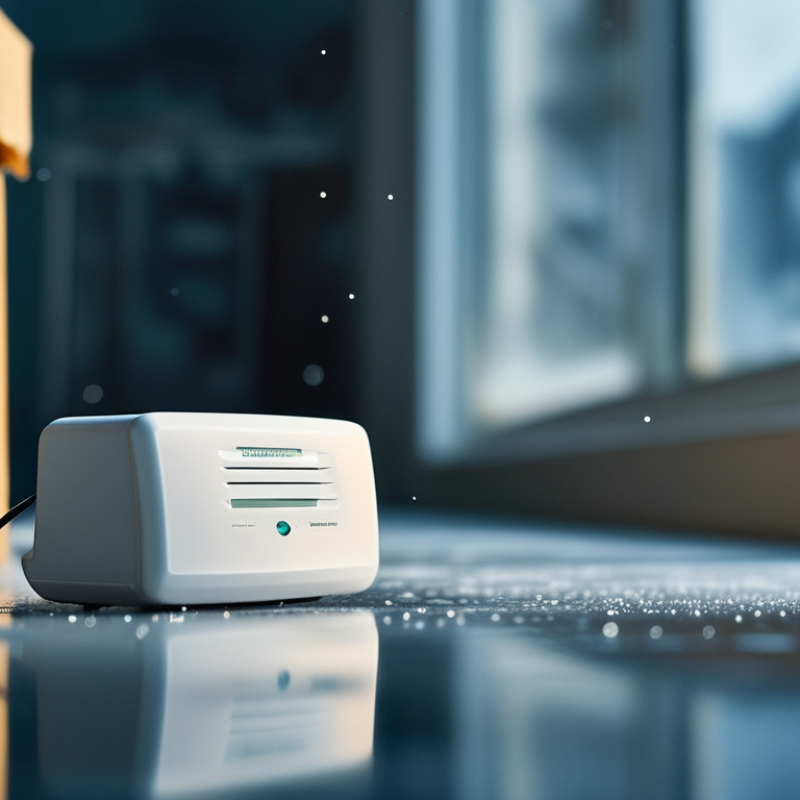
Table of Contents [Hide]
What an Air Humidity Sensor Measures
Why Use an Air Humidity Sensor?
An air humidity sensor measures moisture in the surrounding air. Its primary reading is relative humidity, shown as a percentage. Relative humidity compares current moisture with the maximum moisture air can hold at that temperature. Temperature matters greatly. The same room can show different humidity readings after heating or cooling.
Many sensors also measure air temperature and calculate dew point. Dew point indicates when moisture may condense on windows, pipes, or chilled surfaces. A high dew point can make a room feel sticky. A low dew point may cause dry skin, static electricity, or cracking wood. The U.S. Environmental Protection Agency recommends keeping indoor relative humidity between 30% and 50%. This range is practical, not perfect. Building materials, ventilation, and outdoor weather can change the result.
The sensor does not measure mold, comfort, or air cleanliness directly. It measures moisture conditions linked to those concerns. The World Health Organization connects indoor dampness with respiratory health risks, while ASHRAE Standard 55 treats humidity as one factor in thermal comfort. Placement also affects accuracy. A sensor beside a humidifier may report a false picture. That assumption is easy to miss. In real use, readings should be compared across rooms and over time. Calibration matters, too, because inexpensive devices can drift. A small display can reveal a large problem.