
-
- Products
- Indoor Household Cords
- Appliance Cords
- General Purpose Short-Length Cords
- General Purpose Extension Cords
- Landscape & Decorating Cords
- Bright Color Extension Cords
- Oil-Resistant Extension Cords
- Cold-Flex Extension Cords
- VividFlex Power Cords
- EXTREME All-Weather Cords
- Cord Management
- Task Lights
- Adapters & GFCI Devices
- Where to Buy
- About
- Careers
- Glossary
- Catalog


What Are the Best Long Extension Cords in 2026?
Choosing the best long extension cords in 2026 means matching the cord to the job, not simply buying the longest one. A workshop table saw, a garden trimmer, and a desk lamp place very different demands on a cord. Length, wire gauge, amperage rating, grounding, and indoor or outdoor labeling all matter. A thicker conductor can help limit voltage drop over longer runs, but it cannot make an overloaded circuit safe. Small details count.
Safety data deserves attention, too. The U.S. Consumer Product Safety Commission has long cited an estimate of about 3,300 residential fires each year involving extension cords. That figure is not a 2026 product comparison, and it should not be treated as one. It does underline why cord condition, load limits, and proper use belong in any buying guide. The National Fire Protection Association also tracks fires involving electrical distribution and lighting equipment, offering broader context on household electrical risks.
This guide compares cord types by practical features: length, gauge, outlet design, jacket durability, and recognized safety certification. It also considers how cords perform in real settings, from a damp patio to a crowded garage. There is no perfect pick for every setup. A heavy-duty cord may be awkward indoors, while a lighter cord may not suit power-hungry tools. Check the appliance label and the cord’s rating before choosing. Some advice can feel overly cautious, but replacing guesswork with a few label checks is worth it.
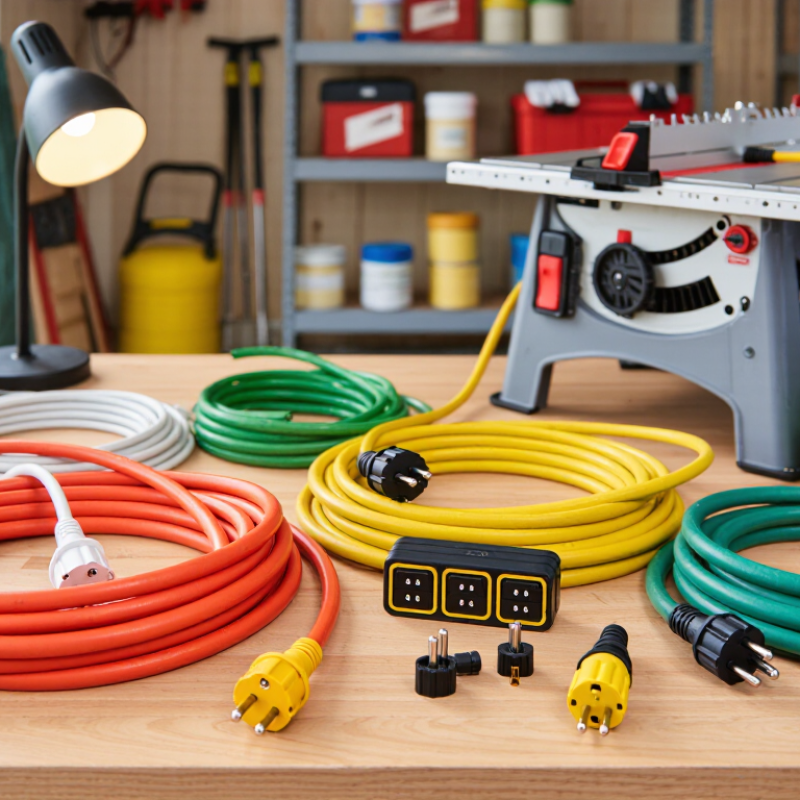
Table of Contents
[Hide]
How Extension-Cord Ratings Work: 120 V, 15 A, and 20 A Circuits
What Are the Best Long Extension Cords in 2026?
The best long extension cord matches the circuit, appliance, and distance. A 120-volt, 15-amp circuit supplies 1,800 watts theoretically. A 20-amp circuit supplies 2,400 watts. Continuous loads should remain near 80% of capacity: about 1,440 watts on 15 amps and 1,920 watts on 20 amps. Heat builds quietly when these limits are ignored.
Cord length adds resistance and voltage drop. A 100-foot cord can make a heater, saw, or compressor start poorly. Thicker conductors reduce that loss, but the cord still cannot increase circuit capacity. Check the cord label for voltage, amperage, wire gauge, and indoor or outdoor approval. A 20-amp plug must not enter a 15-amp receptacle. Never judge safety by thickness alone.
The Electrical Safety Foundation International reports about 3,300 residential fires annually involving extension cords. That figure makes selection more serious than convenience. In practical checks, I trace the cord from the outlet to the load. I also feel for unusual warmth after several minutes. Warm is a warning.
I have seen people choose a longer cord simply because it reached farther. That is convenient, but not always correct. Match the cord’s rating to the appliance’s demand, not just the circuit breaker. Avoid connecting cords together, especially outdoors or near wet ground. A recognized testing laboratory’s certification mark helps, yet it does not correct an overloaded circuit.
What Are the Best Long Extension Cords in 2026?
The best long extension cord depends on circuit rating, conductor size, cord length, load type, and outdoor exposure. Use the cord's printed rating as the final authority; the guidance below is a practical comparison for standard North American 120-volt circuits.
| Recommended Cord Configuration | Typical Length | Conductor Size | Typical Rated Current | Best Use | Why It Is a Good Choice | Important Limitation |
|---|---|---|---|---|---|---|
| Light-duty indoor cord | 6–25 ft | 16 AWG | Up to approximately 13 A when marked for that rating | Lamps, chargers, small fans, and low-power electronics | Flexible and easy to store for relatively small loads | Not intended for heaters, compressors, large power tools, or continuous high-current loads |
| General-purpose household cord | 25–50 ft | 14 AWG | Commonly rated around 15 A, subject to the cord marking | Vacuum cleaners, small lawn equipment, and moderate-duty appliances | Provides a useful balance between flexibility, capacity, and voltage-drop control | Longer lengths and high-wattage loads require careful checking of the rating |
| Heavy-duty 15-amp cord | 25–100 ft | 12 AWG | Commonly rated for 15 A or more, depending on construction and certification | Table saws, circular saws, shop vacuums, and demanding outdoor equipment | Larger conductors generally reduce voltage drop over long distances | Do not exceed the lowest rating printed on the cord, plug, receptacle, or equipment |
| 20-amp professional-use cord | 25–100 ft | 12 AWG or larger | 20 A only when specifically marked and fitted with 20-A-rated components | Equipment designed for a 20 A, 120 V branch circuit | Suitable for higher-current loads when the complete electrical system supports 20 A | A standard 15-A household receptacle and plug must not be treated as a 20-A connection |
| Outdoor-rated cold-weather cord | 25–100 ft | 12–14 AWG, depending on load | Use the exact current rating printed on the cord | Outdoor tools, seasonal equipment, and construction-site applications | Jackets made for outdoor conditions resist moisture, sunlight, and temperature changes better than indoor cords | Outdoor use still requires ground-fault protection and protection from standing water |
| Low-voltage-drop long-run cord | 50–100 ft | 12 AWG or larger | Based on the cord's listed rating and the connected equipment | High-starting-current motors, compressors, pumps, and demanding power tools | Lower conductor resistance helps limit voltage drop and motor-starting problems | Increasing conductor size does not increase the rating of the household circuit |
| Electrical Rating | What It Means | Maximum Theoretical Power | Practical Continuous-Load Planning Level | Typical Applications | Selection Guidance |
|---|---|---|---|---|---|
| 120 V | The nominal voltage supplied by the circuit in many North American homes | Depends on the circuit amperage | Depends on the circuit amperage and applicable electrical rules | Household outlets, portable tools, lighting, and appliances | Confirm that the cord, plug, receptacle, and equipment are all intended for 120 V service |
| 120 V × 15 A | A nominal 15-amp, 120-volt branch-circuit capacity | 1,800 W | About 1,440 W when applying an 80% planning level for a continuous load | General-purpose receptacles, household tools, and moderate appliances | Use a cord rated for the load; a 15-A circuit cannot safely supply more than 15 A simply because a thicker cord is used |
| 120 V × 20 A | A nominal 20-amp, 120-volt branch-circuit capacity | 2,400 W | About 1,920 W when applying an 80% planning level for a continuous load | Dedicated equipment, workshop tools, and higher-demand appliances | Verify the circuit, receptacle, plug, extension cord, and equipment are all compatible with 20-A service |
| 15 A cord on a 20 A circuit | A lower-rated cord connected to a higher-rated branch circuit | Limited by the cord's rating, not the circuit's rating | Use the cord's marked capacity and equipment instructions | Only suitable for loads within the cord's listed rating | The smallest rating in the complete setup controls safe operation |
| 20 A cord on a 15 A circuit | A higher-rated cord connected to a lower-rated branch circuit | Limited by the 15-A circuit | Do not use the cord to justify a load above the circuit rating | May be useful for voltage-drop control if the connection is properly compatible | A thicker cord does not convert a 15-A branch circuit into a 20-A circuit |
Safety checklist:
- Choose the shortest practical cord and select a larger conductor size for long runs or high-starting-current motors.
- Read the printed rating for amperage, wattage, voltage, indoor or outdoor use, and temperature range.
- Fully unwind a cord before using a substantial load; a tightly coiled cord can retain heat.
- Do not connect extension cords end-to-end, run them under rugs or doors, or use a damaged plug or jacket.
- For outdoor equipment, use a properly grounded cord and a ground-fault circuit interrupter (GFCI)-protected receptacle.
- Do not use an extension cord as permanent building wiring. For frequent or permanent high-power use, have a properly rated receptacle installed by a qualified electrician.
Related Posts
-
2026 Top Long Extension Cords for Home and Outdoor Use?
-

Top 10 Cool Extension Cords You Need for Your Home and Office?
-
How to Choose the Right Extension Cords for Your Needs?
-
Transform Your Space: 7 Stylish and Functional Cool Extension Cords You Didn’t Know You Needed
-
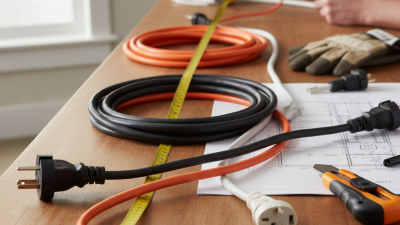
What are Long Extension Cords and How to Choose the Right One
-
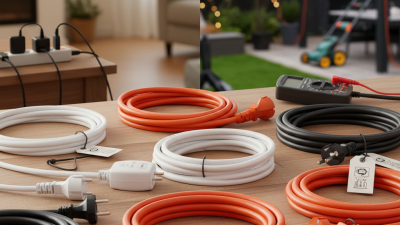
How to Choose the Best Extension Cords for Your Home and Outdoor Needs