How to Choose the Best Power Extension in 2026?

Choosing the best power extension in 2026 requires more than counting sockets. Safety begins with the equipment’s real electrical demand. A compact desk lamp needs different protection from a heater, workshop tool, or gaming computer. Check the wattage, amperage, cable gauge, and maximum load before buying. Do not guess.

UL Solutions safety expert John Drengenberg has said, “Extension cords are designed for temporary use only.” That reminder still matters. A reliable power extension should carry recognized safety certification, include overload protection, and match the plug and voltage used in your region. Look for firmly molded connections, a flexible but durable cable, and enough length without unnecessary slack. For sensitive electronics, surge protection may help, but it is not the same as a backup power supply. Important difference.

Consider the environment, too. A home office needs clean cable management and spaced outlets. A garage may require tougher insulation and protection from dust or moisture. Never hide a loaded cable beneath a rug. Heat can build quietly, especially when several appliances share one strip. I have seen buyers focus on outlet numbers while ignoring the printed load rating. That is an easy mistake.

The best power extension is not always the longest or most expensive. It is the one that fits the load, location, and daily habit. A thoughtful choice reduces clutter and electrical stress. Still, product labels can be confusing, and marketing claims deserve careful checking. In 2026, compare certification details, warranty terms, safety features, and independent test information before making a final decision.
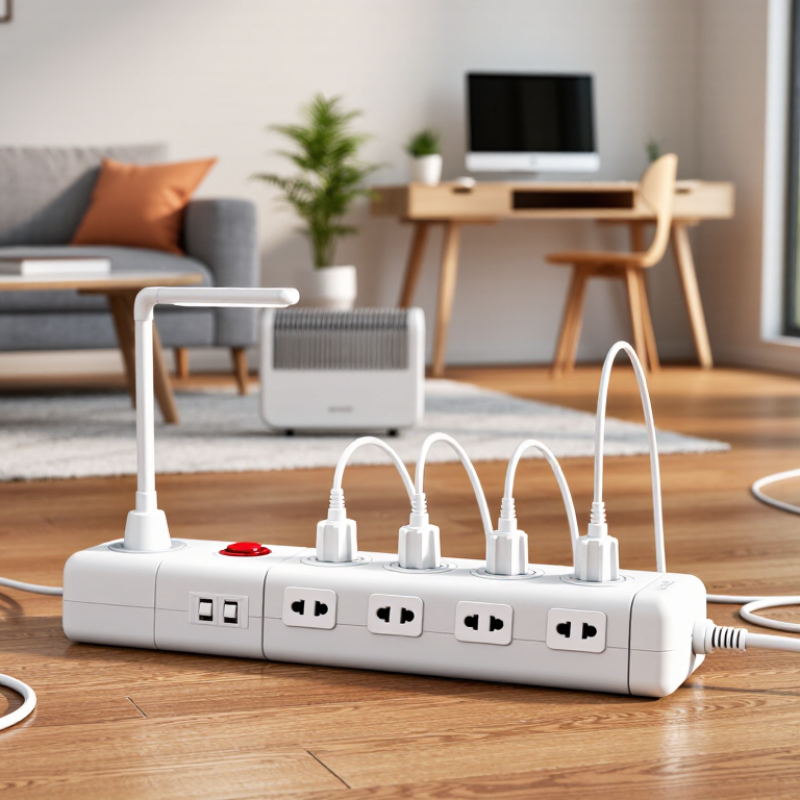
How to Choose the Best Power Extension in 2026?

Calculate Load First: Apply NEC’s 80% Continuous-Load Rule

How to Choose the Best Power Extension in 2026?

Load calculation should guide every extension-cord choice. Under the NEC’s 80% continuous-load rule, equipment running for three hours or longer should not use a circuit’s full rating. A 15-amp, 120-volt circuit provides 1,800 watts theoretically. Its recommended continuous load is about 1,440 watts. Calculate amps by dividing watts by voltage, then add the loads operating at the same time.

For example, a workshop heater rated at 1,200 watts leaves limited capacity for a 150-watt lamp and a small charger. The combined 1,350 watts stays below the practical limit, but motor-driven tools may draw extra current during startup. Check each product’s nameplate, cord gauge, length, and rated capacity. Longer cords can experience greater voltage drop, especially with heavy equipment. Keep connections dry, fully inserted, and away from rugs or tightly coiled sections.

I once focused too much on outlet distance and overlooked startup demand. That was a useful mistake. The cord felt cool, but the calculation was incomplete. Use a heavier-rated extension when the load approaches its limit. Do not treat an extension cord as permanent wiring. Local requirements and equipment instructions may be stricter than this general guide. When several high-load devices share one circuit, ask a qualified electrician to verify the circuit and protection. Test it before relying on it.

Check Ratings: Match Voltage, Amperage, and UL 817 Certification

How to Choose the Best Power Extension in 2026?

A power extension should match your equipment’s voltage, amperage, and operating environment. Check the appliance label before shopping. A 120-volt tool needs an extension rated for 120 volts or higher. Never assume a thicker-looking cable is automatically safer. It may still have a low current rating.

Calculate the load carefully. Amperage equals watts divided by volts. For example, a 1,200-watt heater on a 120-volt circuit draws about 10 amps. Choose an extension rated above that demand, not exactly at the limit. Leave room for startup surges from motors. Check the cable length and wire gauge too. Long, thin cords can cause voltage drop and unwanted heat. Feel the plug after use. Warm is a warning sign.

Look for clear UL 817 certification information on the packaging and cord. UL 817 relates to flexible cord sets and power-supply cords, including construction and safety requirements. A printed symbol without traceable product details deserves caution. Inspect the jacket for cracks, flattened sections, or loose plugs. I once focused too heavily on maximum amperage and overlooked a damaged connector. That was a useful mistake. Ratings matter, but condition matters just as much. Avoid running cords under rugs or through tightly closed doors. Keep connections dry and fully inserted. Shorter is often better.

How to Choose the Best Power Extension in 2026? - Check Ratings: Match Voltage, Amperage, and UL 817 Certification

Selection Factor What to Check Verified Reference Data Recommended Decision
Voltage Rating The extension cord voltage rating must be equal to or higher than the equipment voltage. Many household extension cords are marked 125 V. A cord marked 125 V should not be used for equipment requiring more than 125 V. Match the cord voltage to the appliance nameplate and never exceed the cord’s marked voltage.
Current Rating Compare the cord’s ampere rating with the equipment’s rated or maximum current. At 125 V, a 15 A rating corresponds to a maximum nameplate load of approximately 1,875 W using the formula V × A. A 13 A rating corresponds to approximately 1,625 W. Choose a cord with an ampere rating at least equal to the equipment requirement. Do not exceed the lowest rating in the connected system.
Wire Gauge A smaller American Wire Gauge (AWG) number generally indicates thicker conductors, but the printed cord rating remains the controlling value. Common product markings include 16 AWG, 14 AWG, and 12 AWG. Actual ampacity depends on construction, length, temperature, and the manufacturer’s listing. Use the manufacturer’s stated ampere rating rather than estimating capacity from AWG alone.
Cord Length Longer cords can produce greater voltage drop and may require a higher-rated cord for demanding loads. Typical consumer lengths include 6 ft, 15 ft, 25 ft, 50 ft, and 100 ft. The permitted load can vary by length and product design. Select the shortest practical length and confirm the load rating for that exact length.
Grounding Check whether the equipment requires a grounding conductor and three-prong connection. A grounded household cord commonly has a three-conductor configuration and a grounding contact. A two-wire cord does not provide an equipment grounding path. Use a grounded extension cord for equipment supplied with a grounding-type plug. Never remove or defeat the grounding pin.
Plug and Receptacle Configuration The plug, receptacle, voltage, and current configuration must match the equipment and outlet. A common household configuration is a 125 V, 15 A grounding type. Higher-current configurations may use different slot patterns and must not be forced into incompatible outlets. Do not use adapters or modifications that bypass grounding or permit an incompatible connection.
UL 817 Certification Look for a valid certification mark and the applicable standard designation on the product, packaging, or documentation. UL 817 is the safety standard titled “Cord Sets and Power-Supply Cords.” A legitimate listing should identify the certification information and product ratings. Buy only products with traceable certification information. A generic “meets UL standards” statement without verifiable marking should be treated cautiously.
Jacket and Use Environment Check the cord type, jacket marking, temperature range, and whether it is approved for indoor or outdoor use. Common jacket designations include SPT for lighter-duty applications and SJT for heavier-duty flexible cords. The marking and listing determine suitability. Use outdoor-rated cords outdoors, keep connections away from water, and select a jacket designed for the expected mechanical conditions.
Heat and Load Management Inspect for warmth, discoloration, damaged insulation, loose connections, or signs of overload during operation. A coiled or covered extension cord can retain heat. Motors, heaters, compressors, and other high-inrush equipment may require more starting current than their running rating. Fully unwind the cord when required, avoid connecting multiple extension cords, and stop using any cord that becomes hot or damaged.
Final Rating Check Confirm voltage, amperage, length, wire gauge, grounding, environmental rating, and certification together. The complete cord marking should provide enough information to compare the product with the appliance nameplate and the intended installation. Choose the shortest certified cord whose voltage and ampere ratings meet or exceed the equipment requirements.

Note: Ratings vary by product construction, length, temperature, and applicable electrical codes. Always follow the cord manufacturer’s label, the equipment nameplate, and local electrical requirements.

Select Gauge and Length: Compare 14-AWG/15-A Cords and Voltage Drop

How to Choose the Best Power Extension in 2026?

Gauge and length matter more than appearance. A 14-AWG cord is commonly rated for 15 amps, but the rating depends on construction, insulation, connectors, and listing. Check the cord label, not only its thickness. The National Electrical Code recommends limiting voltage drop to 3% on a branch circuit and 5% overall. These are guidance values, not magic guarantees.

At 120 volts, a 15-amp load draws substantial current. NEC Chapter 9, Table 8 lists 14-AWG copper resistance near 3.07 ohms per 1,000 feet. A 100-foot cord creates roughly 200 feet of electrical path. At 15 amps, that can produce about 9.2 volts of drop. Your tool may receive only around 111 volts.

Heat increases resistance. Motors may struggle during startup. A shorter 14-AWG cord often performs better than a long, thinner cord.

For heavier loads or longer runs, compare 12-AWG or 10-AWG options, while respecting the cord’s marked ampacity. The Electrical Safety Foundation International reports about 3,300 residential fires annually involving extension cords, with roughly 50 deaths and 270 injuries.

Do not connect cords end-to-end, cover them under rugs, or use damaged plugs.

I have seen users choose by reach alone. That judgment is understandable, but incomplete. Measure the route, estimate the load, and inspect the cord after use. A 15-amp tool can briefly exceed its running current. That detail is easy to miss.

Verify Safety Features: Thermal Protection, Grounding, Surge, and IP Ratings

How to Choose the Best Power Extension in 2026?

When I inspect a power extension, I check safety features before length or appearance. Thermal protection matters because overloaded cables can heat beneath carpets or behind furniture. Choose a model with an automatic circuit breaker or resettable overload switch. It should interrupt power before the cable insulation becomes dangerously hot. I once trusted a thick-looking cable too quickly. That was a useful mistake.

Grounding is equally important. A properly grounded outlet helps direct fault current away from exposed metal parts. Check for a three-prong plug and matching grounded sockets. Never remove the grounding pin to fit an older outlet.

Also, confirm the extension’s rated current and wattage. A longer cable may handle less power, especially when coiled. Keep it uncoiled during use.

Surge protection deserves careful reading. Look for a stated surge-energy rating, response specification, and protection indicator. A larger number is not automatically better. Surge devices can wear out after repeated electrical events, so an indicator light should remain functional.

For damp areas, examine the IP rating. Higher ratings offer stronger protection against dust or water, but they do not make every extension suitable for immersion.

Follow local electrical standards and the installation instructions. I still recheck these details because product labels can be easy to misunderstand. Safety is not always obvious.

Assess 2026 Value: Compare Joule Ratings, Warranties, and Recall Records

How to Choose the Best Power Extension in 2026?

When I inspect a power extension, I check its joule rating before judging its appearance. A higher rating usually indicates greater surge-energy absorption capacity. However, joules do not measure every aspect of protection. A 2,000-joule device may still perform poorly with weak internal components or excessive heat. Numbers can mislead. I also examine clamping voltage, response time, overload protection, and the maximum connected load. If the product is only an extension cord, it may have no joule rating. In that case, focus on wire thickness, grounding, insulation, and certified safety testing.

Warranty terms deserve careful reading. Some warranties cover only the device, while others mention connected equipment under strict conditions. Check claim limits, required receipts, exclusions, and whether professional installation is required. A long warranty can look impressive but offer little practical value. I once trusted a generous coverage period without reading its exclusions. That judgment was incomplete. Clear language matters more than a large number.

Recall records provide another useful reliability check. Search the exact model number in government consumer-safety databases and official manufacturer notices. Review reports about overheating, melted outlets, exposed wiring, or failed surge protection. Do not rely only on customer comments. Records should match the specific model, plug type, and production period. Repeated complaints are not proof of failure, but they deserve investigation. Keep the purchase receipt and photograph the product label before installation. Small details can matter later.