How to Choose the Right Cable Wire Extension in 2026?

Choosing the right cable wire extension in 2026 requires more than checking length and price. Modern homes use laptops, monitors, kitchen appliances, chargers, and connected equipment at the same time. Each device may demand a different power rating, connector type, or protection feature. A suitable extension should match the equipment’s voltage, current, wattage, and operating environment. It should also come from a manufacturer that provides clear specifications, testing information, and dependable customer support.

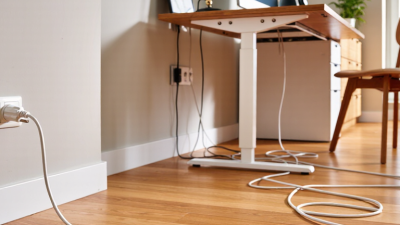
Real-world use often reveals details that product pages overlook. A three-meter cable may reach a desk easily, yet become a tripping hazard across a busy walkway. A compact reel may look convenient, but heat can build when it remains tightly wound under heavy load. I have also seen users choose thin cables for powerful appliances, simply because the package looked attractive. That decision can create unnecessary heat and performance problems. Small details matter.

This guide examines cable construction, conductor size, insulation quality, connector design, surge protection, and safety markings. It also considers indoor, outdoor, workshop, office, and travel applications. The best choice is not always the longest or most expensive option. It is the one that fits the device, location, and expected workload. Some recommendations may seem obvious. Others deserve a second look. Product labels can be confusing, and even reputable brands do not make every model equally well. Readers should verify current specifications before purchase and replace damaged cables promptly. Safety should remain practical, evidence-based, and easy to follow.
How to Choose the Right Cable Wire Extension in 2026?

Define the Load: Apply NEC’s 125% Rule for Loads Running 3+ Hours

When choosing an extension cable in 2026, define the load before comparing length or insulation. Under NEC principles, a load operating for three hours or more is treated as continuous. Its current should be multiplied by 125% when sizing conductors and overcurrent protection. For example, a 12-amp heater needs a calculated capacity of at least 15 amps. Do not match the cord to the appliance label alone. Add simultaneous loads on the same circuit.

Tips: Convert watts to amps by dividing watts by voltage. Then apply the 125% factor. Check the cord’s ampacity, plug rating, temperature rating, and intended indoor or outdoor use. A long cable may create voltage drop, causing motors to run hot or lights to dim. Choose a shorter, heavier-gauge cable when possible. Leave some capacity unused.

In real installations, small details matter. A cord can feel cool and still be undersized internally. I once underestimated a tool’s startup demand; the running current looked safe, but the circuit protection reacted quickly. That experience changed my checklist. Review continuous and starting loads separately. Keep connections dry, fully inserted, and free from coils that trap heat. NEC requirements may vary by local adoption, so a qualified electrician should verify unusual, high-current, or permanent setups.

Select the Gauge: NEC 60°C Ampacity Rates 14 AWG at 15 A and 12 AWG at 20 A

Choosing a cable wire extension in 2026 starts with gauge, not appearance. According to NFPA 70, 2023 edition, Table 310.16, copper conductors rated at 60°C support 14 AWG at 15 amps and 12 AWG at 20 amps. These values apply under stated installation conditions, including circuit size and conductor count.

That distinction matters. A 14 AWG extension suits a 15-amp circuit, such as a small lamp or light-duty tool. A 12 AWG cable is the safer choice for a 20-amp circuit or demanding equipment. Check the plug and receptacle ratings too. They must match the circuit.

Length changes the decision. A long cable creates voltage drop, causing dim lights, slower motors, or warmer connections. The NEC ampacity table does not fully predict that loss. Use the cord’s listed rating, ambient temperature, and intended load together. Do not treat a thicker cable as automatically safer if its connectors are underrated.

A field inspection often finds another weakness: damaged insulation or loose plugs. Replace questionable cords. My own rule would be stricter than the table, because real conditions are rarely perfect. Load calculations can also be misunderstood, especially with coiled cables and multiple tools. Reference NFPA 70 and the cable manufacturer’s technical sheet before choosing the final extension.

Calculate Length: Keep Voltage Drop Near the Industry’s Recommended 3% Limit

Choosing a cable wire extension in 2026 starts with voltage-drop math, not appearance. NFPA 70’s 2023 informational guidance recommends keeping branch-circuit voltage drop near 3%, with total feeder and branch-circuit drop near 5%. The U.S. Department of Energy also uses the 3% branch-circuit target in building-efficiency guidance.

Use this formula: voltage drop equals current multiplied by resistance. Measure the complete circuit path, not only the visible cable. A 50-foot extension creates a 100-foot electrical loop. For a 120-volt, 10-amp load, 3% allows only 3.6 volts of loss. A 12 AWG copper cable has roughly 1.6 ohms per 1,000 feet, producing about 1.6 volts of drop across that loop. That equals approximately 1.3%, which is acceptable. A smaller 16 AWG cable may lose about 4 volts, exceeding the target.

Check the equipment’s starting current. Motors, compressors, and some power supplies briefly demand more current. That short surge can dim lights, trip protection, or heat a marginal cable. I have seen users measure only the operating load and miss this detail. It is an easy mistake. Recalculate for the longest practical distance, the highest expected current, and outdoor temperature. If the result approaches 3%, choose a larger conductor or shorten the extension. Do not treat the 3% figure as a guarantee; connectors, coiled cable, and aging contacts can add resistance.

Match the Jacket: Compare SJT, SJTW, and Outdoor Ratings Under UL 817

How to Choose the Right Cable Wire Extension in 2026?

The jacket is not decoration. It tells you where the cord can safely work. Under UL 817, SJT cords use thermoplastic insulation and usually carry a 300-volt rating. They fit dry indoor areas, such as a desk or workshop bench. SJTW cords add weather-resistant thermoplastic. That “W” matters near damp floors, temporary outdoor lighting, or garden equipment. Still, SJTW is not a license to leave a cord underwater.

Check the print on the jacket, not only the packaging. A professional inspection should confirm the voltage, wire gauge, temperature rating, and listing mark. The jacket does not increase ampacity. A thin 16-gauge cord can overheat when powering a high-load tool, even with an outdoor rating. The U.S. Consumer Product Safety Commission estimates that extension cords cause about 3,300 residential fires annually. Small errors become hot plugs.

Outdoor ratings need practical judgment. Sunlight, rain, soil contact, and repeated bending can age insulation faster than expected. I have seen cords that looked clean but had stiff, cracked jackets near the plug. That is easy to miss. UL 817 compliance supports safer construction, but it does not replace inspection. Choose SJTW for temporary outdoor use, keep connections elevated, and replace any cord with cuts, flattened sections, or exposed conductors. Some “weather-resistant” wording still feels vague. Verify the complete designation.

Verify Safety: Use 125 V, 15 A Connectors and Inspect Every Cord Before Use

How to Choose the Right Cable Wire Extension in 2026?

A safe extension cord begins with its connector rating. Choose connectors marked 125 V and 15 A when your equipment requires that capacity. These numbers are limits, not performance targets. A 15-amp connector should not support a load above 15 amps. Check the equipment label before connecting anything. Modern devices can draw more power than older household tools.

Inspect every cord before use, even if it looks new. Run your fingers along the insulation and look for cuts, flattened areas, exposed wires, or melted plastic. Examine the plug blades for bending, dark marks, or looseness. Check both connector ends. Small damage matters. Do not use a cord with cracked housing, missing grounding parts, or signs of overheating.

Keep the cord dry and fully unwound during operation. Coiled cable can trap heat, especially under a rug or behind furniture. Keep connections away from puddles, sharp edges, and heavy traffic. A common mistake is checking only the plug, then ignoring the cable body. I have found that rushed inspections miss the most obvious wear. Pause for a few seconds. If the cord feels hot, smells burnt, or causes flickering, disconnect it and replace it. Some cords may look acceptable but still deserve closer review.

How to Choose the Right Cable Wire Extension in 2026? - Verify Safety: Use 125 V, 15 A Connectors and Inspect Every Cord Before Use

Extension Cord Selection and Safety Verification Guide
Selection or Inspection Dimension Verified Data or Requirement How to Apply It Safety Reason Recommended Action
Connector voltage rating 125 V Confirm that the plug, receptacle, and cord markings are rated for at least 125 V. A rating below the supply voltage can create overheating, insulation failure, or shock hazards. Use only components marked 125 V or higher.
Connector current rating 15 A maximum for a 125 V, 15 A connection Check that the connector rating is not lower than the equipment’s required current. Underrated connectors may heat excessively when carrying the load. Use a properly grounded 15 A connector for loads up to the cord’s marked rating.
Theoretical electrical capacity 125 V × 15 A = 1,875 W Use this as the mathematical maximum for a 125 V, 15 A circuit, not as an automatic permission to operate every load at that level. Actual safe capacity depends on the cord marking, plug, receptacle, circuit protection, temperature, and load type. Never exceed the lowest marked rating in the complete connection.
Continuous-load planning 12 A at 125 V = 1,500 W when applying an 80% planning limit to a 15 A circuit For equipment expected to operate continuously, keep the calculated load at or below 12 A unless the applicable electrical requirements specify otherwise. Continuous operation increases heating in conductors and connection points. Add the running currents or wattages of all connected equipment before use.
Conductor size Common extension-cord conductors include 16 AWG, 14 AWG, and 12 AWG; the cord label controls the actual rating. For longer runs or higher loads, select a larger conductor size when the manufacturer’s rating supports it. Longer and heavily loaded cords can experience greater voltage drop and heat buildup. Do not choose by wire gauge alone; verify the complete cord rating and permitted length.
Cord length Use the shortest practical length; common sizes are 25 ft, 50 ft, and 100 ft. Choose a length that reaches the outlet without creating loops or excess cable on the floor. Longer cords generally have more voltage drop and can become a trip or heat hazard when coiled. Fully unwind the cord during use, especially under significant load.
Grounding configuration Use a three-conductor cord with a grounding-type plug and receptacle for equipment requiring grounding. Match the plug and receptacle configuration; never remove or defeat the grounding pin. The grounding path helps reduce shock risk during an insulation fault. Do not use a two-wire cord for equipment that requires grounding.
Outdoor or damp-location use Use a cord specifically marked and listed for outdoor or wet-location service. Keep connections elevated and protected from standing water, rain, and wet surfaces. Moisture increases shock risk and can damage insulation and connections. Use ground-fault protection where required or appropriate, particularly in damp areas.
Cord jacket condition No cuts, abrasions, crushed sections, exposed conductors, melted areas, or hardened insulation. Inspect the entire cord before every use, including both ends and strain-relief areas. Damaged insulation can expose users to electric shock and can cause short circuits. Remove damaged cords from service; do not rely on tape as a permanent repair.
Plug and receptacle condition Contacts should be clean and secure; the housing should not be cracked, loose, discolored, or melted. Check for loose blades, bent contacts, burn marks, unusual warmth, or a poor connection. Loose or damaged connections create resistance, heat, arcing, and possible fire hazards. Replace the cord or connector if damage, overheating, or looseness is found.
Load compatibility The cord’s ampere and wattage ratings must meet or exceed the connected equipment’s requirements. For equipment labeled in watts, calculate current using: current = watts ÷ volts. Overloading can cause conductor and connector temperatures to rise beyond safe limits. Add the loads connected to the same cord and compare the total with the cord label.
Heat and placement Keep the cord away from hot surfaces, sharp edges, doors, vehicle traffic, and pinch points. Do not cover the cord with rugs or furniture, and do not place it where it can be crushed. Trapped heat and mechanical damage can degrade insulation and increase fire risk. Route the cord visibly and protect it from physical damage without bundling it tightly.
Connection practice Connect equipment directly to the extension cord unless the cord is specifically designed for additional connections. Avoid daisy-chaining multiple extension cords or using a cord as a substitute for permanent wiring. Extra connections increase resistance, voltage drop, trip hazards, and the chance of overloading. Use one correctly rated cord whenever possible and install permanent wiring for recurring needs.
Pre-use functional check The connection should remain secure and should not produce odor, smoke, buzzing, sparking, or unusual heat. Stop using the cord immediately if any abnormal sign appears during operation. These symptoms can indicate a failing conductor, damaged insulation, or a poor contact. Disconnect power safely and replace the defective cord or connection.
Important: The cord label, equipment instructions, local electrical requirements, and the lowest-rated component always control the final selection. A 125 V, 15 A marking does not make a damaged, overloaded, improperly grounded, or incorrectly used cord safe.