Top Cable Cord Manufacturers for Global Buyers

The global demand for reliable cable cord products is rising with data centers, appliances, industrial automation, and renewable energy projects. Grand View Research estimates that the global wires and cables market will continue expanding through 2030, supported by infrastructure investment and electrification. Its findings suggest steady growth, not a temporary surge. However, market forecasts are not perfectly aligned.

For global buyers, choosing a manufacturer requires more than comparing unit prices. Cable gauge, conductor material, insulation type, temperature rating, plug configuration, and bend performance directly affect product safety. IEC 60227 and IEC 60245 provide important requirements for insulated flexible cables. UL Solutions also emphasizes traceability, testing, and certification when products enter regulated markets. A dependable supplier should provide clear test reports, factory documentation, and consistent sample-to-mass-production quality.

This guide examines top cable cord manufacturers serving international buyers. It considers production capability, certification experience, customization, minimum order quantities, and delivery reliability. Practical details matter. A buyer may need a 2-meter black PVC cord, molded strain relief, copper conductors, and a region-specific plug. Small specification errors can delay an entire shipment.

No single manufacturer fits every project. That matters. Some suppliers excel at retail packaging, while others support industrial volumes or engineered designs. Company websites also present their strongest claims, not every limitation. Therefore, buyers should verify certificates, inspect samples, and review recent customer evidence before signing contracts. This comparison aims to make that process clearer, while recognizing that supplier performance can change over time.

Top Cable Cord Manufacturers for Global Buyers

How Cable Cord Manufacturers Serve Global Buyer Requirements

Top Cable Cord Manufacturers for Global Buyers

Global buyers need more than low pricing from cable cord manufacturers. They need stable specifications, reliable testing, and clear shipment control. Grand View Research estimates that the global wires and cables market will grow at about 6% annually through 2030. This growth increases pressure on factories to manage capacity without weakening quality.

Manufacturers serving different markets usually adapt conductor sizes, insulation materials, plug configurations, and voltage ratings. They also provide test records for resistance, flexibility, flame performance, and insulation strength. IEC standards help buyers compare products across regions, while ISO 9001-based quality systems support repeatable production. Details matter. A cord that works in a factory may fail after repeated bending beside a household appliance.

Serious suppliers also build traceability into each order. Batch numbers, raw material records, and pre-shipment inspection reports help buyers investigate defects quickly. Packaging must protect cords from moisture, crushing, and tangled storage during long transport. The International Energy Agency reported that global electricity demand is expected to rise strongly through 2026, increasing demand for dependable electrical components. Yet forecasts do not remove practical risks. Delays still happen. Material substitutions may be poorly communicated, and small labeling errors can slow customs clearance. Buyers should request samples, audit test methods, and confirm production capacity before placing large orders. A factory can pass one inspection and still need improvement.

Key Standards for Comparing Cable Cord Manufacturers

Top Cable Cord Manufacturers for Global Buyers

Comparing cable cord manufacturers starts with standards, not catalogue photos. IEC 60227 covers PVC-insulated flexible cables, while IEC 60245 addresses rubber-insulated types. Ask for the exact standard edition, rated voltage, temperature range, and test reports. A serious supplier should show conductor resistance, insulation thickness, flame performance, and bend-test results. These details matter when cords run behind warm equipment or bend repeatedly near a plug.

Quality systems provide another useful filter. The ISO Survey 2022 recorded 1,265,216 ISO 9001 certificates across 189 countries and economies. Certification alone proves little, though. Request the certificate scope, audit date, factory address, and corrective-action records. Traceability should reach the copper lot, production line, and final inspection batch.

The IEA Electricity 2024 report expects global electricity demand to grow by about 4% annually through 2026. That growth increases sourcing pressure, but faster delivery should not replace verification. I would still sample every new construction. Assumptions fail quietly.

Tips: Compare five samples, not one. Measure outer diameter with calipers. Check markings against test documents. Confirm RoHS or other destination-market requirements. Review connector fit under load, not only at room temperature. Also examine packaging: crushed cartons can damage insulation before installation. Shortcuts become expensive.

For global buyers, compare warranty terms, change-control procedures, minimum order quantities, and recall communication. Ask whether subcontracted processes are disclosed. A factory may pass a laboratory test and still produce inconsistent batches. Monthly inspection data, retention samples, and independent re-testing create stronger evidence than polished sales language.

Leading Cable Cord Manufacturer Categories by Product Type

Top Cable Cord Manufacturers for Global Buyers

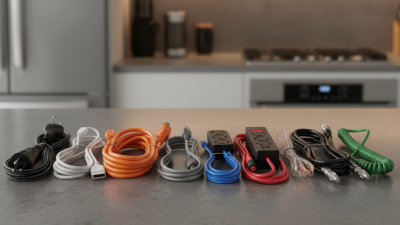
Cable cord manufacturers are commonly evaluated by product type, because each category demands different testing, materials, and production controls. Power cords serve household equipment, industrial tools, and office systems. Extension cords add length and flexibility, but require careful attention to conductor size, insulation, and heat resistance. Appliance cords often need molded connectors and repeated-bend durability. Data and charging cables depend more on signal integrity, shielding, and connector compatibility.

Fortune Business Insights reported that the global wires and cables market reached approximately USD 202 billion in 2023. Its forecast also indicates continued growth through 2030. This expansion does not make every manufacturer suitable. A capable supplier should provide traceability, batch testing, and documentation aligned with applicable IEC or national standards. Small details matter. A warm plug, uneven molding, or stiff jacket can reveal deeper process weaknesses.

Specialty cords form another important category. These include medical, outdoor, high-temperature, and industrial designs. Buyers should compare voltage ratings, bending cycles, ingress protection, and flame performance. The International Energy Agency reported strong global electricity-demand growth in its Electricity 2024 analysis, supporting long-term demand for dependable electrical components. Still, market forecasts can hide quality variation. Product categories overlap, and specifications are sometimes described too broadly. Global buyers should verify samples, audit manufacturing records, and test the finished cord under realistic loads before placing large orders.

Evaluating Quality, Capacity, Customization, and Compliance

Global buyers often compare cable cord manufacturers by price first. That is a costly shortcut. In practical sourcing, quality appears in repeatable details: conductor gauge, insulation thickness, plug fit, bend resistance, and stable color. A sample may look excellent yet fail after repeated flexing. Test at the intended temperature, load, and installation angle. Ask for batch records, not only a glossy certificate. Small gaps matter.

Capacity should be measured against real production evidence. Request monthly output, line allocation, lead-time history, and raw-material backup plans. A large factory may still miss a seasonal shipment. Confirm spool lengths, minimum order quantities, inspection staffing, and packaging controls. Custom work needs disciplined engineering. Discuss conductor structure, jacket markings, length tolerance, connector geometry, and tooling ownership before approval. Pilot runs reveal problems early, although they can slow purchasing decisions. That trade-off deserves honest review.

Compliance is more than printing a mark on the jacket. Match the cord to the destination market, voltage, temperature rating, flame behavior, and documentation rules. Verify test reports by model and material, then check whether production samples match them. Traceability should reach the resin lot and final inspection record. Keep written change-control procedures. Suppliers sometimes alter materials quietly to reduce cost; buyers should challenge this risk without assuming bad faith. I would also recheck aging tests and third-party reports. They are easy to overlook. Reliable partnerships grow through evidence, corrective actions, and clear limits, not promises alone.

Top Cable Cord Manufacturers for Global Buyers - Evaluating Quality, Capacity, Customization, and Compliance

Manufacturer evaluation matrix based on verifiable product, production, testing, and compliance criteria

Evaluation Dimension Industry-Recognized Requirement Buyer Verification Points Typical Commercial Reference Why It Matters to Global Buyers
Product Safety Applicable national or regional safety certification for the target market, such as UL, CSA, EN, IEC, or equivalent requirements. Request current certificates, certificate numbers, covered cable constructions, and confirmation that the manufacturing site is included. Certification must match the exact plug, conductor size, insulation, jacket, and rated voltage configuration. Reduces electrical, regulatory, and market-entry risks caused by incorrect or incomplete approvals.
Materials and Construction Correct conductor material, cross-sectional area, insulation type, jacket compound, plug design, and strain-relief construction. Review technical drawings, bill of materials, conductor resistance data, material declarations, and pre-shipment samples. Common options include copper conductors, PVC or rubber insulation, and PVC, TPE, or rubber outer jackets. Directly affects flexibility, heat resistance, abrasion performance, service life, and total product cost.
Electrical Performance Rated voltage, rated current, conductor resistance, insulation resistance, dielectric strength, and continuity must meet the approved specification. Ask for routine test records, test equipment calibration certificates, sampling plans, and acceptance criteria. Typical equipment power cords are specified by regional voltage systems and current ratings from low-current appliance use to higher-load industrial applications. Ensures safe power delivery and prevents overheating, arcing, nuisance failures, and product recalls.
Testing and Quality Control Documented incoming-material inspection, in-process controls, 100% continuity or hipot testing where required, and final inspection. Verify quality manuals, inspection checklists, nonconformance procedures, corrective-action reports, and lot traceability. ISO 9001 certification is a useful management-system indicator, but it does not replace product-specific testing evidence. Improves consistency between production lots and provides evidence for warranty, audit, and dispute resolution.
Customization Capability Ability to customize length, plug type, conductor gauge, jacket color, labeling, packaging, terminal design, and overmolding. Request design drawings, sample-development procedures, tooling ownership terms, engineering-change controls, and prototype lead time. Custom cable assemblies commonly require approved drawings and a pre-production sample before mass production. Supports regional plug requirements, equipment integration, private-label packaging, and application-specific performance needs.
Production Capacity Adequate extrusion, cutting, stripping, crimping, molding, assembly, testing, and packaging resources for the required order volume. Check monthly capacity by product type, utilization levels, backup equipment, workforce shifts, and capacity-reservation policy. Capacity should be assessed against forecasted demand, seasonal peaks, minimum order quantities, and acceptable lead times. Helps prevent supply interruptions, rushed production, inconsistent quality, and delayed customer deliveries.
Environmental Compliance Material compliance with applicable restrictions such as RoHS and REACH, supported by declarations or laboratory documentation. Request a current substance declaration, supplier material records, test reports where required, and change-notification commitments. Compliance status must be reviewed by market, product version, material revision, and date of declaration. Supports import clearance, customer audits, environmental claims, and responsible product stewardship.
Lead Time and Supply Reliability Clearly defined quotation validity, sample lead time, production lead time, shipping terms, and escalation process. Evaluate historical on-time delivery, raw-material availability, safety-stock options, forecast requirements, and business-continuity plans. Actual lead time varies with customization, order quantity, certification, tooling, and seasonal demand. Reliable planning reduces inventory risk and supports stable global distribution schedules.
Documentation and Traceability Product specifications, drawings, inspection records, certificates, batch identification, packing lists, and change-control documentation. Confirm that raw materials and finished goods can be traced to production dates, work orders, and inspection results. Documentation should be supplied in a consistent format and retained according to contractual and regulatory requirements. Makes technical approval, customs processing, audits, recalls, and root-cause analysis more efficient.
Buyer note: The listed requirements are general procurement benchmarks. Final acceptance should be based on the destination market, applicable standards, approved drawings, contract terms, and product-specific test evidence.

Selecting the Right Cable Cord Manufacturer for International Supply Chains

Selecting the Right Cable Cord Manufacturer for International Supply Chains

International buyers need more than a low quotation. They need stable specifications, traceable materials, and delivery evidence. UNCTAD’s Review of Maritime Transport 2023 reports that over 80% of global merchandise trade by volume moves by sea. A delayed container can therefore disrupt production for weeks. Select manufacturers with documented capacity, dual sourcing, and realistic lead-time planning.

Check conductor size, insulation material, temperature rating, bend performance, and plug configuration against the destination market. IEC 60227 and IEC 60245 can support specification reviews, but local requirements still need verification. Ask for batch-level test reports covering continuity, dielectric strength, flame performance, and dimensional checks. Third-party laboratory results are more dependable than unsigned internal sheets.

Look closely at quality systems.

The World Bank’s 2023 Logistics Performance Index evaluates customs, infrastructure, shipment arrangements, logistics competence, tracking, and timeliness. A capable manufacturer should provide evidence across these areas. Request production photos, sample approval records, corrective-action reports, and an auditable inspection plan. Confirm packaging details too: coil length, carton strength, moisture protection, barcode format, and pallet limits.

My experience is that supplier audits often focus too heavily on factory equipment. That is a mistake. Operator training and process discipline can matter more. Also question unusually short lead times. They may reflect optimistic planning, not genuine capacity. Compare total landed cost, including testing, tooling, freight, duties, rejection risk, and replacement time. A smaller initial order can reveal weaknesses before the supply chain depends on them.

Top Cable Cord Manufacturers for Global Buyers – Selecting the Right Cable Cord Manufacturer for International Supply Chains

For international sourcing, cable cord selection should begin with the required voltage rating and applicable safety standard. This chart compares the upper nominal voltage of commonly specified flexible cord designations used in global procurement.

Data reference: IEC 60227 and IEC 60245 cable designation and voltage classifications. Values represent the upper nominal voltage in each designation.