-
- Products
- Indoor Household Cords
- Appliance Cords
- General Purpose Short-Length Cords
- General Purpose Extension Cords
- Landscape & Decorating Cords
- Bright Color Extension Cords
- Oil-Resistant Extension Cords
- Cold-Flex Extension Cords
- VividFlex Power Cords
- EXTREME All-Weather Cords
- Cord Management
- Task Lights
- Adapters & GFCI Devices
- Where to Buy
- About
- Careers
- Glossary
- Catalog


Why Choose Power Wire for Global Sourcing?
Global sourcing demands more than a low unit price. It requires stable performance, clear documentation, and dependable communication. Power wire supports many systems, from factory control panels to commercial equipment and outdoor installations. Its role is simple, yet its quality affects safety, efficiency, and maintenance costs.
Experienced buyers examine conductor material, wire gauge, insulation type, voltage rating, temperature range, and flexibility. A copper core may provide strong conductivity, while suitable insulation helps resist heat, moisture, and abrasion. Product samples should be tested under realistic conditions. Check the label, measure the conductor, and inspect the jacket closely. Small details matter.
Supplier evaluation is equally important. Review production records, quality procedures, test reports, and relevant certifications. Confirm whether the supplier can repeat the same specifications across large orders. A factory may provide an attractive sample, but consistency is the real challenge. This deserves attention.
Global purchasing also involves packaging, lead times, communication, and shipment planning. A reliable supplier explains tolerances and reports problems early. No sourcing process is perfect. Material shortages, inspection failures, or transit delays can still occur. A practical buyer prepares alternatives without lowering essential quality requirements.
Choosing power wire means balancing technical performance, total cost, and long-term reliability. The cheapest offer may create replacement work later. A carefully verified product can reduce downtime and simplify maintenance. Buyers should compare evidence, not promises. That approach builds stronger supply relationships and supports safer international procurement.
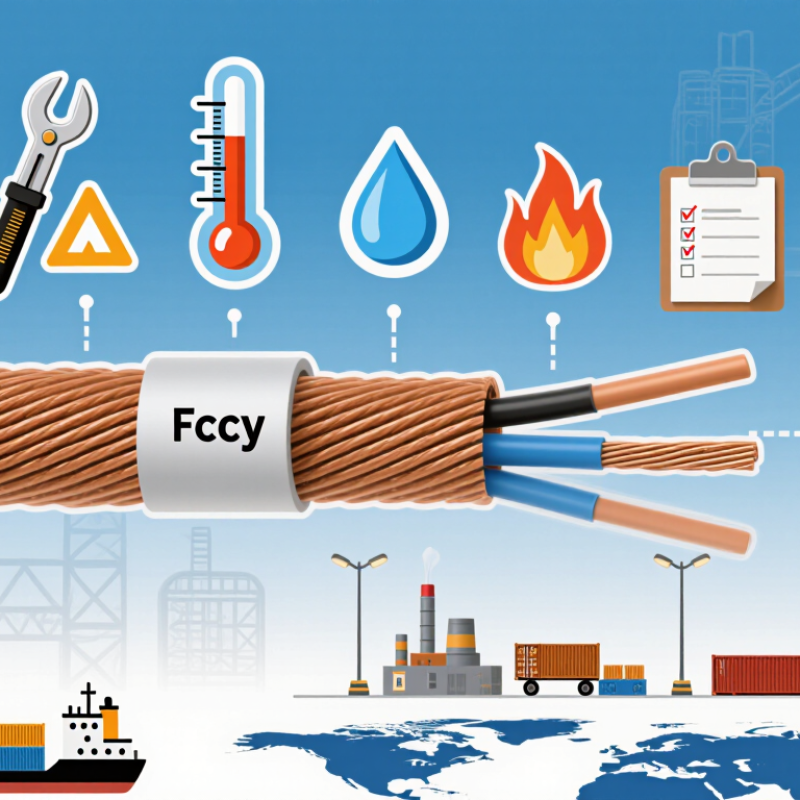
Table of Contents
[Hide]
What Is Power Wire and Why Does It Matter in Global Sourcing?
Power wire is an insulated conductor designed to carry electrical energy safely between a source and equipment. It may include copper or aluminum cores, protective insulation, and layers that resist heat, moisture, or abrasion. In global sourcing, these details matter because a cable that works in one market may fail another market’s voltage, temperature, or installation requirements.
Reliable sourcing starts with a clear technical specification. Check conductor size, insulation material, voltage rating, temperature range, flexibility, and expected service life. Certification and test records should come from qualified laboratories, not only supplier claims. Traceable batch numbers also help teams investigate defects quickly. From practical sourcing experience, small omissions can create large costs. A missing sheath requirement may cause cracking during cold transport. A vague tolerance can create fitting problems during assembly. The specification sheet may look complete, but it can still hide risk.
Tips: Request samples from each production batch. Compare labels with test reports. Confirm packaging protects coils from water and crushing. Ask how raw materials are controlled. Leave room for review, because an efficient plan is not always a perfect one. Suppliers should communicate changes before production, even when the change appears minor.
| Data Dimension | Typical Data | Why It Matters in Global Sourcing |
|---|---|---|
| Product Definition | Power wire is an insulated electrical conductor designed to carry electrical current between a power source and electrical equipment, assemblies, or distribution points. | A clear product definition helps buyers compare equivalent constructions, avoid specification gaps, and request consistent quotations from suppliers in different markets. |
| Common Conductor Materials | Copper and aluminum are the main conductor materials used in power-wire applications. Copper is generally selected for compactness and high conductivity; aluminum is selected where lower weight and material cost are important. | Material selection affects electrical performance, finished weight, freight cost, termination design, and the required installation practices. |
| Electrical Conductivity at 20°C | Annealed copper: approximately 100% IACS. Electrical-conductor-grade aluminum: approximately 61% IACS. | Because aluminum has lower conductivity than copper, an aluminum conductor normally requires a larger cross-sectional area to achieve comparable resistance and current-carrying performance. |
| Material Density | Copper: approximately 8.96 g/cm³. Aluminum: approximately 2.70 g/cm³. | Aluminum conductors can reduce conductor weight by roughly 50% or more for comparable conductance, which may improve logistics efficiency in long-length or large-cross-section projects. |
| Conductor Construction | Solid conductors are commonly used for smaller fixed installations. Stranded and flexible conductors are used where easier routing, vibration resistance, or repeated movement is required. | Construction affects minimum bend radius, installation labor, termination requirements, and packaging design. The construction should be specified before supplier comparison. |
| Typical Conductor Size References | IEC-based specifications commonly use mm² sizes, such as 1.5, 2.5, 4, 6, 10, 16, 25, 35, and 50 mm². North American specifications commonly use AWG or kcmil designations. | Converting between metric and North American size systems requires care because the sizes are not always exact equivalents. The buyer should state the required standard and nominal cross-sectional area. |
| Insulation Materials | Common insulation materials include PVC, XLPE, PE, and elastomeric compounds. Typical continuous conductor temperature limits are about 70°C for many PVC applications and about 90°C for many XLPE applications, subject to the applicable standard and cable design. | Insulation choice influences temperature rating, current capacity, flexibility, chemical resistance, fire behavior, outdoor suitability, and regulatory acceptance. |
| Voltage Classification | Power wires and cables are produced for different voltage classes, including extra-low-voltage, low-voltage, and higher-voltage applications. A commonly used low-voltage cable range under IEC product practice includes rated voltages up to 0.6/1 kV, depending on the applicable product standard. | Voltage rating must match the system design and destination-market requirements. A wire with the wrong insulation or voltage rating may be unsuitable even when its conductor size appears correct. |
| Current-Carrying Capacity | Allowable ampacity depends on conductor material and size, insulation temperature rating, installation method, ambient temperature, grouping, and permissible voltage drop. There is no single ampacity value for a conductor size in every installation. | Buyers should request ampacity tables or calculation conditions rather than comparing only nominal cross-sectional area. This prevents under-sizing and inconsistent technical offers. |
| Voltage Drop | For a two-conductor single-phase circuit, a simplified resistive voltage-drop relationship is: voltage drop ≈ 2 × circuit length × current × conductor resistance per unit length. Actual calculations may also include reactance and power factor. | Long-distance installations may require a larger conductor even when the thermal ampacity is sufficient. Voltage-drop requirements should be included in the sourcing specification. |
| Key Mechanical Properties | Important characteristics include flexibility, tensile strength, elongation, minimum bend radius, abrasion resistance, and resistance to vibration or repeated flexing. | Mechanical requirements affect installation reliability and service life. A flexible power wire may be more suitable for equipment connections, while a fixed-installation conductor may prioritize dimensional stability and cost. |
| Environmental Performance | Depending on the design, power wire may require resistance to moisture, sunlight, oil, chemicals, low temperatures, flame propagation, or UV exposure. | Environmental requirements vary by application and destination. They should be stated separately from electrical requirements so suppliers do not assume unsuitable operating conditions. |
| Relevant Technical Standards | Common international references include IEC 60228 for conductor classes and resistance, IEC 60332 for flame-propagation tests, IEC 60502 for certain power cables, and IEC 60227 for certain PVC-insulated cables. Regional standards may also apply. | Standards define test methods, conductor resistance, insulation performance, marking, and documentation. The exact standard edition and product scope should be confirmed before ordering. |
| Certification and Compliance Documents | Typical documentation may include a technical data sheet, routine test report, material declaration, certificate of conformity, batch traceability records, and applicable market-specific approvals. | Complete documentation supports customs clearance, quality audits, project approval, and after-sales traceability. Requirements should be agreed before production. |
| Packaging and Length Options | Power wire may be supplied in coils, reels, drums, or cut lengths. Common commercial requirements include specified net length, maximum package weight, moisture protection, and durable identification labels. | Packaging affects freight utilization, unloading equipment, storage, handling damage, and the total landed cost. Packaging requirements should be included in the purchase order. |
| Global Sourcing Cost Drivers | Major cost factors include conductor metal content, conductor size, insulation compound, production length, testing, packaging, freight, duties, currency changes, and compliance requirements. | Comparing unit prices alone can be misleading. A landed-cost model provides a more accurate comparison between quotations from different regions. |
| Quality-Control Checkpoints | Typical checks include conductor diameter or cross-sectional area, DC resistance, insulation thickness, spark testing, tensile and elongation testing, dimensional inspection, marking, and package-length verification. | Defining inspection points before production improves consistency across suppliers and reduces the risk of receiving wire that meets appearance expectations but fails electrical or dimensional requirements. |
| Recommended Sourcing Specification | State conductor material, nominal cross-sectional area, conductor class, insulation material, voltage rating, temperature rating, color, required length, applicable standard, test requirements, packaging, and destination-market compliance. | A complete specification creates comparable bids, reduces clarification cycles, improves supplier accountability, and supports repeat purchasing across international markets. |
Note: Values shown are general engineering references. Final conductor sizing, ampacity, voltage-drop limits, testing, and regulatory compliance must be verified against the applicable product standard, installation conditions, and destination-market requirements.
Related Posts
-

What is a Power Wire and How Does it Function?
-
Top 10 Appliance Cables You Need for Safe and Efficient Use
-

Why is Wire Cable Essential for Modern Electrical Systems?
-
Top Cable Cord Manufacturers for Global Buyers
-
Top 10 Power Extension Solutions for Global Buyers?
-
2025 Top 5 Cable Cords: Essential Choices for Every Tech Enthusiast