China Top GFCI Power Cord Supplier for Global Buyers?

Choosing a China supplier for a gfci power cord requires more than comparing catalog prices. Global buyers need verified protection, stable production, and evidence that survives technical review. The Grand View Research Power Cords Market Analysis identifies safety compliance, product standardization, and infrastructure investment as important market drivers. Its findings reflect a practical reality: buyers increasingly demand documented performance, not attractive photographs.

OSHA guidance explains that ground-fault circuit interrupters can disconnect power rapidly during leakage conditions, reducing shock risks in hazardous environments. The U.S. Consumer Product Safety Commission also continues reporting serious electrical injuries involving household and workplace equipment. These findings make testing essential. A reliable supplier should show applicable UL 943, UL 817, IEC 60884-1, or market-specific certification records. Factory audit reports, batch traceability, conductor specifications, and water-resistance testing deserve equal attention.

People matter most.

Electrical safety educator Mike Holt states, “GFCI protection is designed to protect people, not equipment.” That principle should guide every sourcing decision. A dependable Chinese manufacturer should explain trip-current performance, reset behavior, enclosure protection, plug configurations, and inspection controls in clear technical language. Samples should be tested under realistic loads, including damp workshop floors and tightly coiled cables. Results can differ from laboratory expectations. That is uncomfortable, but important.

Price still matters. Pretending otherwise is unrealistic. Yet a low quotation becomes expensive when nuisance tripping, failed inspections, or inconsistent batches interrupt distribution. This guide examines how global buyers can evaluate China’s leading gfci power cord suppliers through standards, production experience, testing evidence, and after-sales accountability. The best supplier is not merely the cheapest. It is the one that can prove safety repeatedly.

China Top GFCI Power Cord Supplier for Global Buyers?

What Is a GFCI Power Cord and How Does It Work?

China Top GFCI Power Cord Supplier for Global Buyers?

What Is a GFCI Power Cord and How Does It Work?

A GFCI power cord combines a flexible cable, plug, and ground-fault protection device. It monitors current leaving through the energized conductor and returning through the neutral conductor. Under normal operation, these currents match. A small mismatch may indicate leakage through a person, wet surface, or damaged insulation. The device then opens the circuit quickly, reducing shock exposure.

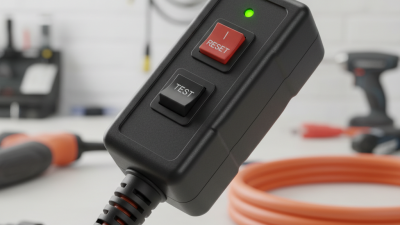
Most portable GFCI cords include Test and Reset buttons. Pressing Test should interrupt power. Pressing Reset should restore it only when supply conditions are acceptable. The exact trip level, response time, plug design, and environmental rating depend on the applicable market standard. Global buyers should verify voltage, frequency, connector type, cable size, enclosure rating, and certification documents before ordering. A cord made for a dry workshop may not suit outdoor construction work.

Details matter.

During practical inspections, technicians look for cracked jackets, loose strain relief, stiff buttons, and heat marks near the plug. A GFCI is not a substitute for correct grounding or routine maintenance. It cannot repair damaged equipment. Some users press Reset repeatedly without finding the leakage source. That habit deserves reconsideration. A dependable supplier should provide traceable test records, clear instructions, sample verification, and consistent production controls. Buyers should test the cord before use and after relocation, especially around moisture. Safety performance is not proven by appearance alone.

Why Source GFCI Power Cords from Chinese Suppliers?

China Top GFCI Power Cord Supplier for Global Buyers?

Why Source GFCI Power Cords from Chinese Suppliers?

Chinese suppliers offer a practical sourcing base for GFCI power cords. The country has extensive manufacturing networks for plugs, cables, housings, terminals, and protective components. This connected supply chain can shorten development cycles and reduce purchasing complexity. Buyers can often request different cable lengths, jacket materials, plug types, and packaging formats. Customization matters when equipment operates in workshops, gardens, kitchens, or damp locations. Details matter.

Experienced suppliers should explain how each cord is assembled and tested. Ask for production records, electrical test procedures, material specifications, and traceable batch information. A reliable factory will verify trip performance, insulation strength, grounding continuity, and resistance before shipment. Independent laboratory reports can provide additional confidence. However, one test report does not prove every future batch will match it.

China can also provide competitive pricing through large-scale production and established tooling capabilities. Yet low quotations deserve careful review. They may reflect thinner materials, limited inspection, or unclear documentation. No supplier is perfect. Even strong factories can miss a labeling detail or face component delays. Buyers should conduct factory audits, approve samples, define acceptance criteria, and schedule pre-shipment inspections. Compliance requirements differ by destination, so technical files should match the intended market. Clear communication, realistic lead times, and responsive corrective action often matter more than the lowest unit price.

How to Evaluate a Top China GFCI Power Cord Supplier

How to Evaluate a Top China GFCI Power Cord Supplier

A qualified supplier should show more than a low quotation. NFPA reports that electrical distribution and lighting equipment caused about 35,150 U.S. home fires annually from 2015 to 2019. These incidents caused roughly 470 deaths and $1.3 billion in direct property damage. The U.S. CPSC also states that GFCI protection can prevent more than two-thirds of electrocutions. Those figures make testing a purchasing requirement, not a sales detail.

Ask for test records covering trip current, trip time, grounding, polarity, insulation resistance, thermal endurance, and cord flexing. The supplier should explain which requirements apply in your destination market, including IEC 60884-1 or UL 943 where relevant. Check whether production units receive 100% functional testing or only periodic sampling. Sampling alone can miss a weak terminal.

Request raw test data, calibration records, material certificates, and batch traceability. Visit the factory if order volume justifies it. Inspect crimping, strain relief, terminal torque, and enclosure seams with your own checklist. A certificate can be genuine yet still fail to prove consistent production. That is an uncomfortable gap.

Independent laboratory verification adds confidence. However, even laboratories test submitted samples, not every future shipment. Approve a sealed reference sample, define rejection limits, and repeat inspections after tooling or material changes. I would also review complaint history, corrective-action speed, and reserve production capacity. Price matters, but an unstable trip mechanism costs more than a small unit saving.

China Top GFCI Power Cord Supplier for Global Buyers? - How to Evaluate a Top China GFCI Power Cord Supplier
Evaluation Dimension Practical Benchmark for Global Buyers Objective Evidence to Request Why It Matters Suggested Priority
Applicable Safety Standards The product specification should identify the applicable requirements for the complete assembly, including the flexible cord, plug, connector, enclosure, and ground-fault protection device. Current third-party certification documents, certificate scope, construction details, and test reports matching the exact model and rating. A certificate for a cable or plug alone does not necessarily certify the complete GFCI power cord assembly. Critical
GFCI Trip Performance For Class A protection used in North American applications, the device should trip at a ground-fault current not exceeding 6 mA and interrupt the circuit within the applicable safety-standard time requirement. Production test records, trip-current test results, trip-time results, reset-function tests, and calibration records for test equipment. Incorrect trip sensitivity or slow interruption can create a serious electric-shock hazard. Critical
Electrical Rating Compatibility Voltage, frequency, current rating, plug configuration, conductor size, and GFCI type must match the target market and end-use equipment. Common market systems include 120 V/60 Hz and 230 V/50 Hz, but they are not interchangeable by default. Electrical datasheet, wiring diagram, rating label artwork, plug configuration drawing, and sample inspection against the purchase specification. A mismatch between the cord rating and the local electrical system may cause overheating, nuisance tripping, or unsafe operation. Critical
Cord Construction and Conductor Size The conductor material, cross-sectional area or AWG size, insulation, jacket material, number of conductors, and grounding arrangement should be clearly defined and consistent with the rated load. Bill of materials, conductor resistance results, cross-section inspection, material declarations, and incoming-material inspection records. Undersized conductors or inconsistent copper content can increase resistance, heat generation, and voltage drop. Critical
Ingress and Environmental Protection The enclosure and cable assembly should have an environmental rating suitable for the intended location. Outdoor or wet-location use requires verification of the applicable enclosure, sealing, and moisture-resistance requirements. Environmental test reports, enclosure construction drawings, gasket specifications, IP or equivalent rating documentation where applicable, and installation instructions. Moisture entering the GFCI housing can cause corrosion, leakage current, false trips, or electrical shock. High
Mechanical Durability The assembly should withstand repeated flexing, plug insertion and withdrawal, strain relief loads, and normal handling without exposing conductors or impairing the reset and test functions. Flexing, pull-force, strain-relief, impact, and endurance test procedures with recorded results linked to the production model. Weak strain relief or brittle insulation can lead to conductor breakage, short circuits, or exposed live parts. High
Factory Quality-Control System A documented quality system should control incoming materials, assembly processes, electrical safety tests, nonconforming products, corrective actions, and final release. Quality manual, process flow chart, control plan, inspection records, calibration certificates, corrective-action samples, and traceability procedure. Without process controls, approved samples may not represent the quality of later production batches. Critical
100% Production Testing Each finished unit should receive documented tests appropriate to the design, such as continuity, polarity, dielectric withstand, ground continuity, GFCI test/reset operation, and visual inspection. Sample production test records, test-machine settings, serial or batch traceability, operator instructions, and failure-rejection records. Batch sampling alone may allow an individual wiring or assembly defect to reach the customer. Critical
Material Compliance Materials should comply with the destination market’s restricted-substance requirements, such as the EU RoHS Directive 2011/65/EU and applicable REACH obligations when those rules apply. Supplier declarations, laboratory test reports, material composition records, and a controlled list of components and sub-suppliers. Non-compliant materials can cause customs delays, product recalls, customer rejection, or restricted-market sales problems. High
Sample-to-Mass-Production Consistency The approved sample, production drawing, bill of materials, firmware or electronic design where applicable, and shipment specification should be revision-controlled and identical in safety-critical features. Golden sample, signed approval sheet, engineering change procedure, revision history, production inspection photos, and pre-shipment inspection report. Uncontrolled substitutions can change trip performance, heat resistance, mechanical strength, or certification status. Critical
Packaging and Shipment Protection Packaging should protect the GFCI module, plug, terminals, and cable from impact, moisture, compression, and abrasion during international transport. Packaging specification, carton dimensions, drop-test method where applicable, palletization plan, moisture protection details, and pre-shipment photographs. Transport damage may not be visible externally but can affect internal wiring, housing integrity, or the reset mechanism. Medium
Lead Time and Supply Capacity The supplier should provide separate and clearly defined timelines for sample approval, tooling, first production, repeat orders, and peak-season capacity. Written production schedule, capacity statement, critical-component lead times, safety-stock policy, and historical on-time delivery records. Long or unstable lead times can interrupt projects even when the product passes technical evaluation. High
Technical Documentation Documentation should include datasheets, dimensional drawings, wiring diagrams, ratings, operating instructions, warnings, test procedures, and carton or product labeling requirements. Controlled English documentation, label artwork, installation instructions, inspection standards, and revision-controlled engineering drawings. Incomplete documentation increases installation errors, approval delays, and after-sales disputes. High
Warranty and Corrective Action The commercial agreement should define warranty duration, defect classification, response time, replacement or credit procedure, root-cause analysis, and corrective-action deadlines. Written warranty terms, complaint-handling workflow, 8D or equivalent corrective-action example, and product traceability method. Clear remediation rules reduce financial exposure when a field defect or batch issue occurs. High
Independent Pre-Shipment Verification For safety-critical orders, the buyer should use an agreed inspection plan covering quantity, dimensions, labeling, electrical function, packaging, and visual workmanship before shipment. Approved inspection checklist, sampling plan, test equipment list, inspection report, defect photographs, and buyer-approved acceptance criteria. Independent verification reduces the chance of receiving products that differ from the approved specification. High
Total Cost of Ownership Compare the complete landed cost, including unit price, tooling, certification, testing, packaging, freight, duties, inspection, warranty exposure, and minimum order quantity. Itemized quotation, Incoterms, payment terms, tooling ownership terms, packaging costs, inspection charges, and estimated logistics costs. A low unit price may conceal higher certification, defect, logistics, or replacement costs. High

Key Certifications and Standards for Global Buyers

For global buyers, a GFCI power cord needs more than a test report. It must match the destination market’s electrical system, plug design, and certification rules. In North America, buyers commonly check UL 943 requirements, grounding continuity, leakage-current limits, and trip-time performance. A Class A GFCI normally trips near 5 mA, helping reduce shock risk in wet environments.

International projects require careful comparison. IEC 60364-4-41 commonly supports additional protection through devices rated at 30 mA residual current. However, an IEC-based RCD is not automatically equivalent to a North American GFCI cord. Voltage, frequency, neutral switching, enclosure protection, and plug standards can differ. The International Electrotechnical Commission reported that electricity demand rose strongly in 2024, increasing pressure on reliable protection equipment. Small specification errors can become expensive.

Factory audits should verify third-party certification, calibrated trip-current testing, insulation resistance, polarity, and cable strain relief. Ask for production samples, not only certificates. Inspectors often find impressive paperwork but inconsistent markings on the molded plug. That detail matters. A 2024 electrical safety market analysis estimated global demand would grow at over 7% annually, but forecasts are not proof of product quality. Buyers should also confirm certification validity, factory surveillance status, and destination-country approval. One weakness remains common: suppliers may quote “GFCI” broadly, while the actual device lacks the required local function. Clear test records are essential.

Ordering, Quality Control, and International Delivery Considerations

China Top GFCI Power Cord Supplier for Global Buyers?

Ordering, Quality Control, and International Delivery Considerations

Selecting a Chinese GFCI power cord supplier requires more than comparing unit prices. Confirm the rated voltage, current, plug configuration, cable length, and intended application before requesting quotations. Share drawings, technical specifications, and packaging requirements in writing. Details matter. A supplier should explain production capacity, testing equipment, lead times, and quality records clearly.

During quality control, request approved samples before placing a large order. Check insulation, grounding, housing assembly, strain relief, and button operation. Production testing should include ground continuity, dielectric strength, polarity, and GFCI trip response. Ask for batch traceability and inspection reports with measurable results. Do not guess. Independent pre-shipment inspection can provide useful evidence, especially for new suppliers. However, inspection samples cannot represent every unit perfectly. That limitation deserves honest consideration.

International delivery needs early coordination. Confirm shipping terms, carton dimensions, moisture protection, labeling, and required export documents. Verify destination-market requirements with qualified local professionals, because electrical rules differ by country and product category. Build time for sample approval, production, inspection, customs processing, and possible port delays. A clear purchase agreement should define tolerances, replacement procedures, and responsibility for damaged goods. In practice, the first order may expose communication gaps or packaging weaknesses. Treat those findings as process data, not personal failure, and revise the next order accordingly.