
-
- Products
- Indoor Household Cords
- Appliance Cords
- General Purpose Short-Length Cords
- General Purpose Extension Cords
- Landscape & Decorating Cords
- Bright Color Extension Cords
- Oil-Resistant Extension Cords
- Cold-Flex Extension Cords
- VividFlex Power Cords
- EXTREME All-Weather Cords
- Cord Management
- Task Lights
- Adapters & GFCI Devices
- Where to Buy
- About
- Careers
- Glossary
- Catalog


What Is the Best GFCI Cord for 2026?
Choosing the best GFCI cord for 2026 is not just about finding the longest cable or the lowest price. A dependable model should interrupt power quickly when a ground fault occurs, while matching the tool, location, and electrical load. Small details matter. A stiff cord can drag across a wet workshop floor; a poorly placed reset button can be awkward when wearing gloves.
Reliable comparisons should start with recognized safety references. UL 943 sets requirements for ground-fault circuit interrupters, while OSHA’s construction standard, 29 CFR 1926.404(b)(1), addresses GFCI protection on many job sites. The U.S. Bureau of Labor Statistics’ Census of Fatal Occupational Injuries tracks electrical exposure in workplace deaths, and NIOSH FACE investigations document real incidents involving electrical hazards. These sources explain why protection deserves more weight than convenience claims alone. They do not, however, certify every product advertised as “heavy duty.”
This guide compares each gfci cord by its rated amperage, wire gauge, length, plug design, reset access, and stated environment rating. It also separates verified specifications from marketing language. That distinction is easy to miss. A cord labeled outdoor-rated still needs careful inspection, correct use, and protection from damage. The strongest choice for one person may be too short, too bulky, or unsuitable for another setup. The goal is a practical, evidence-based shortlist—not a promise that one cord fits every job.
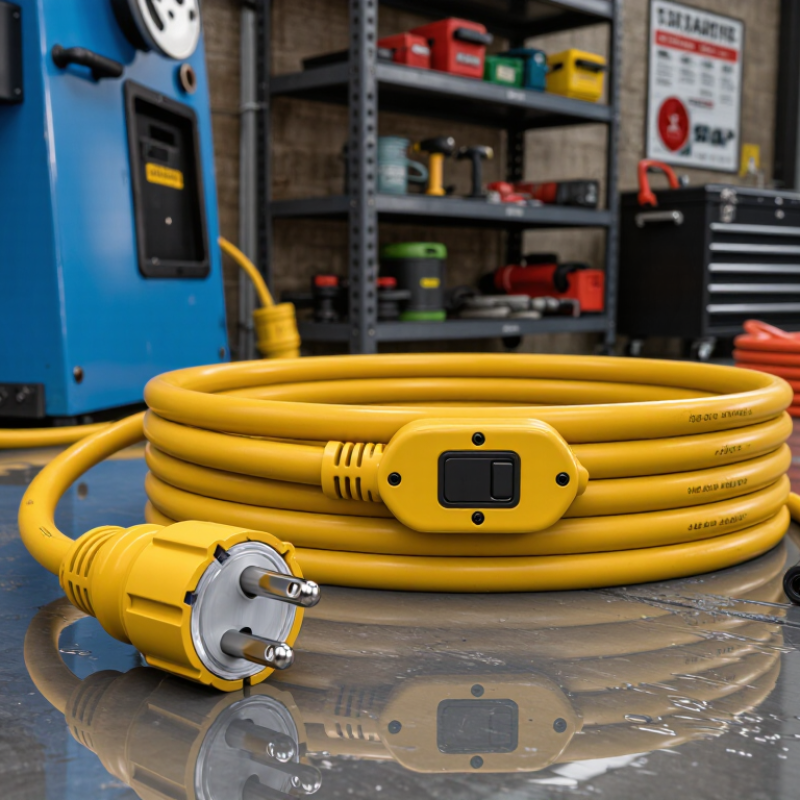
Table of Contents
[Hide]
How GFCI Cords Detect Faults: UL 943 Class A Trips at 4–6 mA
What Is the Best GFCI Cord for 2026?
A GFCI cord helps reduce the risk of severe electric shock by monitoring current as it flows through a circuit. Under UL 943 Class A criteria, a ground-fault interrupter must trip when leakage reaches the 4–6 mA range. That is a small imbalance. A sensing coil compares the current in the outgoing and returning conductors. If some current takes another path, such as through damp ground or a person, the difference can trigger the device to shut off power.
The trip range is not a promise that every electrical hazard will be stopped. A GFCI cord may not protect against every kind of contact or equipment failure, so it should not replace careful setup. Keep plugs and connections away from standing water, and avoid running cords where vehicles or doors can crush them. Small details matter. Before use, inspect the jacket for cuts, check that the plug and receptacle are dry, and press the test and reset buttons according to the cord’s instructions. If it will not trip or reset, stop using it.
For a 2026 purchase, check the product label for its GFCI rating, cord length, intended environment, and current capacity. Match those details to the tool and location, rather than choosing by length alone. A longer cord can be convenient, but it can also add clutter and voltage drop. I would still check the instructions each time; it is easy to assume a familiar cord is working when it has been damaged since the last job.
What Is the Best GFCI Cord for 2026? - How GFCI Cords Detect Faults: UL 943 Class A Trips at 4–6 mA
The best choice depends on the outlet, load, environment, and required reach. Compare the cord’s marked ratings and listed safety features; specifications vary by model.
| Comparison dimension | What to look for | Why it matters |
|---|---|---|
| Ground-fault protection | A Class A GFCI cord evaluated to the applicable UL 943 requirements; Class A devices are designed to trip in the 4–6 mA ground-fault current range. | The sensing circuit compares current in the ungrounded (hot) and grounded (neutral) conductors. A difference indicates current may be leaking elsewhere, so the device interrupts power. |
| Voltage and current rating | Match the cord’s nameplate voltage and amperage to the supply and the connected equipment. Many household models are marked for 120 V; current ratings vary. | A GFCI function does not increase the cord’s electrical capacity. Never exceed the marked ratings or the rating of any plug, receptacle, or connected circuit. |
| Cord length and conductor size | Choose only the length and wire size stated on the product marking. Longer cords and higher-current loads require particular attention to the manufacturer’s ratings. | A suitable rating helps avoid excessive voltage drop and overheating. Do not connect multiple extension cords to extend reach. |
| Use environment | For outdoor or damp-location use, verify the cord is specifically marked for that use and follow its instructions. Keep connections protected as directed. | An indoor-use cord is not made suitable for wet conditions by adding GFCI protection. Avoid immersion and damaged or exposed connections. |
| Test and reset controls | Look for accessible TEST and RESET controls and follow the manufacturer’s test instructions before use and at the stated intervals. | Testing checks that the protective function operates. If the device will not trip during a test, will not reset, or shows damage, stop using it. |
| Protection limits | Treat GFCI protection as additional protection, not as a substitute for correct wiring, equipment grounding where required, or overload protection. | A GFCI detects current imbalance; it is not, by itself, a circuit breaker and does not necessarily protect against overloads or line-to-neutral short circuits. |
| Condition and compatibility | Check the plug type, equipment instructions, cord markings, and condition of the jacket, plug, and GFCI housing before connecting a load. | Do not use cords with cuts, crushed sections, loose connections, or signs of overheating. A tripping cord may indicate a fault that needs investigation. |
Selection note: There is no universally best GFCI cord. Use the marked ratings for the specific cord and equipment, and follow local electrical requirements and the manufacturer’s instructions.
Related Posts
-
What is a GFCI Cord and How Does it Work?
-
China Top GFCI Power Cord Supplier for Global Buyers?
-
2025's Top 10 GFCI Power Cords: Safe and Reliable Options for Your Home
-
How to Choose the Right GFCI Power Cord for Your Needs?
-

Best GFCI Power Cord Options for Safe Electrical Use?
-
Top 10 GFCI Cord Suppliers for Global Buyers