
-
- Products
- Indoor Household Cords
- Appliance Cords
- General Purpose Short-Length Cords
- General Purpose Extension Cords
- Landscape & Decorating Cords
- Bright Color Extension Cords
- Oil-Resistant Extension Cords
- Cold-Flex Extension Cords
- VividFlex Power Cords
- EXTREME All-Weather Cords
- Cord Management
- Task Lights
- Adapters & GFCI Devices
- Where to Buy
- About
- Careers
- Glossary
- Catalog


China Top Short Power Cord Suppliers for Global Buyers?
A short power cord may look like a minor component, but its length, plug type, conductor size, and construction can affect installation and daily use. In compact appliances, server racks, display units, and factory equipment, a few extra centimeters can create clutter or restrict placement. Buyers need more than a low unit price. They need clear specifications, consistent production, responsive communication, and samples that match the final order.
For this introduction, the following line is an original editorial statement, not a verified quotation from a named industry professional: “A reliable short power cord is measured by fit, finish, and repeatable performance—not length alone.” The article uses that principle to examine suppliers serving global buyers. It will consider product range, customization, quality checks, lead times, and export support. Details matter. A molded plug should sit cleanly; insulation should feel uniform; labels should remain readable. Small flaws can signal a larger process problem, though they do not prove one by themselves.
Supplier lists can be useful, but they are not guarantees. Capabilities change, and published claims deserve confirmation through current specifications, samples, and direct questions. Some product pages are vague. That is worth noticing. This guide will help buyers compare China-based short power cord suppliers with practical criteria, while recognizing that the best match depends on the application, order volume, and required documentation.
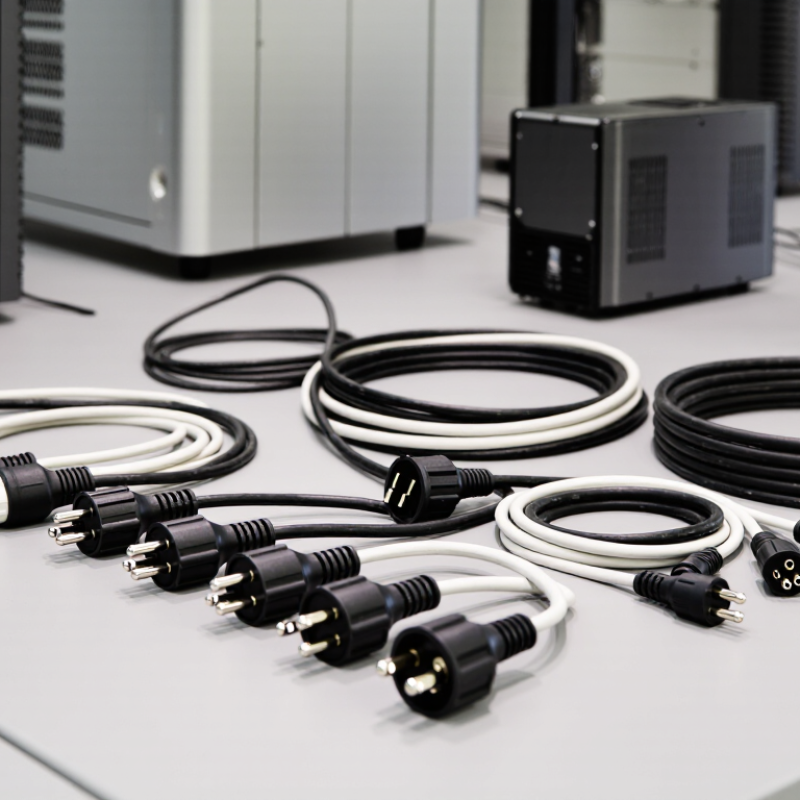
Table of Contents
[Hide]
Short Power Cords: Definitions, Applications, and Buyer Requirements
Short power cords are compact cables designed to connect equipment with minimal excess length. They usually include a molded plug, flexible insulation, and a connector or exposed lead. Common lengths range from 150 to 600 millimeters. The correct length depends on socket location, enclosure depth, and cable routing. Too short creates tension. Too long causes clutter.
Their applications include power strips, monitors, routers, medical equipment, kitchen appliances, and industrial control cabinets. In factory sourcing, I have found that a ten-centimeter difference can affect assembly speed. A tight bend may also damage the cable near the plug. Buyers should check conductor size, rated voltage, current, insulation material, temperature range, and bend performance. Measure twice.
Global buyers should provide drawings, plug specifications, destination markets, annual volume, and packaging details before requesting quotations from Chinese suppliers. Sample approval should confirm dimensions, polarity, connector fit, surface quality, and electrical test results. Ask for production records and traceable inspection reports. Relevant safety and environmental requirements vary by market, so compliance documents must match the final destination.
A reliable supplier should explain tolerances instead of promising perfection. This matters. Buyers sometimes focus on unit price and overlook carton compression, moisture protection, or label accuracy. That decision can create delays later. I would also review a small pilot order before scaling production, because an approved sample may not reveal every batch-level variation.
| Topic | Typical Details | Common Applications | Buyer Requirements | What to Verify with a Supplier |
|---|---|---|---|---|
| Definition of a short power cord | “Short” is generally a purchasing description, not one universal electrical standard. Buyers commonly specify a compact assembly by its exact finished length, measured from end to end according to an agreed method. | Equipment installed close to a wall outlet, power distribution unit, or adjacent device. | State the finished length, acceptable tolerance, and whether the measurement includes the plug and connector. | Confirm the drawing, measurement method, tolerance, and sample length before production. |
| IEC equipment jumper | A cord with compatible IEC 60320 connectors, such as C13-to-C14 or C19-to-C20. Connector selection and assembly ratings depend on the specific components and applicable approvals. | Server racks, network cabinets, power distribution units, and other equipment using IEC inlets and outlets. | Match both connector types to the equipment; confirm current, voltage, temperature, and regional compliance requirements. | Check connector identification, component ratings, conductor size, cord construction, and applicable test or certification documentation. |
| Appliance power cord | A short mains cord with a plug suited to the destination market and an appliance-side connector or termination suited to the product. | Small appliances, monitors, audio equipment, and devices positioned near a receptacle. | Specify the destination country, plug configuration, appliance inlet, rated load, cable type, and required approvals. | Verify that the plug and cord assembly are approved for the intended market and match the appliance’s electrical specifications. |
| Right-angle or space-saving cord | A cord using an angled plug or connector to reduce clearance behind equipment. The appropriate angle and orientation depend on the installation. | Closely spaced equipment, wall-mounted devices, cabinets, and installations with limited rear clearance. | Provide the required angle, orientation, clearance, and bend allowance; confirm the cord will not be under strain when installed. | Review a dimensioned drawing or physical sample and check plug orientation, strain relief, and installation clearance. |
| Regional plug and cord configuration | Plug styles and electrical requirements vary by country and market. A cord accepted in one destination may not be suitable for another. | Export products, international equipment projects, and replacement-cord programs. | Identify the destination market and applicable national requirements before requesting a quotation. | Request documentation for the exact plug, cord, and finished assembly intended for the destination market. |
| Electrical and material specifications | Key variables include rated voltage and current, conductor material and cross-section, insulation, temperature rating, and cord type. | All mains-powered equipment and power distribution applications. | Provide the equipment load and operating conditions; do not select a cord solely by its external appearance or length. | Check that component and assembly ratings meet the application and are supported by relevant technical documentation. |
| Supplier capability assessment | Potential suppliers may offer cord assembly, connector sourcing, cutting, termination, inspection, and export packaging services. | OEM production, replacement parts, rack installations, and project-based procurement. | Compare suppliers against the same specification, order quantity, target market, delivery schedule, and quality requirements. | Assess samples, production controls, traceability, inspection records, certifications applicable to the exact product, and change-control practices. |
| Quality and acceptance checks | Inspection plans can cover dimensions, connector fit, workmanship, continuity, polarity where applicable, and electrical safety tests required by the specification. | Incoming inspection and production quality control for cord assemblies. | Agree on test methods, sampling plan, acceptance criteria, labeling, and documentation before placing an order. | Confirm which checks are performed on each unit and which are performed by sampling; request records where needed. |
| Packaging and logistics | Compact cords can be packed individually or in bulk. Packaging should protect connectors and keep specified lengths and configurations identifiable. | Bulk manufacturing, distribution, service inventories, and international shipment. | Specify quantity per package, labels, barcode needs, carton requirements, shipping destination, and delivery terms. | Confirm packaging samples, product identification, lead time, minimum order quantity, and export documentation responsibilities. |
Note: The cord lengths and configurations described here are examples for sourcing discussions, not universal standards. Final ratings, approvals, and test requirements depend on the complete cord assembly, equipment, and destination market.
Related Posts
-
7 Tips for Choosing the Right Power Cord Cable
-

2025 How to Choose the Best Power Cord Adapters for Your Devices
-
How to Choose the Best Extension Cords for Your Home and Outdoor Needs
-
2025 How to Choose the Best Power Extension Cable for Your Needs
-
How to Choose the Right Power Cord Wire for Global Sourcing?
-

Best Cord and Cable Options for Global Buyers?