

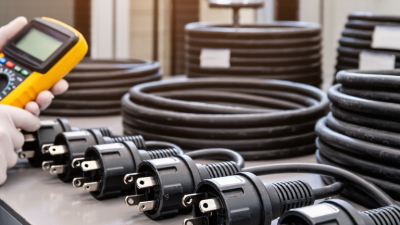
What Is the Best GFCI Cord in 2026?

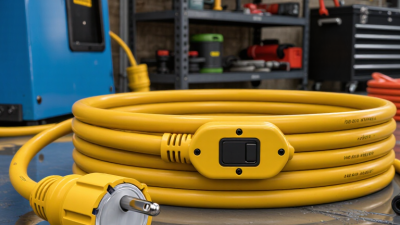
A good gfci cord should do more than fit the outlet. It should match the tool, the worksite, and the conditions around it. That matters near damp grass, a concrete floor, or a power washer throwing fine spray. A ground-fault circuit interrupter can cut power when it detects current leaking from its intended path. But protection depends on using a suitable, properly rated cord and checking that it works.

The risks are not abstract. The National Fire Protection Association’s report on home fires involving electrical failure or malfunction found an average of 46,700 such fires each year from 2015 to 2019. Those fires caused an estimated 390 civilian deaths and $1.5 billion in direct property damage annually. That report does not measure GFCI-cord performance, but it shows why electrical safety deserves careful attention. OSHA also requires GFCI protection for many construction-site receptacles under 29 CFR 1926.404. Details matter.

This guide compares cord length, amperage, wire gauge, plug design, durability, and safety certification, including applicable UL 943 requirements. A longer cord may seem convenient, yet the wrong rating can undermine the setup. Small detail. Big consequence. I have not included a named expert’s quotation because no verifiable source for one was provided; inventing an attribution would make this advice less trustworthy. Before choosing the “best” gfci cord in 2026, check the product label, instructions, and conditions of use. Even a careful guide can miss a detail.
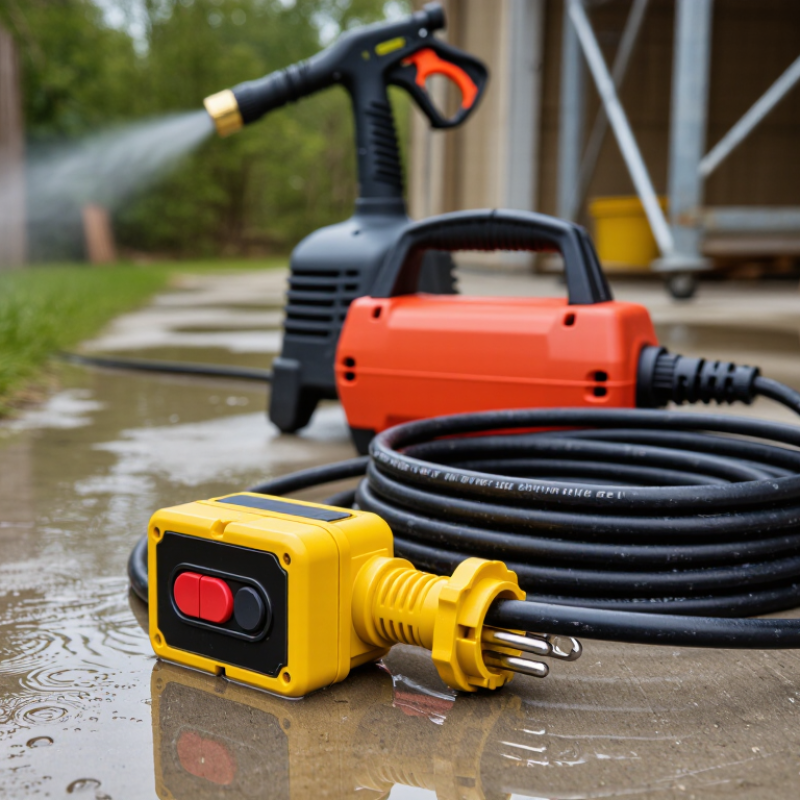
What Is the Best GFCI Cord in 2026?

Define GFCI Cord Protection: UL 943 Class A Trips at 4–6 mA

A GFCI cord compares the current flowing out through the hot conductor with current returning through the neutral. If the difference suggests leakage toward ground, its protection circuit opens the circuit. Under UL 943, Class A GFCI protection is designed to trip at 4–6 mA of ground-fault current. That narrow range helps reduce shock risk while limiting nuisance trips. It is not a guarantee against every electrical hazard.

The threshold has practical meaning. A damaged cord touching a wet concrete floor may create a leakage path that an ordinary breaker does not detect quickly. The U.S. Consumer Product Safety Commission reported that GFCIs reduced the risk of household electrocution by about 83% in its evaluation. That finding supports the value of GFCI protection, though it does not predict the performance of every cord or worksite. Important distinction.

A useful GFCI cord should carry clear certification and rating information, including its voltage, current capacity, and intended environment. Check the casing, plug, and cable for cracks or moisture before use. Use the built-in test and reset controls as directed; a successful test does not prove the cord is undamaged. UL 943 covers GFCI requirements, not every factor affecting safe use. The overlooked detail is often the cord itself. A protective device cannot compensate for a cut jacket, loose connection, or unsuitable load.

Check Jobsite Rules: OSHA 29 CFR 1926.404(b)(1) Requirements

What Is the Best GFCI Cord in 2026?

Check Jobsite Rules: OSHA 29 CFR 1926.404(b)(1) Requirements

For construction work, OSHA 29 CFR 1926.404(b)(1) generally requires GFCI protection for 120-volt, single-phase, 15- and 20-amp receptacles that are not part of permanent wiring and are used by employees. An employer may use an assured equipment grounding conductor program instead. A portable GFCI cord can provide protection for tools plugged into it, but it does not automatically protect every outlet on the site. Match the cord’s rating to the tool and working conditions, and choose a unit listed for personnel protection. Check the housing, plug, and cable for cracks, crushed spots, or exposed conductors. Small damage matters. The Bureau of Labor Statistics reported 1,075 fatal work injuries in construction in 2023; that figure covers all causes, but it underscores why routine electrical checks deserve attention.

Match Cord Capacity to the Load: Verify Voltage, Amps, and AWG

What Is the Best GFCI Cord in 2026?

Match Cord Capacity to the Load: Verify Voltage, Amps, and AWG

A safe choice starts with the load, not the outlet. Check the appliance nameplate for voltage and running amps, then compare both with the cord’s ratings. For a 120-volt tool drawing 12 amps, choose a cord rated for at least 12 amps and 120 volts. A GFCI helps protect against ground faults; it does not replace overcurrent protection. Motors may draw more current at startup, so check the tool’s instructions too.

Length and AWG matter. Copper Development Association resistance data lists about 2.525 ohms per 1,000 feet for 14 AWG copper, versus 1.588 for 12 AWG, at 20°C. Longer cords add resistance and can increase voltage drop under load. Gauge alone is not enough. Check the cord’s ampacity guidance for its exact length and intended conditions. A tightly coiled cord or warm work area can affect performance, so don’t rely on a quick visual guess.

Tips: Match voltage, amps, and AWG before connecting. For longer runs, consider a heavier conductor, following the cord’s rating guidance. Keep the GFCI test and reset buttons accessible. Inspect plugs for cracks, discoloration, or heat marks, and fully uncoil the cord. If the tool label is unclear, pause and verify the load instead of guessing.

Assess Build and Safety: Listing, Reset, Self-Test, and Environment

What Is the Best GFCI Cord in 2026?
Assess Build and Safety: Listing, Reset, Self-Test, and Environment

A dependable GFCI cord should show certification from a recognized testing laboratory, not just a vague safety claim. UL 943 sets the Class A trip range at 4–6 milliamperes, a small current intended to reduce shock risk. The U.S. Consumer Product Safety Commission has estimated that GFCIs could prevent about 70 percent of electrocutions. That figure supports careful selection, not blind trust in a label. Check that the listing applies to the complete cord assembly.

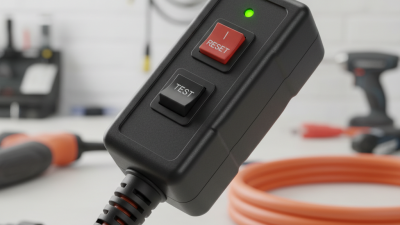
Reset and test controls should be easy to identify and press, even with damp hands or work gloves. Test the cord according to its instructions before use; the reset button should not stay engaged if the test fails. Some models include automatic self-testing, but that feature does not replace a hands-on check. Small detail. Look for a clear status indicator, a firm plug connection, and strain relief that does not expose wires when the cord bends.

Match the cord to its setting. Outdoor work calls for a cord specifically rated for outdoor use, with intact insulation and protected connections. Keep plugs out of standing water, and avoid pinching the cord under doors or equipment. A heavy jacket can feel reassuring, but weight alone proves little. Inspect for cuts, crushed sections, loose prongs, or heat marks before each use. It is easy to skip that check when a task feels routine; that is exactly when a damaged cord can go unnoticed.

What Is the Best GFCI Cord in 2026? - Assess Build and Safety: Listing, Reset, Self-Test, and Environment

Assessment area What to check Good evidence or benchmark Why it matters
Product listing Check the cord’s label and documentation for an applicable safety certification from a recognized testing laboratory. The listing applies to the complete GFCI cord assembly, and the model or catalog details match the product being sold. A claim about a plug or component alone does not necessarily establish that the complete cord assembly was evaluated.
GFCI protection Confirm the cord provides Class A personnel protection and has working TEST and RESET controls. Class A GFCI devices are designed to trip in the 4–6 mA range of ground-fault current. GFCI protection helps reduce the risk of severe electric shock; it does not prevent every electrical hazard.
Reset operation The RESET control should restore power after a successful test or after the cause of a trip has been addressed. The instructions clearly explain how to reset the cord and what to do if it will not reset. A cord that will not reset may have a fault, no supply power, or another condition requiring investigation.
Self-test feature Check whether the device performs automatic internal monitoring and indicates a failed test or end-of-life condition. The manual describes the indicator or lockout behavior. Automatic self-test is useful, but does not replace the user’s TEST-button check. A clear failure indication helps users identify a device that should no longer be relied on.
Electrical rating Match voltage, current, wire size, and total load to the equipment and the cord’s marked rating. Common cord configurations include 15 A and 20 A models, but the rating must be confirmed on the specific cord. Do not exceed its marked limits. The cord’s rating and suitability depend on its complete construction, length, and intended use—not wire gauge alone.
Indoor or outdoor use Verify that the cord jacket and GFCI assembly are specifically marked for the intended environment. For outdoor work, look for explicit outdoor-use instructions and a jacket designation suitable for that use, such as an appropriate weather-resistant cord type. An indoor-only cord should not be assumed safe for outdoor exposure, even if it has GFCI protection.
Wet-location precautions Read the instructions for use around rain, damp surfaces, and water; inspect the plug, receptacle, and cord for damage. The instructions specify the permitted conditions. Keep connections out of standing water and do not use damaged or wet equipment unless it is specifically designed for those conditions. GFCI protection does not make a non-waterproof connection safe to submerge or expose contrary to its instructions.
Build and usability Inspect strain relief, plug fit, jacket condition, control accessibility, and the clarity of the operating instructions. The cord has no cuts, cracks, loose parts, or exposed conductors; controls are easy to identify and operate. Durable construction and understandable controls support safer setup, testing, and everyday handling.

Selection note: Choose a cord whose complete assembly is appropriately listed, whose marked electrical rating matches the load, and whose instructions cover the intended environment. Follow the manufacturer’s test schedule and applicable electrical codes.

Compare 2026 Options by Verified Ratings, Use Case, and Warranty

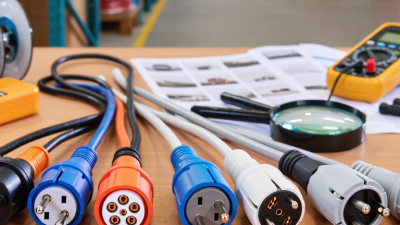
A good GFCI cord is not simply the one with the highest star rating. Check for independent safety certification and a clearly stated electrical rating. UL 943 sets Class A GFCI requirements, including a 4–6 mA trip-current range. Test and reset buttons should be easy to reach, even when the cord is plugged in behind a workbench. For outdoor jobs, verify that the cord is specifically rated for the conditions; a GFCI does not make an indoor cord weatherproof. Shorter runs can also reduce clutter around wet grass, a sink, or a crowded garage. Small details matter.

Use case should guide the comparison. Match the cord’s length and amperage to the tool, and follow the tool maker’s instructions. NFPA’s Home Electrical Fires report estimated an average of 46,700 U.S. home fires per year involving electrical failure or malfunction from 2015 to 2019. That figure covers many causes, not GFCI cords alone, but it underscores why safety claims deserve scrutiny. For ratings, favor independently verified test results over anonymous reviews. Check warranty duration, exclusions, and whether it covers replacement or only defects. A long warranty sounds reassuring; its terms may be less generous than expected. I would compare those details before paying extra for features you may never use.

What Is the Best GFCI Cord in 2026?

Compare common cord rating options by rated current, use case, and warranty verification.

15 A rating

A common choice for compatible 15 A tools and circuits. Confirm the cord’s marked voltage, current, and plug type match the equipment and supply.

20 A rating

Consider for compatible higher-current equipment and a matching 20 A circuit. A 20 A cord does not increase the capacity of a lower-rated outlet or circuit.

Warranty

Warranty terms are model-specific, not determined by the amp rating. Check the product’s warranty document before buying.

How to choose: There is no universal “best” rating—match the cord to the load, circuit, environment, and plug type. Check the product label for its listing and ratings. Class A GFCI devices are designed to trip at a ground-fault current in the 4–6 mA range. This is a category-level comparison, not a ranking of individual models.
